

Join Our Newsletter To Be Informed When New Videos Are Posted
Hebrew Text
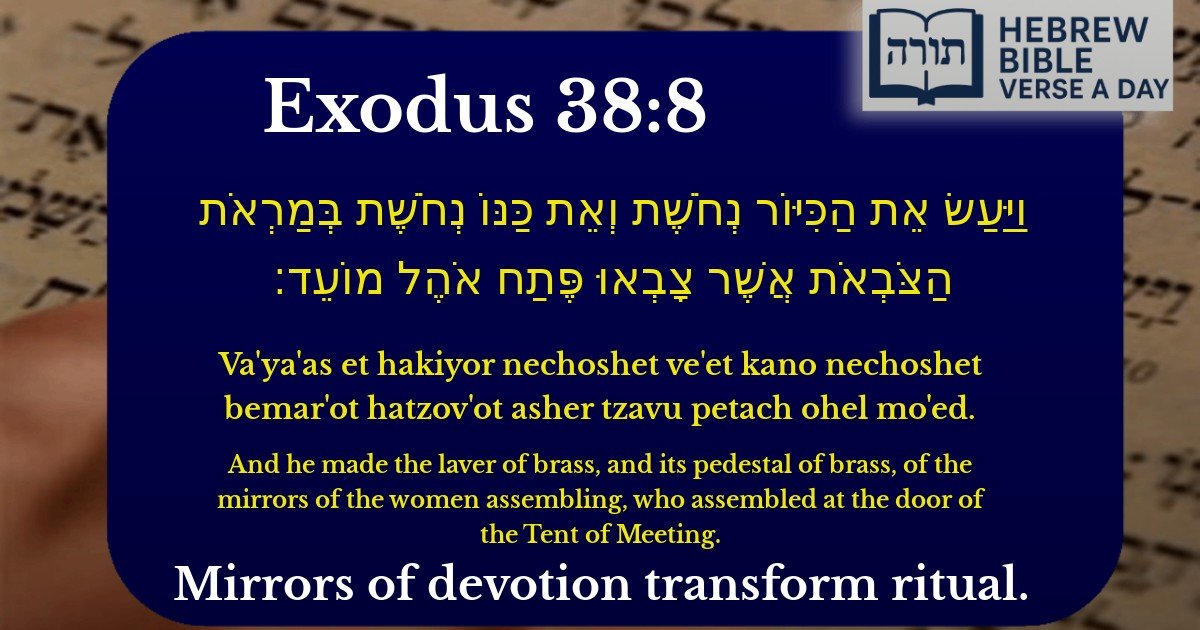
וַיַּעַשׂ אֵת הַכִּיּוֹר נְחֹשֶׁת וְאֵת כַּנּוֹ נְחֹשֶׁת בְּמַרְאֹת הַצֹּבְאֹת אֲשֶׁר צָבְאוּ פֶּתַח אֹהֶל מוֹעֵד׃
English Translation
And he made the laver of brass, and its pedestal of brass, of the mirrors of the women assembling, who assembled at the door of the Tent of Meeting.
Transliteration
Va'ya'as et hakiyor nechoshet ve'et kano nechoshet bemar'ot hatzov'ot asher tzavu petach ohel mo'ed.
Hebrew Leining Text
וַיַּ֗עַשׂ אֵ֚ת הַכִּיּ֣וֹר נְחֹ֔שֶׁת וְאֵ֖ת כַּנּ֣וֹ נְחֹ֑שֶׁת בְּמַרְאֹת֙ הַצֹּ֣בְאֹ֔ת אֲשֶׁ֣ר צָֽבְא֔וּ פֶּ֖תַח אֹ֥הֶל מוֹעֵֽד׃ {ס}
🎵 Listen to leining
Parasha Commentary
📚 Talmud Citations
This verse is quoted in the Talmud.
📖 Sotah 11b
The verse is referenced in the context of discussing the righteousness of the Israelite women in Egypt, who used mirrors to beautify themselves for their husbands despite the harsh conditions, and how these mirrors were later used to make the laver in the Tabernacle.
The Brass Laver and the Mirrors of the Women
The verse describes the construction of the kiyor (laver) and its base from the copper mirrors of the women who gathered at the entrance of the Tent of Meeting. This detail is significant, as it highlights the sanctification of an object that could have been associated with vanity.
Rashi's Explanation
Rashi (Shemot 38:8) explains that these mirrors were used by the Israelite women in Egypt to beautify themselves and thereby encourage their exhausted husbands to continue having children, despite Pharaoh’s decrees. When Moshe initially hesitated to accept them for the Mishkan, considering them instruments of vanity, Hashem instructed him to accept them because they were dearer to Him than anything else, due to the righteousness of the women.
Midrashic Insight
The Midrash Tanchuma (Pekudei 9) elaborates that the women would look into these mirrors while preparing to meet their husbands, ensuring they appeared attractive despite the harsh labor. Their self-sacrifice for the sake of building the Jewish people demonstrated their deep faith and commitment to the future of Klal Yisrael.
Symbolism of the Laver
The kiyor was used by the Kohanim to sanctify their hands and feet before service. The fact that it was made from these mirrors teaches:
Halachic Perspective (Rambam)
The Rambam (Hilchos Beis HaBechirah 1:16) discusses the requirement for Kohanim to wash their hands and feet from the kiyor before service. The use of these mirrors underscores that even the most mundane aspects of life—when directed toward a higher purpose—can become vessels for kedushah.