

Exodus 3:9 - Divine hears Israel's suffering

Exodus 3:9 - שמות 3:9

Hebrew Text

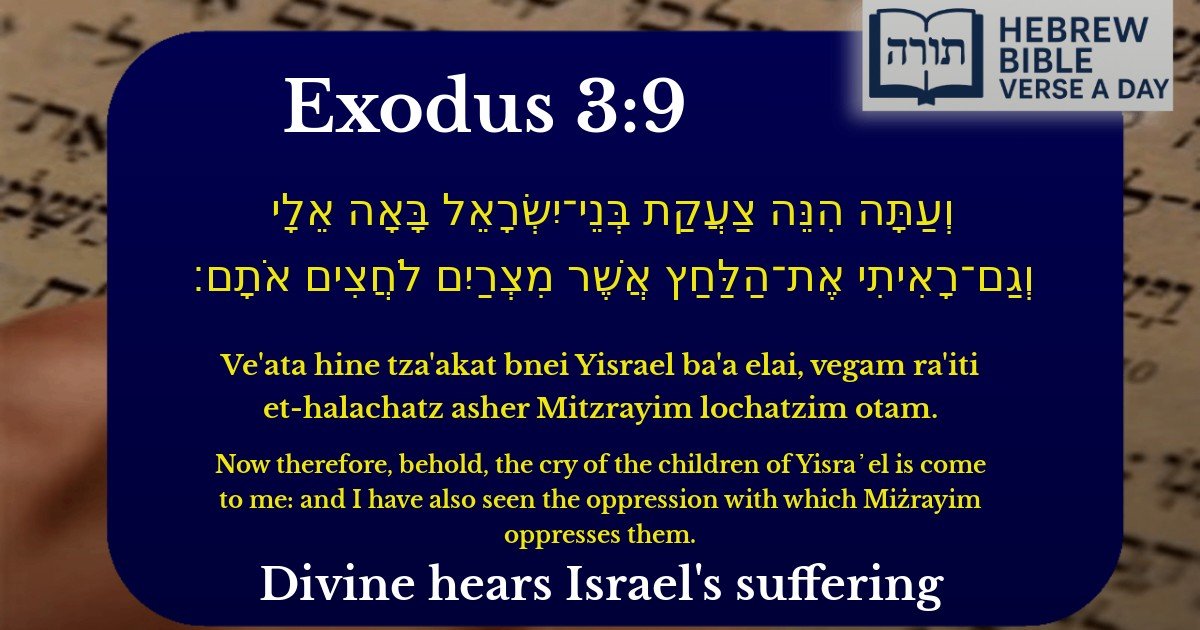
וְעַתָּה הִנֵּה צַעֲקַת בְּנֵי־יִשְׂרָאֵל בָּאָה אֵלָי וְגַם־רָאִיתִי אֶת־הַלַּחַץ אֲשֶׁר מִצְרַיִם לֹחֲצִים אֹתָם׃

English Translation

Now therefore, behold, the cry of the children of Yisra᾽el is come to me: and I have also seen the oppression with which Miżrayim oppresses them.

Transliteration

Ve'ata hine tza'akat bnei Yisrael ba'a elai, vegam ra'iti et-halachatz asher Mitzrayim lochatzim otam.

Hebrew Leining Text

וְעַתָּ֕ה הִנֵּ֛ה צַעֲקַ֥ת בְּנֵי־יִשְׂרָאֵ֖ל בָּ֣אָה אֵלָ֑י וְגַם־רָאִ֙יתִי֙ אֶת־הַלַּ֔חַץ אֲשֶׁ֥ר מִצְרַ֖יִם לֹחֲצִ֥ים אֹתָֽם׃

🎵 Listen to leining

Parasha Commentary

Context in Shemot (Exodus) 3:9

This verse appears in the narrative of Hashem's revelation to Moshe at the burning bush, where He declares His awareness of Bnei Yisrael's suffering in Mitzrayim (Egypt) and His intention to redeem them. The verse emphasizes two key elements: the tze'akah (cry) of Bnei Yisrael and the lachatz (oppression) inflicted by the Egyptians.

Rashi's Commentary on the Cry and Oppression

Rashi (Shemot 3:9) explains that the phrase "צַעֲקַת בְּנֵי־יִשְׂרָאֵל" ("the cry of the children of Israel") refers not only to their audible cries but also to their heartfelt prayers. He notes that the term tze'akah is used specifically for prayers uttered in distress, as seen in other biblical instances (e.g., Yonah 1:5). This teaches that Hashem responds to sincere supplication, especially in times of suffering.

Regarding "הַלַּחַץ אֲשֶׁר מִצְרַיִם לֹחֲצִים אֹתָם" ("the oppression with which Egypt oppresses them"), Rashi highlights that the Egyptians intensified their cruelty when they saw Bnei Yisrael multiplying despite harsh decrees (Shemot 1:12). The doubling of the verb lochatzim otam ("oppresses them") underscores the relentless nature of their persecution.

Midrashic Insights

  • Shemot Rabbah (1:28): The Midrash teaches that the "cry" reached Hashem because it was directed toward Him with faith, unlike the general groaning of suffering. This distinction shows that redemption comes when the Jewish people turn to Hashem with intentional prayer.
  • Mechilta (Bo 12): The oppression is described as systematic and calculated, designed to break Bnei Yisrael physically and spiritually. The Egyptians sought to eradicate their identity, but their cries preserved their connection to Avraham, Yitzchak, and Yaakov.

Rambam on Divine Providence

In Moreh Nevuchim (3:10), Rambam explains that Hashem's declaration of seeing the oppression reflects the principle of hashgachah pratit (divine providence). The verse demonstrates that Hashem is intimately aware of human suffering and intervenes in history to uphold justice, particularly for the Jewish people as bearers of the covenant.

Practical Lessons

  • The power of tze'akah—cries of pain and prayer—to reach the heavens and prompt divine response.
  • The importance of recognizing oppression as a call to action, both spiritually (through tefillah) and physically (as seen in Moshe's eventual leadership).
  • Hashem's promise to remember the suffering of His people, reinforcing the belief in eventual redemption.

📚 Talmud Citations

This verse is quoted in the Talmud.

📖 Sotah 11a
The verse is cited in the context of discussing the suffering of the Israelites in Egypt and God's response to their cries.
📖 Sanhedrin 101b
The verse is referenced in a discussion about divine justice and the timing of God's intervention in response to human suffering.

Frequently Asked Questions

Q: What does Exodus 3:9 mean?
A: Exodus 3:9 means that Hashem heard the cries of the Jewish people suffering in Egypt and saw their oppression. According to Rashi, this verse emphasizes that Hashem is fully aware of our suffering and responds to our prayers, as seen when He later redeems us from Egypt.
Q: Why is Exodus 3:9 important?
A: This verse is important because it shows that Hashem listens to the prayers of the Jewish people and intervenes in history. The Rambam teaches that this moment marks the beginning of the redemption from Egypt, demonstrating Hashem's faithfulness to His covenant with our ancestors.
Q: What can we learn from Exodus 3:9 today?
A: We learn that Hashem is aware of our struggles and hears our prayers, just as He did in Egypt. The Midrash teaches that the Jewish people's cries reached Hashem because they maintained their faith and identity despite oppression. This encourages us to turn to Hashem in difficult times.
Q: How does Exodus 3:9 relate to Jewish prayer?
A: This verse teaches that sincere prayer reaches Hashem. The Talmud (Berachot 32b) explains that the Jewish people's cries in Egypt were a form of prayer that moved Hashem to act. It reminds us that heartfelt tefillah (prayer) is powerful and always heard by Hashem.
Q: What does 'the oppression with which Egypt oppresses them' refer to?
A: According to Rashi and the Midrash, this refers to the harsh slavery, including backbreaking labor and Pharaoh's decree to drown Jewish babies. The Sages teach that the double language ('oppression...oppresses') emphasizes the severity of the suffering, which ultimately led to Hashem's intervention.