

Join Our Newsletter To Be Informed When New Videos Are Posted
Hebrew Text
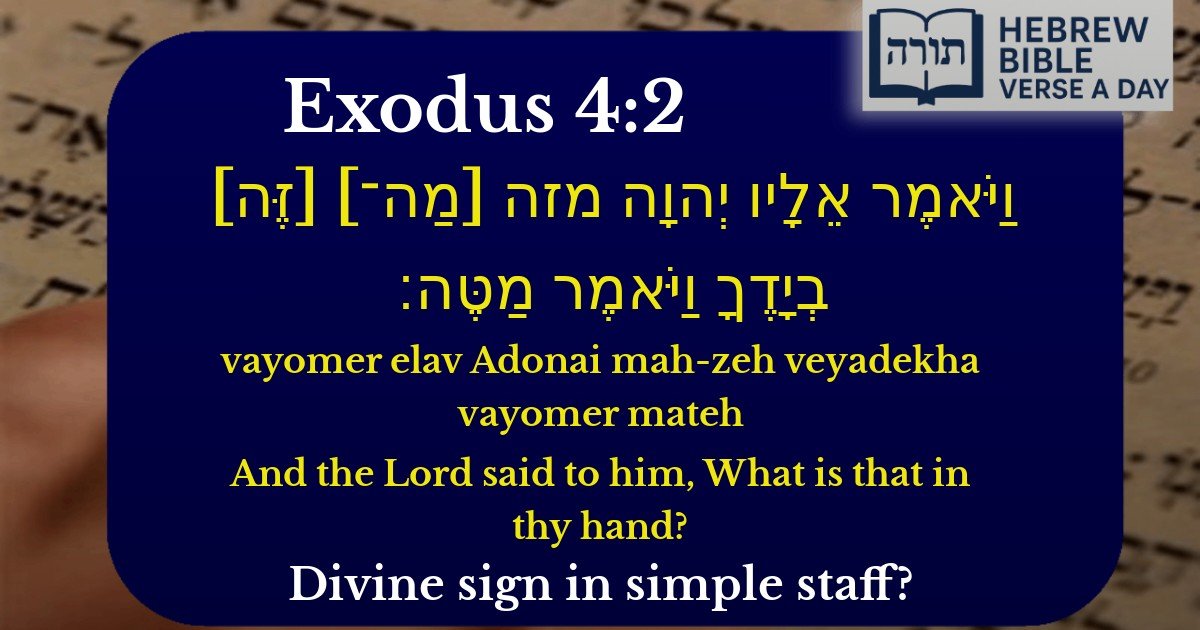
וַיֹּאמֶר אֵלָיו יְהוָה מזה [מַה־] [זֶּה] בְיָדֶךָ וַיֹּאמֶר מַטֶּה׃
English Translation
And the Lord said to him, What is that in thy hand?
Transliteration
Vayomer elav Adonai mah-zeh veyadekha vayomer mateh
Hebrew Leining Text
וַיֹּ֧אמֶר אֵלָ֛יו יְהֹוָ֖ה (מזה) [מַה־זֶּ֣ה] בְיָדֶ֑ךָ וַיֹּ֖אמֶר מַטֶּֽה׃
🎵 Listen to leining
Parasha Commentary
📚 Talmud Citations
This verse is not quoted in the Talmud.
The Significance of Moshe's Staff
The verse (Shemot 4:2) describes Hashem asking Moshe, "מַה־זֶּה בְיָדֶךָ" ("What is that in your hand?"), to which Moshe responds, "מַטֶּה" ("a staff"). This interaction holds deep symbolic meaning in Orthodox Jewish thought, as explored by classical commentators:
The Deeper Lesson in Hashem's Question
The Malbim notes that Hashem didn't ask "what is that staff?" but rather "what is that in your hand?" - implying:
The Staff as a Symbol in Jewish Thought
The Talmud (Shabbat 97a) connects this staff to later Jewish history, noting it was passed down through leaders until the Temple's destruction. The Kli Yakar adds that the staff represents: