

Join Our Newsletter To Be Informed When New Videos Are Posted
Hebrew Text
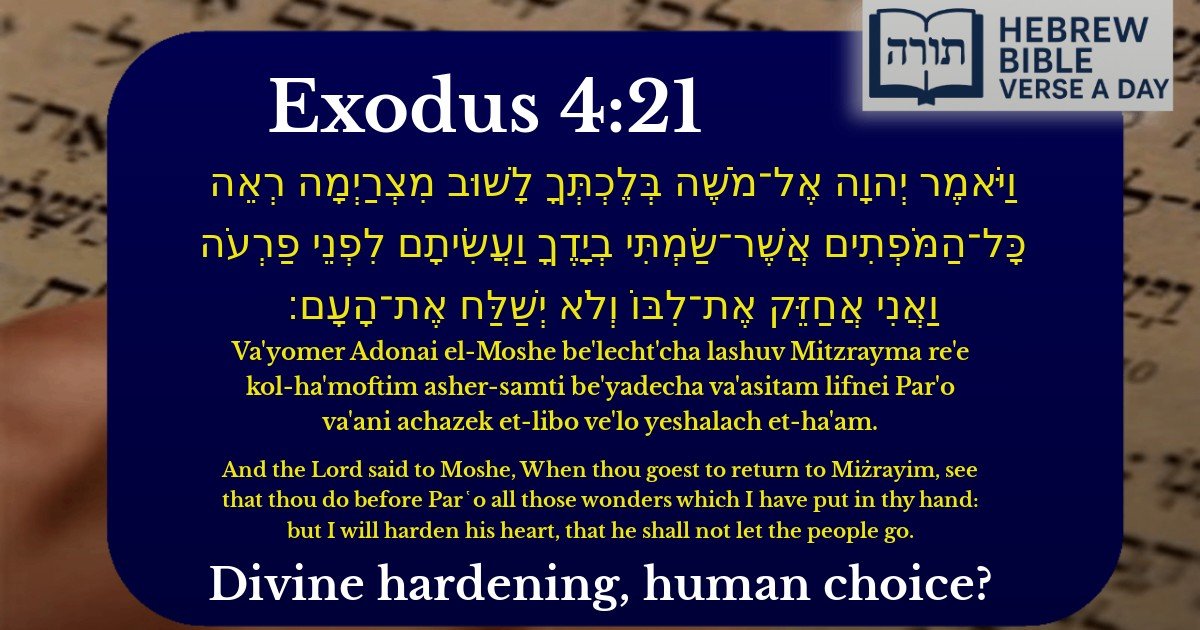
וַיֹּאמֶר יְהוָה אֶל־מֹשֶׁה בְּלֶכְתְּךָ לָשׁוּב מִצְרַיְמָה רְאֵה כָּל־הַמֹּפְתִים אֲשֶׁר־שַׂמְתִּי בְיָדֶךָ וַעֲשִׂיתָם לִפְנֵי פַרְעֹה וַאֲנִי אֲחַזֵּק אֶת־לִבּוֹ וְלֹא יְשַׁלַּח אֶת־הָעָם׃
English Translation
And the Lord said to Moshe, When thou goest to return to Miżrayim, see that thou do before Par῾o all those wonders which I have put in thy hand: but I will harden his heart, that he shall not let the people go.
Transliteration
Va'yomer Adonai el-Moshe be'lecht'cha lashuv Mitzrayma re'e kol-ha'moftim asher-samti be'yadecha va'asitam lifnei Par'o va'ani achazek et-libo ve'lo yeshalach et-ha'am.
Hebrew Leining Text
וַיֹּ֣אמֶר יְהֹוָה֮ אֶל־מֹשֶׁה֒ בְּלֶכְתְּךָ֙ לָשׁ֣וּב מִצְרַ֔יְמָה רְאֵ֗ה כׇּל־הַמֹּֽפְתִים֙ אֲשֶׁר־שַׂ֣מְתִּי בְיָדֶ֔ךָ וַעֲשִׂיתָ֖ם לִפְנֵ֣י פַרְעֹ֑ה וַאֲנִי֙ אֲחַזֵּ֣ק אֶת־לִבּ֔וֹ וְלֹ֥א יְשַׁלַּ֖ח אֶת־הָעָֽם׃
🎵 Listen to leining
Parasha Commentary
📚 Talmud Citations
This verse is quoted in the Talmud.
📖 Sanhedrin 106b
The verse is referenced in a discussion about Pharaoh's hardened heart and divine intervention in human decisions.
📖 Exodus Rabbah 5:6
The Midrash discusses this verse in the context of the signs and wonders performed by Moses before Pharaoh.
Divine Command to Moshe
The verse (Shemot 4:21) describes Hashem instructing Moshe to return to Mitzrayim and perform the mofetim (wonders) before Pharaoh. Rashi explains that these mofetim refer to the signs Moshe was given earlier (the staff turning into a snake, the leprous hand, and water turning to blood), which were meant to demonstrate Hashem's power. The instruction to perform them before Pharaoh indicates that these signs were not just for Moshe's assurance but were part of the divine plan to confront Pharaoh directly.
The Hardening of Pharaoh's Heart
The phrase "I will harden his heart" raises theological questions about free will. Rambam (Hilchot Teshuvah 6:3) explains that when a person repeatedly sins despite warnings, Hashem may remove their ability to repent as a form of punishment. Pharaoh's persistent refusal to release Bnei Yisrael after witnessing multiple miracles demonstrated his wickedness, leading to the hardening of his heart as a divine decree.
Purpose of the Plagues
The Midrash (Shemot Rabbah 5:6) teaches that the hardening of Pharaoh's heart served a greater purpose: to demonstrate Hashem's absolute power over creation. By escalating the plagues despite Pharaoh's obstinance, Hashem revealed His glory to both Mitzrayim and Bnei Yisrael. The Netziv (Ha'amek Davar) adds that this process also refined Bnei Yisrael's faith, preparing them for Yetziat Mitzrayim.
Key Lessons from the Verse