

Join Our Newsletter To Be Informed When New Videos Are Posted
Hebrew Text
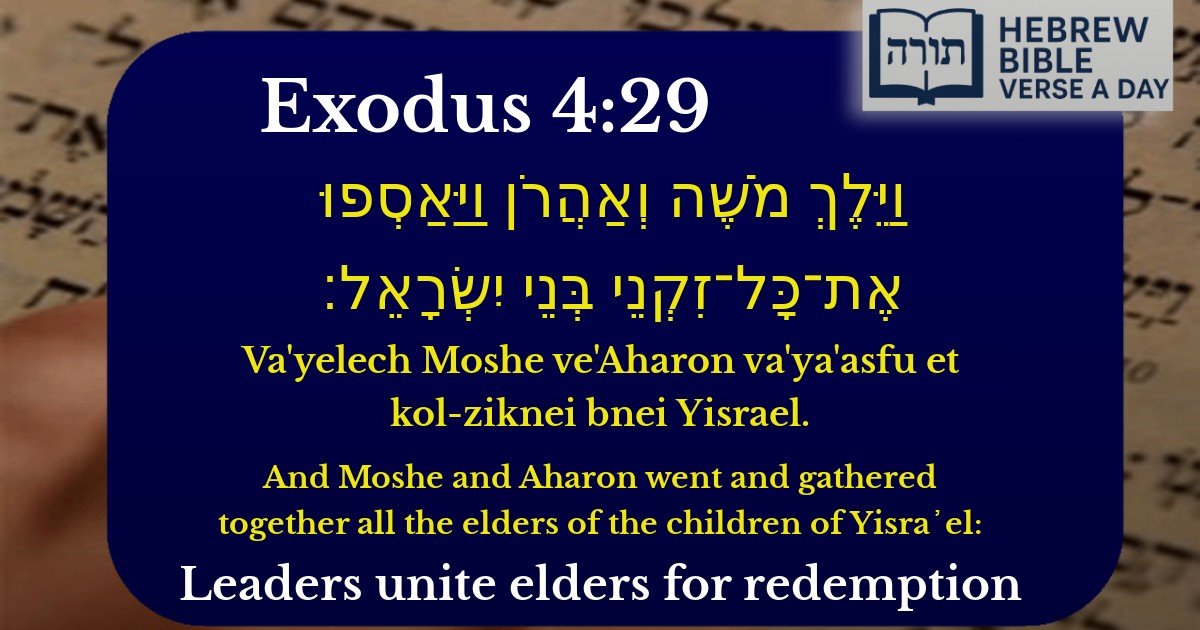
וַיֵּלֶךְ מֹשֶׁה וְאַהֲרֹן וַיַּאַסְפוּ אֶת־כָּל־זִקְנֵי בְּנֵי יִשְׂרָאֵל׃
English Translation
And Moshe and Aharon went and gathered together all the elders of the children of Yisra᾽el:
Transliteration
Va'yelech Moshe ve'Aharon va'ya'asfu et kol-ziknei bnei Yisrael.
Hebrew Leining Text
וַיֵּ֥לֶךְ מֹשֶׁ֖ה וְאַהֲרֹ֑ן וַיַּ֣אַסְפ֔וּ אֶת־כׇּל־זִקְנֵ֖י בְּנֵ֥י יִשְׂרָאֵֽל׃
🎵 Listen to leining
Parasha Commentary
📚 Talmud Citations
This verse is not quoted in the Talmud.
Context of the Verse
The verse (Shemot 4:29) describes Moshe and Aharon gathering the elders of Bnei Yisrael to convey Hashem's message about the impending redemption from Mitzrayim. This gathering marks a pivotal moment in the lead-up to Yetziat Mitzrayim.
Rashi's Commentary
Rashi explains that Moshe and Aharon gathered the elders first because the elders were the most respected and influential members of the community. By addressing them first, Moshe and Aharon ensured that the message would be properly disseminated and accepted by the entire nation. Rashi also notes that the elders had previously suffered under Pharaoh's oppression (Shemot 5:6), making them more receptive to the promise of redemption.
Rambam's Perspective
Rambam (Hilchos Sanhedrin 1:3) highlights the importance of leadership through elders (זקנים). He explains that the elders represent wisdom and experience, and their involvement in conveying Hashem's message underscores the principle that major decisions—especially those affecting Klal Yisrael—must be made with the counsel of Torah leaders.
Midrashic Insights
Halachic Implications
The Gemara (Sanhedrin 8a) derives from this verse that major communal matters require consultation with the elders, establishing a precedent for Jewish leadership structures. The Ramban (on Shemot 4:29) adds that this gathering also served as a model for future generations, teaching that Torah leaders must engage with the people respectfully and through proper channels.
Symbolism of the Elders
The Ohr HaChaim (R' Chaim ibn Attar) explains that the elders represent the preservation of mesorah (tradition). Their presence ensured that the message of geulah (redemption) would be transmitted faithfully to future generations, linking the past (the Avos) to the future (the receiving of the Torah at Har Sinai).