

Join Our Newsletter To Be Informed When New Videos Are Posted
Hebrew Text
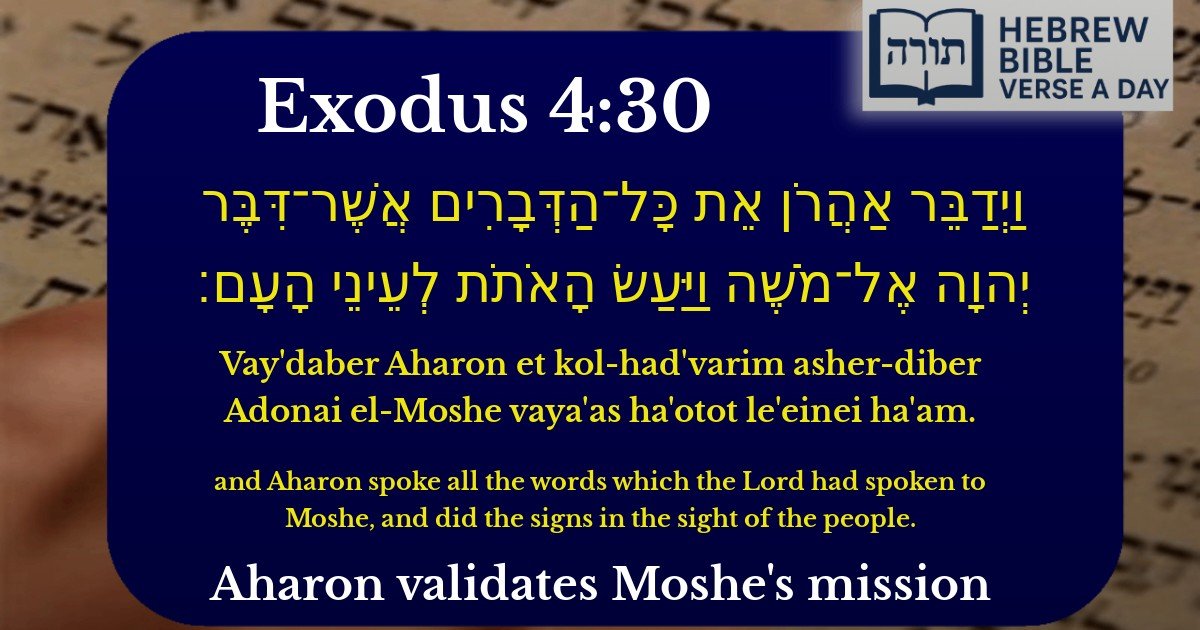
וַיְדַבֵּר אַהֲרֹן אֵת כָּל־הַדְּבָרִים אֲשֶׁר־דִּבֶּר יְהוָה אֶל־מֹשֶׁה וַיַּעַשׂ הָאֹתֹת לְעֵינֵי הָעָם׃
English Translation
and Aharon spoke all the words which the Lord had spoken to Moshe, and did the signs in the sight of the people.
Transliteration
Vay'daber Aharon et kol-had'varim asher-diber Adonai el-Moshe vaya'as ha'otot le'einei ha'am.
Hebrew Leining Text
וַיְדַבֵּ֣ר אַהֲרֹ֔ן אֵ֚ת כׇּל־הַדְּבָרִ֔ים אֲשֶׁר־דִּבֶּ֥ר יְהֹוָ֖ה אֶל־מֹשֶׁ֑ה וַיַּ֥עַשׂ הָאֹתֹ֖ת לְעֵינֵ֥י הָעָֽם׃
🎵 Listen to leining
Parasha Commentary
📚 Talmud Citations
This verse is not quoted in the Talmud.
Aharon's Role as Moshe's Spokesman
The verse (Shemot 4:30) describes Aharon fulfilling his divinely appointed role as Moshe's spokesman to Bnei Yisrael. Rashi explains that Aharon faithfully conveyed all the words that Hashem had told Moshe, without adding or omitting anything. This demonstrates Aharon's complete fidelity to his mission.
The Significance of the Signs
The signs (ha'otot) performed before the people refer to the three miraculous demonstrations Hashem gave Moshe to authenticate his mission:
The Ramban notes that these signs served both to validate Moshe's prophetic mission and to foreshadow the coming plagues in Egypt.
Aharon's Performance of the Signs
While Moshe originally performed these signs (Shemot 4:1-9), our verse states that Aharon did the signs before the people. The Midrash (Shemot Rabbah 3:17) explains that Aharon replicated Moshe's miracles to demonstrate their authenticity and that both brothers were acting in unison as Hashem's agents.
The Public Nature of the Demonstration
The phrase in the sight of the people emphasizes that these signs were performed openly before the elders and the entire nation. As the Sforno explains, this public display was necessary to establish Moshe's credibility before the entire nation prior to their approaching Pharaoh.