
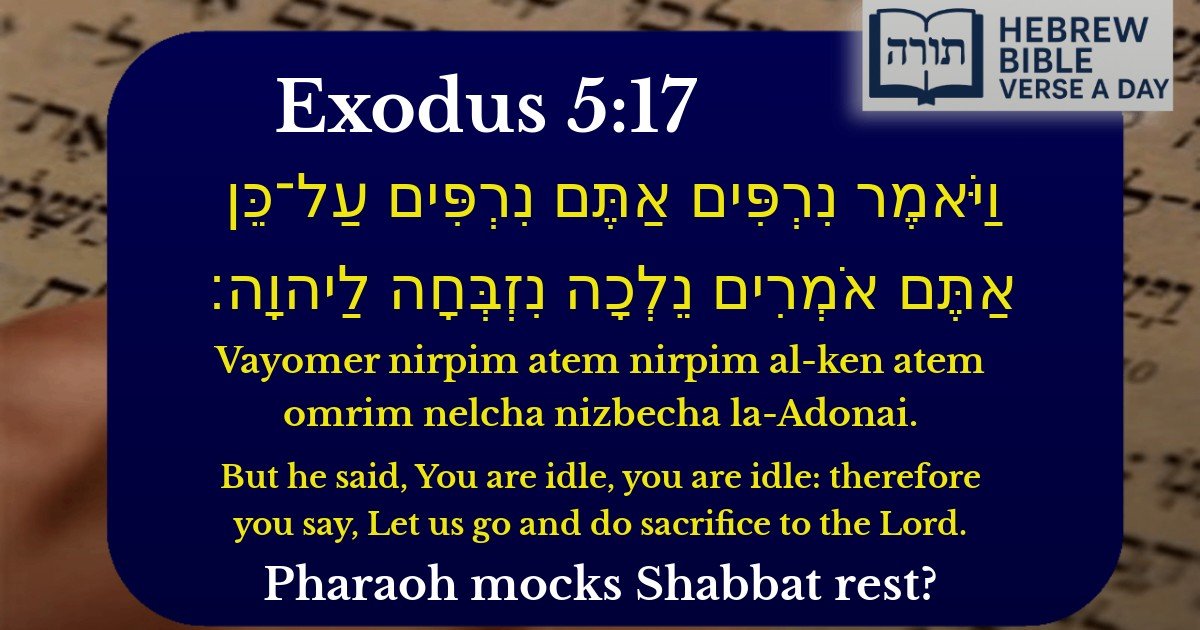

Exodus 5:17 - Pharaoh mocks Shabbat rest?

Exodus 5:17 - שמות 5:17

Hebrew Text

וַיֹּאמֶר נִרְפִּים אַתֶּם נִרְפִּים עַל־כֵּן אַתֶּם אֹמְרִים נֵלְכָה נִזְבְּחָה לַיהוָה׃

English Translation

But he said, You are idle, you are idle: therefore you say, Let us go and do sacrifice to the Lord.

Transliteration

Vayomer nirpim atem nirpim al-ken atem omrim nelcha nizbecha la-Adonai.

Hebrew Leining Text

וַיֹּ֛אמֶר נִרְפִּ֥ים אַתֶּ֖ם נִרְפִּ֑ים עַל־כֵּן֙ אַתֶּ֣ם אֹֽמְרִ֔ים נֵלְכָ֖ה נִזְבְּחָ֥ה לַֽיהֹוָֽה׃

🎵 Listen to leining

Parasha Commentary

Context of the Verse

The verse (Exodus 5:17) appears in the narrative where Pharaoh responds to Moshe and Aharon's request to allow Bnei Yisrael to journey into the wilderness to offer sacrifices to Hashem. Pharaoh accuses the Israelites of being idle ("nirpim"), suggesting their request stems from laziness rather than genuine religious devotion.

Meaning of "Nirpim" (נִרְפִּים)

Rashi explains that "nirpim" derives from the root רפ"ה, meaning "weak" or "slack." Pharaoh claims the Israelites are lazy and seek to avoid labor by requesting a religious excursion. Ramban adds that Pharaoh mocks their request, implying they have too much free time to think about sacrifices.

Pharaoh's Accusation

The Midrash (Shemot Rabbah 5:18) elaborates that Pharaoh's words reflect his disdain for the Israelites' spiritual aspirations. By calling them "nirpim," he dismisses their desire to serve Hashem as mere idleness, revealing his refusal to acknowledge their faith.

Spiritual Implications

  • Test of Faith: The Ohr HaChaim notes that Pharaoh's accusation serves as a test—whether Bnei Yisrael truly seek closeness to Hashem or merely an escape from labor.
  • Opposition to Divine Service: The Kli Yakar emphasizes that Pharaoh, representing evil (עבודה זרה), opposes any act of worship to Hashem, framing it as laziness to justify oppression.

Lessons for Jewish Life

The Seforno teaches that Pharaoh's words remind us how external forces may belittle Torah observance, labeling it as impractical or a waste of time. True dedication to mitzvot requires resilience against such mockery.

📚 Talmud Citations

This verse is not quoted in the Talmud.

Frequently Asked Questions

Q: What does Pharaoh mean when he says 'You are idle' in Exodus 5:17?
A: Pharaoh accuses the Israelites of being lazy ('נִרְפִּים') and using the request to worship Hashem as an excuse to avoid work. Rashi explains that Pharaoh saw their request as a sign of having too much free time, which is why he increased their workload (Exodus 5:9).
Q: Why did Pharaoh respond so harshly to the Israelites' request to worship Hashem?
A: Pharaoh, representing oppression and denial of divine authority, saw the Israelites' desire to serve Hashem as a threat to his control. The Midrash (Shemot Rabbah 5:18) teaches that tyrants often fear spiritual awakening because it empowers people to seek freedom.
Q: What lesson can we learn from Pharaoh's accusation in Exodus 5:17?
A: This verse teaches that evil leaders may dismiss sincere faith as laziness or rebellion. The Rambam (Hilchot Avodat Kochavim 1:3) explains that true service of Hashem requires courage, especially when facing those who mock devotion.
Q: How does this verse relate to challenges in serving Hashem today?
A: Just as Pharaoh tried to stop the Israelites from worship, distractions and pressures today can discourage Torah observance. The Talmud (Berachot 32b) teaches that perseverance in mitzvot—even under difficulty—is central to Jewish identity.
Q: Why does the Torah record Pharaoh's insulting words?
A: The Torah includes this to show the depth of Israel's oppression before redemption. The Sforno notes that Pharaoh's cruelty highlights Hashem's justice in freeing them, as later seen in the Ten Plagues (Exodus 7-12).