

Join Our Newsletter To Be Informed When New Videos Are Posted
Hebrew Text
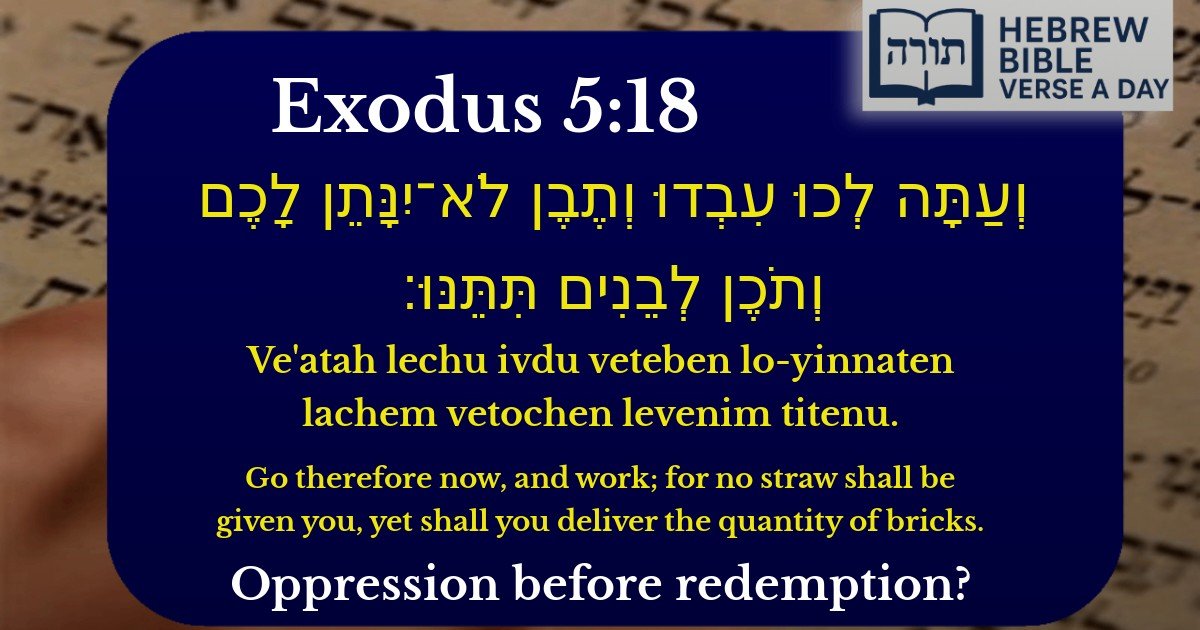
וְעַתָּה לְכוּ עִבְדוּ וְתֶבֶן לֹא־יִנָּתֵן לָכֶם וְתֹכֶן לְבֵנִים תִּתֵּנּוּ׃
English Translation
Go therefore now, and work; for no straw shall be given you, yet shall you deliver the quantity of bricks.
Transliteration
Ve'atah lechu ivdu veteben lo-yinnaten lachem vetochen levenim titenu.
Hebrew Leining Text
וְעַתָּה֙ לְכ֣וּ עִבְד֔וּ וְתֶ֖בֶן לֹא־יִנָּתֵ֣ן לָכֶ֑ם וְתֹ֥כֶן לְבֵנִ֖ים תִּתֵּֽנוּ׃
🎵 Listen to leining
Parasha Commentary
📚 Talmud Citations
This verse is quoted in the Talmud.
📖 Sotah 11b
The verse is referenced in the context of discussing the harsh labor imposed on the Israelites in Egypt, illustrating the cruelty of Pharaoh's decrees.
📖 Nedarim 25a
The verse is cited in a discussion about vows and obligations, using the biblical narrative as an example of imposed tasks without provision of necessary materials.
Context in Shemot (Exodus)
The verse (Shemot 5:18) appears during Pharaoh's harsh decree against Bnei Yisrael, intensifying their slavery by demanding the same brick production without providing straw—a crucial binding material. This reflects Pharaoh's cruelty and the beginning of the oppression leading to Yetziat Mitzrayim (the Exodus).
Rashi's Explanation
Rashi (Rabbi Shlomo Yitzchaki) comments that Pharaoh's command was intentionally impossible to fulfill. He notes that the Egyptians would previously provide straw for brick-making, but now Bnei Yisrael had to gather straw themselves while maintaining the same quota—a deliberate tactic to break their spirits (Rashi on Shemot 5:18).
Midrashic Insights
Rambam's Perspective on Slavery
Rambam (Maimonides) discusses the ethical lessons of Egyptian slavery in Hilchot Avadim (Laws of Servants). He highlights how this oppression underscores the Torah's later commandments to treat laborers justly, contrasting Pharaoh's cruelty with the Torah's emphasis on human dignity (Hilchot Avadim 9:8).
Chassidic Interpretation
The Sefat Emet (Rabbi Yehudah Aryeh Leib of Gur) teaches that the demand for bricks without straw parallels spiritual challenges: sometimes, Hashem removes "straw"—external support—to compel us to dig deeper into our own spiritual resources and strengthen our emunah (faith).