
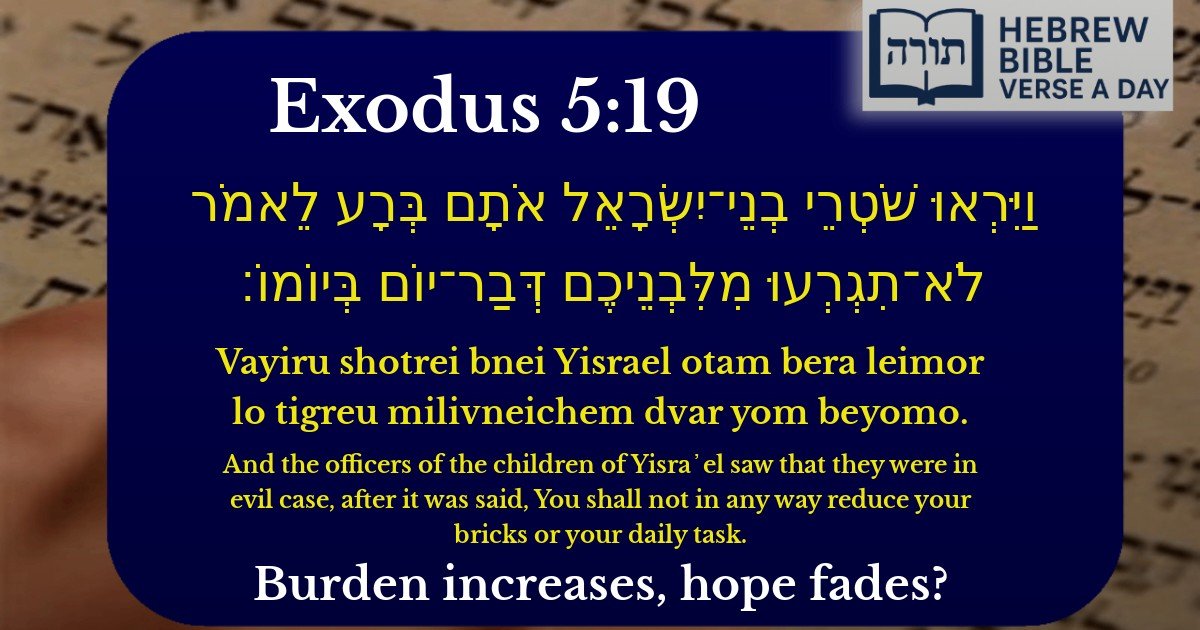

Exodus 5:19 - Burden increases, hope fades?

Exodus 5:19 - שמות 5:19

Hebrew Text

וַיִּרְאוּ שֹׁטְרֵי בְנֵי־יִשְׂרָאֵל אֹתָם בְּרָע לֵאמֹר לֹא־תִגְרְעוּ מִלִּבְנֵיכֶם דְּבַר־יוֹם בְּיוֹמוֹ׃

English Translation

And the officers of the children of Yisra᾽el saw that they were in evil case, after it was said, You shall not in any way reduce your bricks or your daily task.

Transliteration

Vayiru shotrei bnei Yisrael otam bera leimor lo tigreu milivneichem dvar yom beyomo.

Hebrew Leining Text

וַיִּרְא֞וּ שֹֽׁטְרֵ֧י בְנֵֽי־יִשְׂרָאֵ֛ל אֹתָ֖ם בְּרָ֣ע לֵאמֹ֑ר לֹא־תִגְרְע֥וּ מִלִּבְנֵיכֶ֖ם דְּבַר־י֥וֹם בְּיוֹמֽוֹ׃

🎵 Listen to leining

Parasha Commentary

Context in Shemot (Exodus)

The verse (Shemot 5:19) describes the reaction of the Israelite officers after Pharaoh intensified their oppression by demanding the same quota of bricks despite no longer providing straw. This followed Moshe and Aharon's request to Pharaoh to allow Bnei Yisrael to worship Hashem in the wilderness.

Rashi's Explanation

Rashi explains that the officers saw themselves in a dire situation ("בְּרָע") because they were beaten when the Israelites could not meet the unchanged brick quota. The phrase "לֹא־תִגְרְעוּ מִלִּבְנֵיכֶם" ("you shall not reduce your bricks") refers to Pharaoh's cruel decree that the daily brick production must remain unchanged, even though the slaves now had to gather their own straw.

Malbim's Insight

The Malbim emphasizes the officers' distress as leaders caught between Pharaoh's impossible demands and the suffering of their people. The term "בְּרָע" reflects their realization that this oppression was a direct result of Moshe's intervention, which seemingly worsened their plight.

Midrashic Interpretation

  • The Midrash (Shemot Rabbah 5:20) notes that the officers were righteous individuals who shared in the people's suffering rather than exempting themselves.
  • Some commentaries suggest the officers feared divine punishment if they failed to meet quotas, as Pharaoh framed the brick production as sacred work (see Ramban).

Halachic Dimension

The Rambam (Hilchos Avadim 1:7) derives from this episode that oppressing workers with impossible demands violates the prohibition of "לֹא תִרְדֶּה בוֹ בְּפָרֶךְ" (do not rule over him ruthlessly). The officers' distress highlights the injustice of Pharaoh's decree.

📚 Talmud Citations

This verse is not quoted in the Talmud.

Frequently Asked Questions

Q: What does Exodus 5:19 mean when it says the officers saw they were 'in evil case'?
A: The verse describes how the Israelite officers realized Pharaoh's decree made their situation worse. Rashi explains that 'in evil case' (בְּרָע) means they saw the impossible burden placed upon them - being told to produce the same number of bricks without being given straw, which made their slavery even harsher.
Q: Why were the Israelite officers upset about the brick quota in Exodus 5:19?
A: The officers were distressed because Pharaoh cruelly demanded the same daily brick production while withholding the necessary straw (Exodus 5:7-8). The Midrash (Shemot Rabbah 5:20) teaches this shows how Egyptian oppression intensified, as they were now forced to gather straw themselves while maintaining the same impossible workload.
Q: What lesson can we learn from Exodus 5:19 about dealing with hardship?
A: This verse teaches that when facing unjust hardships, we should recognize the reality of our situation (as the officers did) while maintaining faith. The Rambam (Hilchot De'ot 1:4) derives from such passages that we must confront difficulties with clear understanding before seeking solutions.
Q: How does Exodus 5:19 relate to Jewish concepts of labor and fairness?
A: The verse highlights Torah principles about fair labor conditions. The Talmud (Bava Metzia 83a) derives from such verses that employers must be reasonable in their demands. Though the Israelites were slaves here, Jewish law later established ethical work standards based on these experiences.
Q: Why is Exodus 5:19 important in the Passover story?
A: This verse marks a turning point where the Israelites fully felt Egyptian cruelty, setting the stage for redemption. The Seder's 'Avadim Hayinu' declaration recalls this oppression. Mechilta (Bo 1) notes that such extreme suffering made the subsequent Exodus and miracles necessary for complete liberation.