

Join Our Newsletter To Be Informed When New Videos Are Posted
Hebrew Text
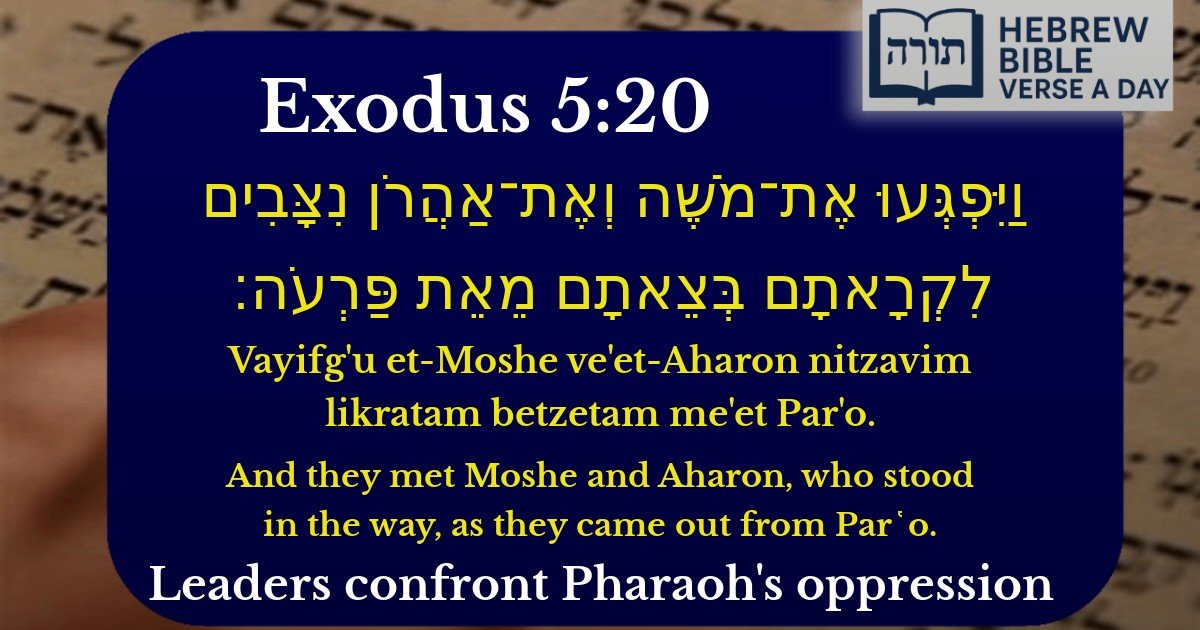
וַיִּפְגְּעוּ אֶת־מֹשֶׁה וְאֶת־אַהֲרֹן נִצָּבִים לִקְרָאתָם בְּצֵאתָם מֵאֵת פַּרְעֹה׃
English Translation
And they met Moshe and Aharon, who stood in the way, as they came out from Par῾o.
Transliteration
Vayifg'u et-Moshe ve'et-Aharon nitzavim likratam betzetam me'et Par'o.
Hebrew Leining Text
וַֽיִּפְגְּעוּ֙ אֶת־מֹשֶׁ֣ה וְאֶֽת־אַהֲרֹ֔ן נִצָּבִ֖ים לִקְרָאתָ֑ם בְּצֵאתָ֖ם מֵאֵ֥ת פַּרְעֹֽה׃
🎵 Listen to leining
Parasha Commentary
📚 Talmud Citations
This verse is not quoted in the Talmud.
Context of the Verse
The verse (Shemot 5:20) describes how the Israelite officers encountered Moshe and Aharon after leaving Pharaoh's presence. This occurred after Pharaoh intensified the oppression of Bnei Yisrael by withholding straw for bricks while demanding the same quota.
Rashi's Explanation
Rashi explains that the officers "met" (ויפגעו) Moshe and Aharon in a confrontational manner, blaming them for worsening their suffering. The term "ניצבים" (standing) implies they were waiting deliberately to confront them, as the officers felt Moshe's appeal to Pharaoh had backfired.
Ibn Ezra's Insight
Ibn Ezra notes that the officers were distressed and frustrated, as they had hoped Moshe's intervention would alleviate their burden. Instead, Pharaoh's decree made their labor even harsher, leading them to confront Moshe and Aharon directly.
Midrashic Interpretation
The Midrash (Shemot Rabbah 5:20) elaborates that the officers were prominent leaders among Bnei Yisrael, and their confrontation was not merely out of anger but from deep anguish. They questioned why Moshe and Aharon had seemingly provoked Pharaoh, leading to greater suffering.
Rambam's Perspective
Rambam (Moreh Nevuchim) suggests that this episode demonstrates the human struggle with divine providence. The officers could not yet perceive Hashem's greater plan for redemption, leading them to react with immediate frustration rather than trust in the unfolding geulah.
Key Lessons