
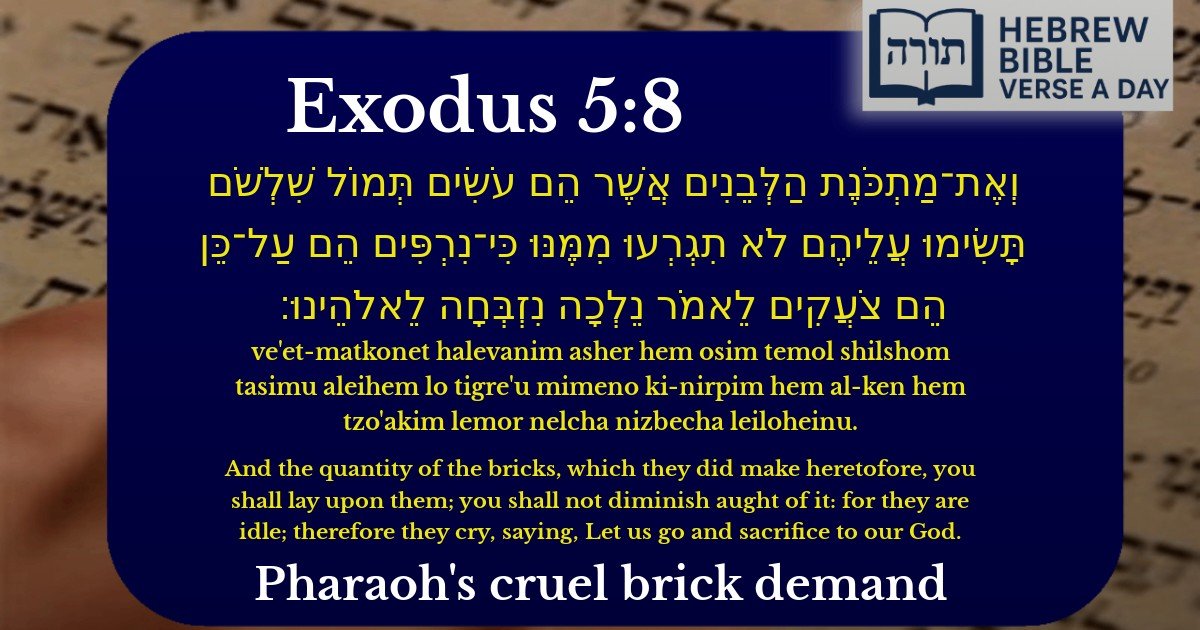

Exodus 5:8 - Pharaoh's cruel brick demand

Exodus 5:8 - שמות 5:8

Hebrew Text

וְאֶת־מַתְכֹּנֶת הַלְּבֵנִים אֲשֶׁר הֵם עֹשִׂים תְּמוֹל שִׁלְשֹׁם תָּשִׂימוּ עֲלֵיהֶם לֹא תִגְרְעוּ מִמֶּנּוּ כִּי־נִרְפִּים הֵם עַל־כֵּן הֵם צֹעֲקִים לֵאמֹר נֵלְכָה נִזְבְּחָה לֵאלֹהֵינוּ׃

English Translation

And the quantity of the bricks, which they did make heretofore, you shall lay upon them; you shall not diminish aught of it: for they are idle; therefore they cry, saying, Let us go and sacrifice to our God.

Transliteration

Ve'et-matkonet halevanim asher hem osim temol shilshom tasimu aleihem lo tigre'u mimeno ki-nirpim hem al-ken hem tzo'akim lemor nelcha nizbecha leiloheinu.

Hebrew Leining Text

וְאֶת־מַתְכֹּ֨נֶת הַלְּבֵנִ֜ים אֲשֶׁ֣ר הֵם֩ עֹשִׂ֨ים תְּמ֤וֹל שִׁלְשֹׁם֙ תָּשִׂ֣ימוּ עֲלֵיהֶ֔ם לֹ֥א תִגְרְע֖וּ מִמֶּ֑נּוּ כִּֽי־נִרְפִּ֣ים הֵ֔ם עַל־כֵּ֗ן הֵ֤ם צֹֽעֲקִים֙ לֵאמֹ֔ר נֵלְכָ֖ה נִזְבְּחָ֥ה לֵאלֹהֵֽינוּ׃

🎵 Listen to leining

Parasha Commentary

Context in Shemot (Exodus) 5:8

This verse appears in Parashat Shemot, where Pharaoh responds to Moshe and Aharon's request to allow Bnei Yisrael to worship Hashem in the wilderness. Pharaoh accuses the Israelites of idleness and increases their workload as punishment.

Pharaoh's Accusation of Idleness

Rashi explains that Pharaoh claimed Bnei Yisrael were "nirpim" (idle) because they had free time to gather and discuss their desire to serve Hashem. The Midrash Tanchuma (Shemot 9) adds that Pharaoh viewed their request to worship as an excuse to avoid labor, prompting him to intensify their oppression.

The Cruelty of Increased Brick Quotas

Ramban notes that Pharaoh's decree to maintain the same brick production "without diminishing" despite removing the straw supply was intentionally impossible. The Sforno emphasizes that this was a psychological tactic—making the workload unattainable to crush their spirits and prevent further requests for religious freedom.

The Cry to Serve Hashem

The phrase "they cry, saying, Let us go and sacrifice to our God" is interpreted by the Malbim as evidence of Bnei Yisrael's enduring faith. Even under oppression, their desire to connect with Hashem persisted. The Kli Yakar highlights the irony: Pharaoh’s accusation of idleness stemmed from their spiritual yearning, which he misinterpreted as laziness.

Lessons from the Verse

  • Persecution and Faith: Oppressors often mistake spiritual devotion for rebellion, as seen in Pharaoh's response (based on Midrash Rabbah).
  • Divine Plan: The increased hardship was part of Hashem’s design to accelerate the redemption (Shemot Rabbah 5:18).
  • Straw as a Symbol: The absence of straw (previously provided) represents the breakdown of Pharaoh’s earlier "benevolence," exposing his true cruelty (Ibn Ezra).

📚 Talmud Citations

This verse is not quoted in the Talmud.

Frequently Asked Questions

Q: What does Pharaoh mean when he says the Israelites are 'idle' in Exodus 5:8?
A: Pharaoh accuses the Israelites of being 'idle' (נִרְפִּים) because they requested time to worship Hashem. Rashi explains that Pharaoh saw their request as laziness—claiming they had too much free time if they could ask to leave work. In truth, their desire to serve Hashem was genuine, but Pharaoh twisted it to justify increasing their oppression.
Q: Why did Pharaoh increase the Israelites' brick quota after they asked to worship?
A: Pharaoh increased the workload to crush their spirits and prevent them from serving Hashem. The Midrash (Shemot Rabbah 5:18) teaches that tyrants often respond to spiritual resistance with harsher oppression. By demanding the same output without providing straw (Exodus 5:7-8), Pharaoh aimed to break their hope and connection to Hashem.
Q: What lesson can we learn from Pharaoh's response to the Israelites' request?
A: This teaches that evil forces often intensify struggles when people seek to grow closer to Hashem. The Rambam (Hilchot De'ot 2:3) explains that overcoming such challenges strengthens our commitment. Like the Israelites, we must persist in serving Hashem even when obstacles arise.
Q: How does Exodus 5:8 show Pharaoh's cruelty?
A: Pharaoh's cruelty is evident in his unjust punishment—accusing the Israelites of laziness for wanting to worship Hashem while ignoring their backbreaking labor. The Talmud (Sotah 11b) describes how Pharaoh would drown Israelite babies if daily brick quotas weren’t met. This verse reveals his pattern of using false accusations to justify oppression.
Q: Why does the Torah mention the Israelites' cry to 'sacrifice to our God' in this verse?
A: The verse highlights their sincere desire to serve Hashem despite slavery. The Ohr HaChaim notes that Pharaoh feared their spiritual awakening, as true devotion to Hashem empowers people to resist tyranny. Their cry foreshadows the eventual Exodus—showing that faith persists even under oppression.