
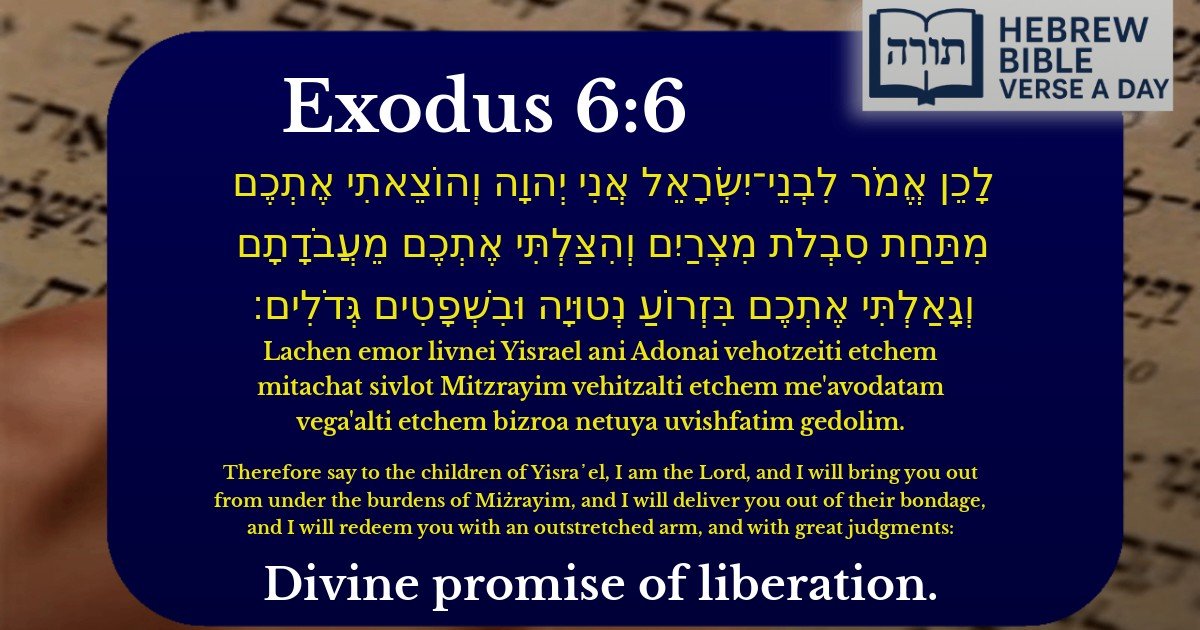

Exodus 6:6 - Divine promise of liberation.

Exodus 6:6 - שמות 6:6

Hebrew Text

לָכֵן אֱמֹר לִבְנֵי־יִשְׂרָאֵל אֲנִי יְהוָה וְהוֹצֵאתִי אֶתְכֶם מִתַּחַת סִבְלֹת מִצְרַיִם וְהִצַּלְתִּי אֶתְכֶם מֵעֲבֹדָתָם וְגָאַלְתִּי אֶתְכֶם בִּזְרוֹעַ נְטוּיָה וּבִשְׁפָטִים גְּדֹלִים׃

English Translation

Therefore say to the children of Yisra᾽el, I am the Lord, and I will bring you out from under the burdens of Miżrayim, and I will deliver you out of their bondage, and I will redeem you with an outstretched arm, and with great judgments:

Transliteration

Lachen emor livnei Yisrael ani Adonai vehotzeiti etchem mitachat sivlot Mitzrayim vehitzalti etchem me'avodatam vega'alti etchem bizroa netuya uvishfatim gedolim.

Hebrew Leining Text

לָכֵ֞ן אֱמֹ֥ר לִבְנֵֽי־יִשְׂרָאֵל֮ אֲנִ֣י יְהֹוָה֒ וְהוֹצֵאתִ֣י אֶתְכֶ֗ם מִתַּ֙חַת֙ סִבְלֹ֣ת מִצְרַ֔יִם וְהִצַּלְתִּ֥י אֶתְכֶ֖ם מֵעֲבֹדָתָ֑ם וְגָאַלְתִּ֤י אֶתְכֶם֙ בִּזְר֣וֹעַ נְטוּיָ֔ה וּבִשְׁפָטִ֖ים גְּדֹלִֽים׃

🎵 Listen to leining

Parasha Commentary

Introduction to the Verse

This verse from Shemot (Exodus) 6:6 is part of Hashem's promise to Bnei Yisrael during their enslavement in Mitzrayim. It outlines four key expressions of redemption (arba leshonot shel geulah), which are foundational to the Passover Haggadah and Jewish understanding of divine deliverance.

Phrase-by-Phrase Analysis

  • "I am the Lord" (אֲנִי יְהוָה): Rashi explains that this establishes Hashem's authority and faithfulness to His covenant with the Avot (Avraham, Yitzchak, and Yaakov). The name Yud-Heh-Vav-Heh signifies divine mercy and fulfillment of promises.
  • "I will bring you out from under the burdens of Mitzrayim" (וְהוֹצֵאתִי אֶתְכֶם מִתַּחַת סִבְלֹת מִצְרַיִם): The Sforno notes that this refers not only to physical liberation but also to the psychological relief from oppressive labor, as the Egyptians imposed increasingly harsh decrees.
  • "I will deliver you out of their bondage" (וְהִצַּלְתִּי אֶתְכֶם מֵעֲבֹדָתָם): The Ramban emphasizes that this denotes complete removal from servitude, ensuring Bnei Yisrael would never return to Egyptian subjugation.
  • "I will redeem you with an outstretched arm" (וְגָאַלְתִּי אֶתְכֶם בִּזְרוֹעַ נְטוּיָה): The Midrash (Shemot Rabbah 6:6) interprets "outstretched arm" as a display of Hashem's unmatched power, as seen in the Ten Plagues and the splitting of the Yam Suf.
  • "And with great judgments" (וּבִשְׁפָטִים גְּדֹלִים): Ibn Ezra explains that these "judgments" refer to the miraculous and precise nature of the plagues, which targeted Egyptian idolatry and demonstrated divine justice.

Theological Significance

The four verbs—hotzeiti (I will bring out), hitzalti (I will deliver), ga'alti (I will redeem), and lakachti (I will take, mentioned in the next verse)—form the basis of the Four Cups of Wine at the Pesach Seder. The Maharal teaches that these stages represent progressively deeper levels of divine intervention, moving from physical freedom to spiritual elevation as Am Yisrael.

Connection to Jewish Redemption

The Netziv highlights that this verse is not merely historical but serves as a paradigm for all future redemptions. Just as Hashem redeemed Bnei Yisrael from Mitzrayim with signs and wonders, so too will He redeem Israel in the final geulah. This idea is echoed in daily prayers, reinforcing the belief in geulah sheleimah (complete redemption).

📚 Talmud Citations

This verse is quoted in the Talmud.

📖 Sotah 5a
The verse is referenced in the context of discussing God's redemption of Israel from Egypt, emphasizing the divine promise and power.
📖 Sanhedrin 111a
The verse is cited in a discussion about the merits of the Israelites and the miracles performed during the Exodus.

Frequently Asked Questions

Q: What does Exodus 6:6 mean?
A: Exodus 6:6 is part of Hashem's promise to the Jewish people before the Exodus from Egypt. It contains four expressions of redemption: 'I will bring you out,' 'I will deliver you,' 'I will redeem you,' and 'I will take you as My people.' These phrases represent different stages of liberation from slavery to freedom, emphasizing Hashem's direct intervention with miracles ('outstretched arm') and justice ('great judgments'). Rashi explains that this verse reassures the Jewish people of their eventual redemption despite their difficult circumstances.
Q: Why is the 'outstretched arm' mentioned in Exodus 6:6?
A: The 'outstretched arm' (זְרוֹעַ נְטוּיָה) symbolizes Hashem's mighty and visible power in performing miracles during the Exodus, such as the Ten Plagues and the splitting of the Red Sea. The Rambam (Hilchot Chametz U’Matzah 7:5) teaches that this phrase reminds us of the supernatural nature of the redemption, reinforcing belief in Divine providence.
Q: What are the 'great judgments' in Exodus 6:6 referring to?
A: The 'great judgments' (שְׁפָטִים גְּדֹלִים) refer to the Ten Plagues, which were acts of Divine justice against Egypt for enslaving the Jewish people. The Midrash (Shemot Rabbah 6:6) explains that each plague corresponded to Egypt's crimes, demonstrating Hashem's precision in retribution and His commitment to justice.
Q: How does Exodus 6:6 relate to the Passover Seder?
A: The four expressions of redemption in Exodus 6:6 are the basis for the 'Four Cups of Wine' at the Passover Seder (Pesachim 99b). Each cup corresponds to one of these promises, symbolizing our gratitude for the stages of liberation. The Vilna Gaon connects this to the idea that future redemptions will mirror the Exodus, reinforcing hope for the final Geulah (redemption).
Q: What lesson can we learn from Exodus 6:6 today?
A: This verse teaches that Hashem hears the cries of the oppressed and intervenes in history to uphold justice. The Sforno notes that the phrasing ('I am the Lord') reminds us that redemption comes from Hashem alone, not human effort. Today, this encourages faith during hardships, trusting that just as He redeemed us from Egypt, He will ultimately bring the final redemption.