

Join Our Newsletter To Be Informed When New Videos Are Posted
Hebrew Text
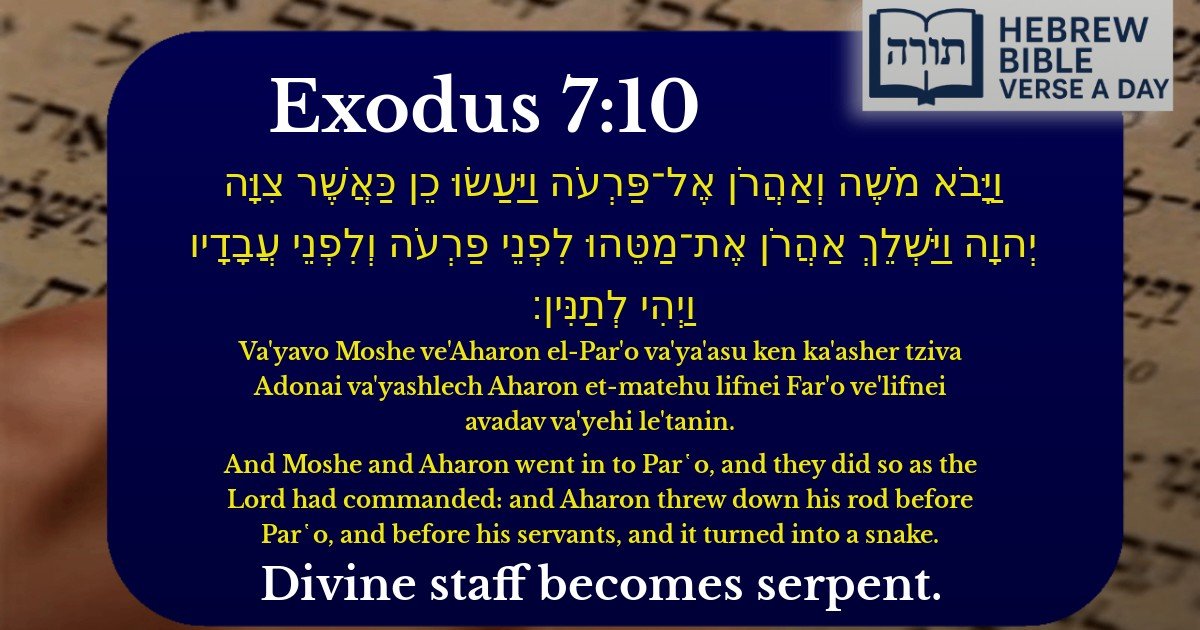
וַיָּבֹא מֹשֶׁה וְאַהֲרֹן אֶל־פַּרְעֹה וַיַּעַשׂוּ כֵן כַּאֲשֶׁר צִוָּה יְהוָה וַיַּשְׁלֵךְ אַהֲרֹן אֶת־מַטֵּהוּ לִפְנֵי פַרְעֹה וְלִפְנֵי עֲבָדָיו וַיְהִי לְתַנִּין׃
English Translation
And Moshe and Aharon went in to Par῾o, and they did so as the Lord had commanded: and Aharon threw down his rod before Par῾o, and before his servants, and it turned into a snake.
Transliteration
Va'yavo Moshe ve'Aharon el-Par'o va'ya'asu ken ka'asher tziva Adonai va'yashlech Aharon et-matehu lifnei Far'o ve'lifnei avadav va'yehi le'tanin.
Hebrew Leining Text
וַיָּבֹ֨א מֹשֶׁ֤ה וְאַהֲרֹן֙ אֶל־פַּרְעֹ֔ה וַיַּ֣עֲשׂוּ כֵ֔ן כַּאֲשֶׁ֖ר צִוָּ֣ה יְהֹוָ֑ה וַיַּשְׁלֵ֨ךְ אַהֲרֹ֜ן אֶת־מַטֵּ֗הוּ לִפְנֵ֥י פַרְעֹ֛ה וְלִפְנֵ֥י עֲבָדָ֖יו וַיְהִ֥י לְתַנִּֽין׃
🎵 Listen to leining
Parasha Commentary
📚 Talmud Citations
This verse is quoted in the Talmud.
📖 Sanhedrin 67b
The verse is referenced in a discussion about the nature of miracles performed by Moses and Aaron before Pharaoh, particularly focusing on the transformation of Aaron's rod into a serpent.
📖 Exodus Rabbah 9:5
The midrash elaborates on the incident where Aaron's rod turns into a serpent, discussing its significance and the reaction of Pharaoh and his magicians.
The Significance of the Staff Turning into a Snake
Rashi (Shemot 7:10) explains that the transformation of Aharon's staff into a snake (tannin) was a symbolic act demonstrating Hashem's supremacy over Pharaoh. The snake was a representation of the Egyptian deity associated with the Nile, and this miracle served to challenge Pharaoh's belief in his own gods. The Midrash Tanchuma (Va'eira 9) further elaborates that the snake was chosen specifically because Pharaoh wore a crown adorned with a serpent, symbolizing his perceived divine authority.
Aharon's Role in Performing the Miracle
The verse emphasizes that Aharon, not Moshe, cast down the staff. Ramban (Shemot 7:9) notes that this was because Moshe owed gratitude to the Nile, which had saved him as an infant (when he was placed in a basket). Therefore, to avoid striking the Nile himself, Aharon performed the act. This teaches the principle of hakarat hatov (recognizing and showing gratitude for kindness), even to inanimate objects.
The Deeper Meaning of the Miracle
The Phrase "As Hashem Commanded"
Ibn Ezra (Shemot 7:10) highlights the precision with which Moshe and Aharon followed Hashem's instructions. The phrase "ka'asher tzivah Hashem" underscores their complete obedience, a model for how mitzvot should be performed—without deviation or personal interpretation.