

Join Our Newsletter To Be Informed When New Videos Are Posted
Hebrew Text
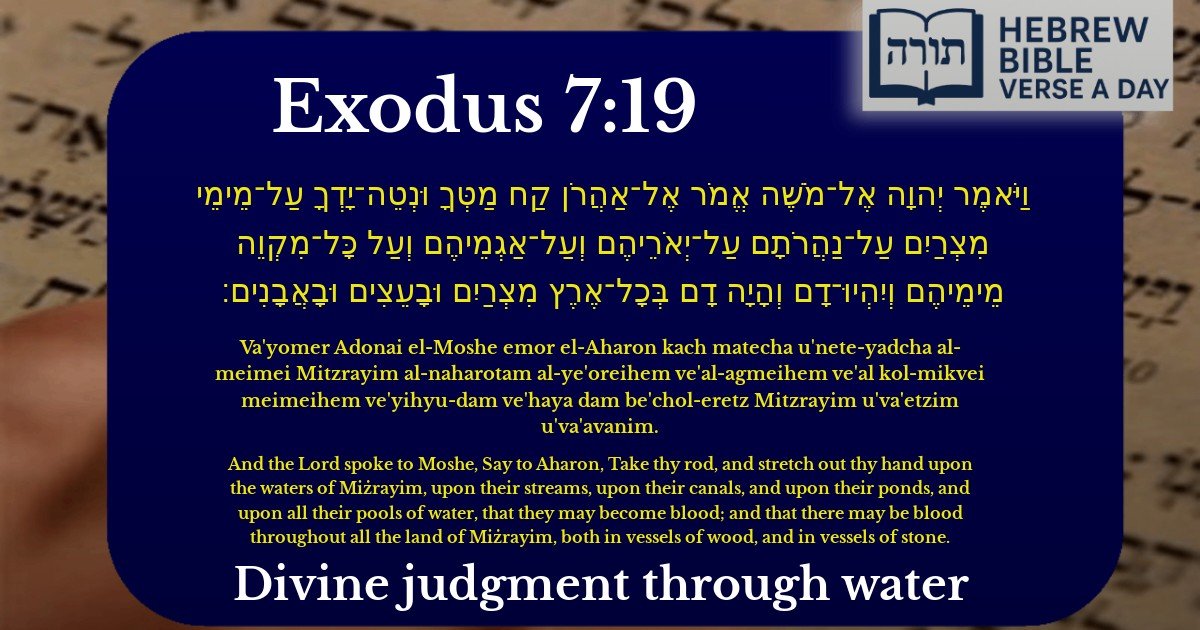
וַיֹּאמֶר יְהוָה אֶל־מֹשֶׁה אֱמֹר אֶל־אַהֲרֹן קַח מַטְּךָ וּנְטֵה־יָדְךָ עַל־מֵימֵי מִצְרַיִם עַל־נַהֲרֹתָם עַל־יְאֹרֵיהֶם וְעַל־אַגְמֵיהֶם וְעַל כָּל־מִקְוֵה מֵימֵיהֶם וְיִהְיוּ־דָם וְהָיָה דָם בְּכָל־אֶרֶץ מִצְרַיִם וּבָעֵצִים וּבָאֲבָנִים׃
English Translation
And the Lord spoke to Moshe, Say to Aharon, Take thy rod, and stretch out thy hand upon the waters of Miżrayim, upon their streams, upon their canals, and upon their ponds, and upon all their pools of water, that they may become blood; and that there may be blood throughout all the land of Miżrayim, both in vessels of wood, and in vessels of stone.
Transliteration
Va'yomer Adonai el-Moshe emor el-Aharon kach matecha u'nete-yadcha al-meimei Mitzrayim al-naharotam al-ye'oreihem ve'al-agmeihem ve'al kol-mikvei meimeihem ve'yihyu-dam ve'haya dam be'chol-eretz Mitzrayim u'va'etzim u'va'avanim.
Hebrew Leining Text
וַיֹּ֨אמֶר יְהֹוָ֜ה אֶל־מֹשֶׁ֗ה אֱמֹ֣ר אֶֽל־אַהֲרֹ֡ן קַ֣ח מַטְּךָ֣ וּנְטֵֽה־יָדְךָ֩ עַל־מֵימֵ֨י מִצְרַ֜יִם עַֽל־נַהֲרֹתָ֣ם&thinsp
🎵 Listen to leining
Parasha Commentary
📚 Talmud Citations
This verse is quoted in the Talmud.
📖 Sotah 36b
The verse is referenced in the context of discussing the miracles performed in Egypt, particularly the plague of blood, highlighting Aaron's role in executing God's command.
📖 Sanhedrin 67b
The verse is mentioned in a discussion about the nature of miracles and the specific actions taken by Aaron under Moses' direction during the plagues.
The Command to Turn Water into Blood
The verse describes Hashem's instruction to Moshe to command Aharon to strike the waters of Egypt, turning them into blood. This marks the first of the ten plagues, demonstrating Hashem's supremacy over the Nile, which the Egyptians worshipped as a deity (Rashi, Shemot 7:19). The specificity of the command—targeting rivers, canals, ponds, and all water sources—emphasizes the totality of the plague, leaving no doubt of its divine origin.
Aharon's Role in Executing the Plague
Rashi (Shemot 7:19) explains that Aharon, rather than Moshe, was chosen to initiate this plague because the Nile had protected Moshe when he was cast into it as an infant. It would be inappropriate for Moshe to strike the very waters that had safeguarded him. This teaches the principle of hakarat hatov (recognizing and repaying kindness), even to inanimate objects.
The Extent of the Plague
The verse states that the blood would appear "in vessels of wood and stone." The Midrash (Shemot Rabbah 9:10) elaborates that even water stored in containers turned to blood, demonstrating that the miracle transcended natural boundaries. The plague was not merely a contamination of the Nile but a complete transformation of all water sources, including those already drawn and stored.
Symbolism of the Plague
The Rod as an Instrument of Miracles
Aharon uses his rod to initiate the plague, a recurring motif in the Exodus narrative. The Talmud (Sanhedrin 97a) teaches that miracles are often performed through natural-seeming instruments to allow room for human free will—those who wish to see divine intervention can, while skeptics may attribute it to other causes.