

Join Our Newsletter To Be Informed When New Videos Are Posted
Hebrew Text
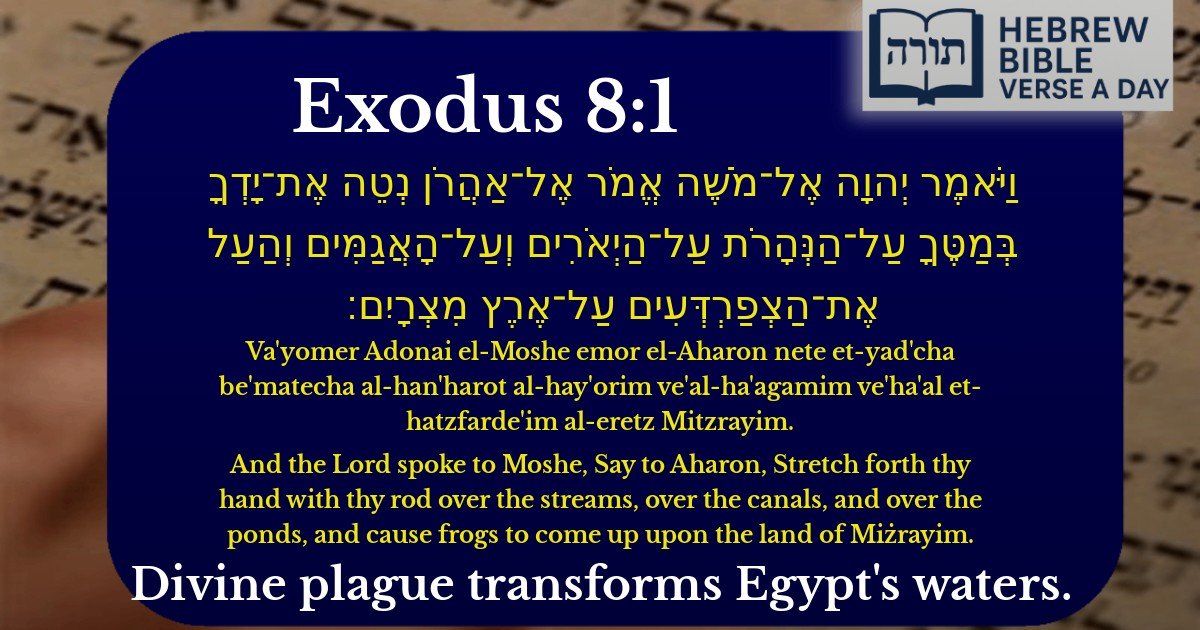
וַיֹּאמֶר יְהוָה אֶל־מֹשֶׁה אֱמֹר אֶל־אַהֲרֹן נְטֵה אֶת־יָדְךָ בְּמַטֶּךָ עַל־הַנְּהָרֹת עַל־הַיְאֹרִים וְעַל־הָאֲגַמִּים וְהַעַל אֶת־הַצְפַרְדְּעִים עַל־אֶרֶץ מִצְרָיִם׃
English Translation
And the Lord spoke to Moshe, Say to Aharon, Stretch forth thy hand with thy rod over the streams, over the canals, and over the ponds, and cause frogs to come up upon the land of Miżrayim.
Transliteration
Va'yomer Adonai el-Moshe emor el-Aharon nete et-yad'cha be'matecha al-han'harot al-hay'orim ve'al-ha'agamim ve'ha'al et-hatzfarde'im al-eretz Mitzrayim.
Hebrew Leining Text
וַיֹּ֣אמֶר יְהֹוָה֮ אֶל־מֹשֶׁה֒ אֱמֹ֣ר אֶֽל־אַהֲרֹ֗ן נְטֵ֤ה אֶת־יָדְךָ֙ בְּמַטֶּ֔ךָ עַ֨ל־הַנְּהָרֹ֔ת עַל־הַיְאֹרִ֖ים וְעַל־הָאֲגַמִּ֑ים וְהַ֥עַל אֶת־הַֽצְפַרְדְּעִ֖ים עַל־אֶ֥רֶץ מִצְרָֽיִם׃
🎵 Listen to leining
Parasha Commentary
📚 Talmud Citations
This verse is quoted in the Talmud.
The verse is referenced in the context of discussing the plagues in Egypt, particularly the plague of frogs, and the roles of Moshe and Aharon in executing God's commands.
📖 Sanhedrin 67b
The verse is mentioned in a discussion about the nature of miracles and the specific actions commanded by God during the plagues.
Divine Command and the Role of Aharon
Rashi (Shemot 7:19) explains that Hashem instructed Moshe to tell Aharon to bring about the plague of frogs to teach the principle of "measure for measure." Since the Nile River protected Moshe when he was placed there as an infant (Shemot 2:3), it was not fitting for Moshe to strike it. Instead, Aharon, who had no such connection to the Nile, was chosen to initiate this plague. This reflects the midrashic principle (Mechilta, Bo 12) that Hashem is meticulous in ensuring that even in executing judgment, there is no injustice.
The Extent of the Plague
The verse specifies three types of water sources: neharot (rivers), ye'orim (canals), and agamim (ponds). The Ramban (Shemot 7:19) notes that this comprehensive listing emphasizes that the plague affected all water sources in Mitzrayim, leaving no refuge from the frogs. The Midrash Tanchuma (Va'eira 14) adds that the frogs even entered ovens and kneading bowls, demonstrating the inescapable nature of Divine retribution.
The Symbolism of Frogs
The Malbim explains that frogs, which normally inhabit water, emerging onto dry land represented a disruption of the natural order—a theme recurring in the Ten Plagues. The Talmud (Sanhedrin 67b) also associates frogs with impurity, symbolizing how Mitzrayim's moral corruption necessitated this form of punishment. Additionally, the Midrash (Shemot Rabbah 10:4) teaches that the frogs willingly sacrificed themselves by entering fiery ovens to fulfill Hashem's will, contrasting with Pharaoh's stubborn refusal to submit to Divine authority.
The Rod of Aharon