

Join Our Newsletter To Be Informed When New Videos Are Posted
Hebrew Text
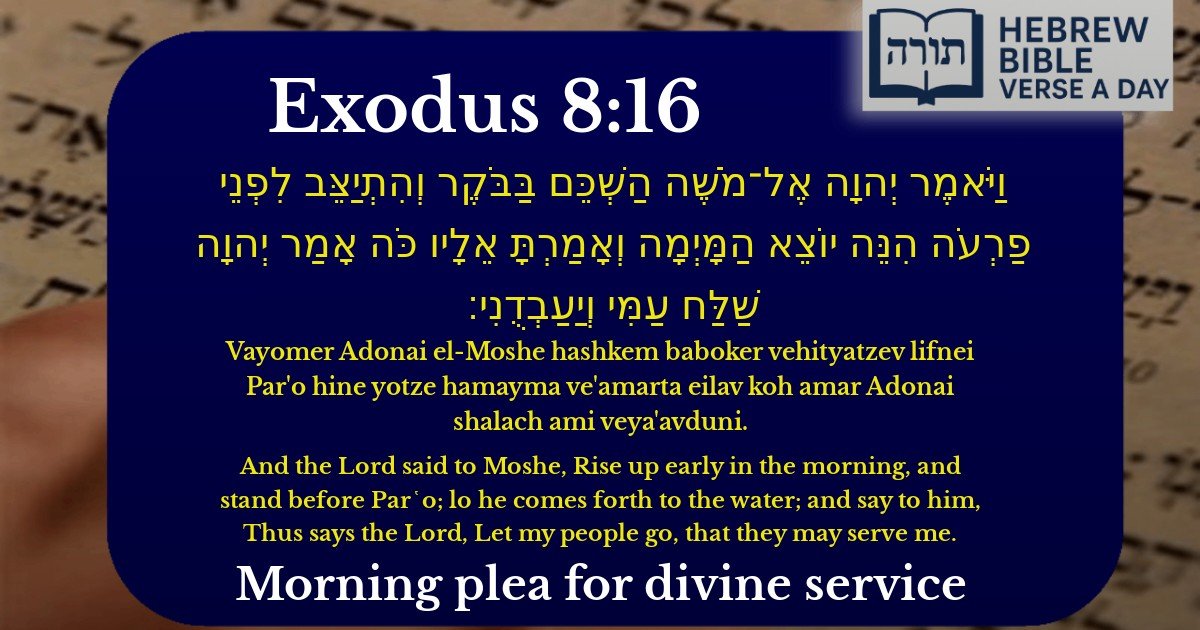
וַיֹּאמֶר יְהוָה אֶל־מֹשֶׁה הַשְׁכֵּם בַּבֹּקֶר וְהִתְיַצֵּב לִפְנֵי פַרְעֹה הִנֵּה יוֹצֵא הַמָּיְמָה וְאָמַרְתָּ אֵלָיו כֹּה אָמַר יְהוָה שַׁלַּח עַמִּי וְיַעַבְדֻנִי׃
English Translation
And the Lord said to Moshe, Rise up early in the morning, and stand before Par῾o; lo he comes forth to the water; and say to him, Thus says the Lord, Let my people go, that they may serve me.
Transliteration
Vayomer Adonai el-Moshe hashkem baboker vehityatzev lifnei Par'o hine yotze hamayma ve'amarta eilav koh amar Adonai shalach ami veya'avduni.
Hebrew Leining Text
וַיֹּ֨אמֶר יְהֹוָ֜ה אֶל־מֹשֶׁ֗ה הַשְׁכֵּ֤ם בַּבֹּ֙קֶר֙ וְהִתְיַצֵּב֙ לִפְנֵ֣י פַרְעֹ֔ה הִנֵּ֖ה יוֹצֵ֣א הַמָּ֑יְמָה וְאָמַרְתָּ֣ אֵלָ֗יו כֹּ֚ה אָמַ֣ר יְהֹוָ֔ה שַׁלַּ֥ח עַמִּ֖י וְיַֽעַבְדֻֽנִי׃
🎵 Listen to leining
Parasha Commentary
📚 Talmud Citations
This verse is not quoted in the Talmud.
Context of the Verse
This verse (Shemot 8:16) occurs during the narrative of the ten plagues, specifically before the plague of wild beasts (עָרוֹב). Hashem instructs Moshe to confront Pharaoh early in the morning as he goes to the Nile, demanding the release of Bnei Yisrael so they may serve Him.
Rashi's Commentary
Rashi explains that Pharaoh would go to the Nile in the morning to relieve himself, as he pretended to be a deity and claimed not to need bodily functions. By confronting him there, Moshe exposed Pharaoh's false divinity (Rashi on Shemot 7:15). Additionally, Rashi notes that "הַשְׁכֵּם בַּבֹּקֶר" (rise early in the morning) emphasizes urgency—Hashem wanted Moshe to act promptly in fulfilling the divine mission.
Rambam's Perspective
Rambam (Hilchot Teshuvah 6:5) derives from this episode that true service of Hashem requires freedom from external oppression. Pharaoh's refusal to "let My people go that they may serve Me" highlights that avodat Hashem must be performed willingly, not under duress.
Midrashic Insights
Halachic Implications
The Sifrei (Devarim 26) links this verse to the mitzvah of zerizut (alacrity) in divine service. Just as Moshe was commanded to act early, we learn to prioritize mitzvot with enthusiasm—a principle codified in Shulchan Aruch (Orach Chaim 1:1).
Symbolism of the Nile
The Kli Yakar notes that Pharaoh's reliance on the Nile—a source of Egypt's sustenance—symbolized his arrogance in believing he controlled life’s necessities. Moshe’s confrontation there underscored that true sustenance comes only from Hashem.