

Join Our Newsletter To Be Informed When New Videos Are Posted
Hebrew Text
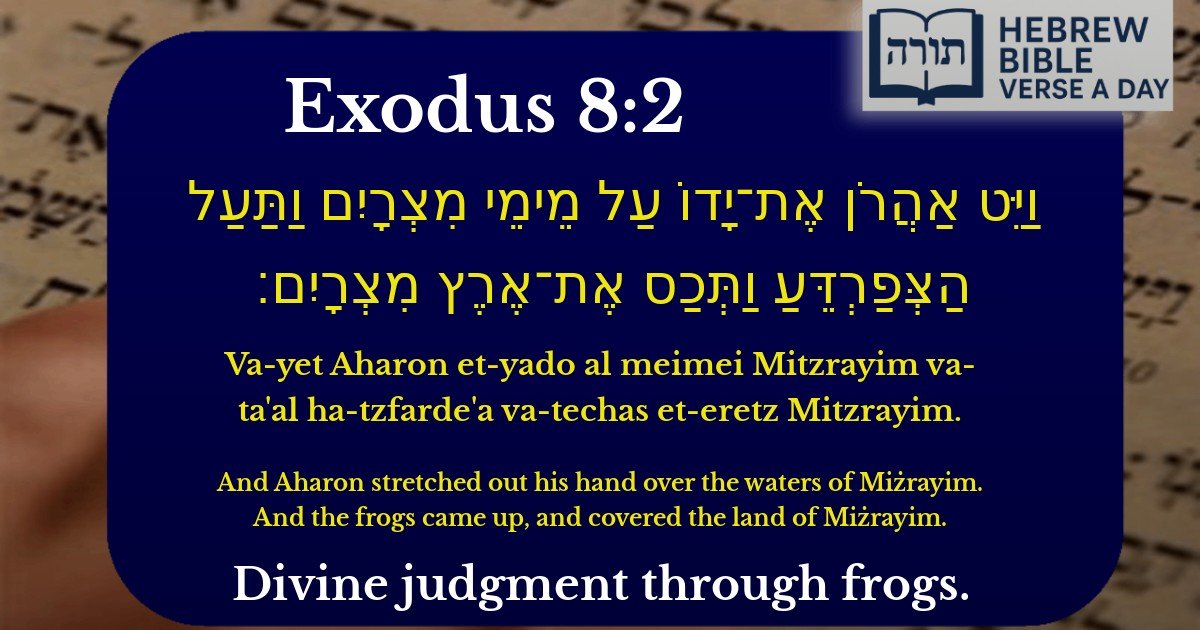
וַיֵּט אַהֲרֹן אֶת־יָדוֹ עַל מֵימֵי מִצְרָיִם וַתַּעַל הַצְּפַרְדֵּעַ וַתְּכַס אֶת־אֶרֶץ מִצְרָיִם׃
English Translation
And Aharon stretched out his hand over the waters of Miżrayim. And the frogs came up, and covered the land of Miżrayim.
Transliteration
Va-yet Aharon et-yado al meimei Mitzrayim va-ta'al ha-tzfarde'a va-techas et-eretz Mitzrayim.
Hebrew Leining Text
וַיֵּ֤ט אַהֲרֹן֙ אֶת־יָד֔וֹ עַ֖ל מֵימֵ֣י מִצְרָ֑יִם וַתַּ֙עַל֙ הַצְּפַרְדֵּ֔עַ וַתְּכַ֖ס אֶת־אֶ֥רֶץ מִצְרָֽיִם׃
🎵 Listen to leining
Parasha Commentary
📚 Talmud Citations
This verse is quoted in the Talmud.
📖 Sanhedrin 67b
The verse is referenced in a discussion about the miracles performed by Aharon during the ten plagues in Egypt, specifically the plague of frogs.
📖 Pesachim 53b
The verse is mentioned in the context of discussing the timing and nature of the plagues, particularly how the frogs covered the land of Egypt.
Aharon's Role in the Plague of Frogs
Rashi (Shemot 7:19) explains that Aharon, rather than Moshe, was chosen to initiate this plague because the Nile had protected Moshe when he was cast into it as an infant. It would be inappropriate for Moshe to strike the Nile, which had done him a kindness. This teaches the principle of hakarat hatov (recognizing and repaying kindness), a fundamental Jewish value.
The Nature of the Frogs' Invasion
The Midrash (Shemot Rabbah 10:4) describes how the frogs emerged in overwhelming numbers, invading every space in Egypt - homes, ovens, kneading bowls, and even the Egyptians' bodies. The Talmud (Pesachim 53b) notes that the frogs demonstrated extraordinary self-sacrifice by entering hot ovens, showing greater dedication to fulfilling Hashem's will than some humans.
The Significance of the Frogs
The Lesson of the Plague
The Kli Yakar (Shemot 7:28) observes that the frogs' croaking served as a constant reminder of Hashem's presence and power. This auditory component made the plague particularly psychologically distressing, as the Egyptians couldn't escape the sound of the frogs' testimony to Hashem's sovereignty.