
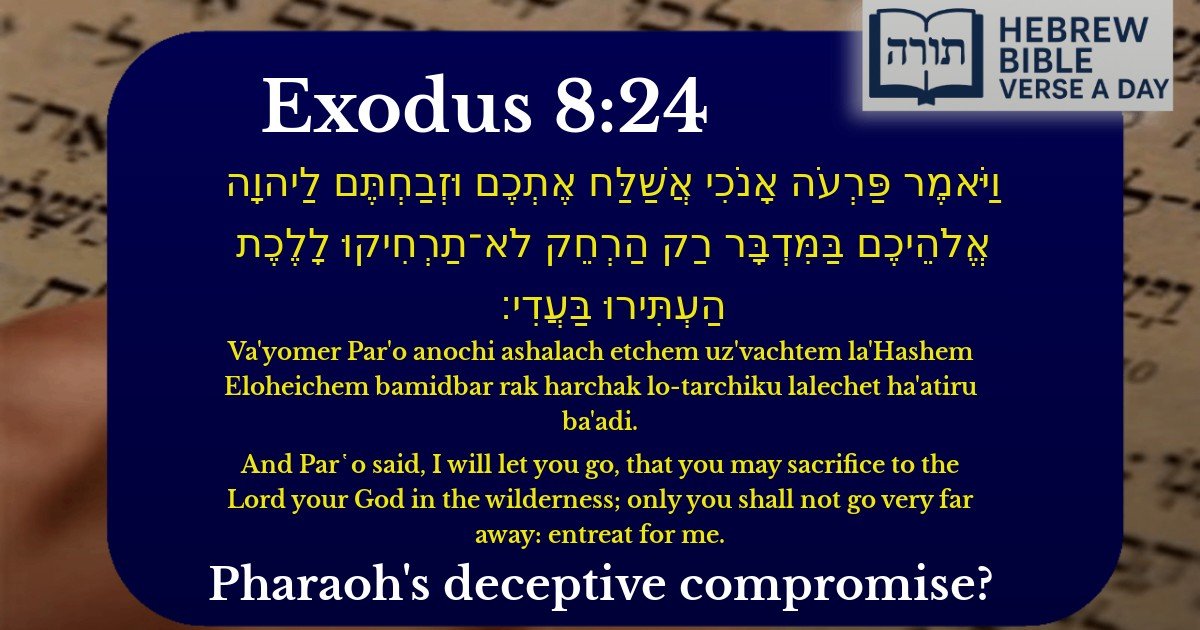

Exodus 8:24 - Pharaoh's deceptive compromise?

Exodus 8:24 - שמות 8:24

Hebrew Text

וַיֹּאמֶר פַּרְעֹה אָנֹכִי אֲשַׁלַּח אֶתְכֶם וּזְבַחְתֶּם לַיהוָה אֱלֹהֵיכֶם בַּמִּדְבָּר רַק הַרְחֵק לֹא־תַרְחִיקוּ לָלֶכֶת הַעְתִּירוּ בַּעֲדִי׃

English Translation

And Par῾o said, I will let you go, that you may sacrifice to the Lord your God in the wilderness; only you shall not go very far away: entreat for me.

Transliteration

Va'yomer Par'o anochi ashalach etchem uz'vachtem la'Hashem Eloheichem bamidbar rak harchak lo-tarchiku lalechet ha'atiru ba'adi.

Hebrew Leining Text

וַיֹּ֣אמֶר פַּרְעֹ֗ה אָנֹכִ֞י אֲשַׁלַּ֤ח אֶתְכֶם֙ וּזְבַחְתֶּ֞ם לַיהֹוָ֤ה אֱלֹֽהֵיכֶם֙ בַּמִּדְבָּ֔ר רַ֛ק הַרְחֵ֥ק לֹא־תַרְחִ֖יקוּ לָלֶ֑כֶת הַעְתִּ֖ירוּ בַּעֲדִֽי׃

🎵 Listen to leining

Parasha Commentary

Pharaoh's Conditional Offer

The verse (Exodus 8:24) records Pharaoh's reluctant concession to allow Bnei Yisrael to temporarily leave Egypt to serve Hashem in the wilderness, but with significant restrictions. Rashi explains that Pharaoh's words "I will let you go" were insincere - he had no intention of permitting a complete exodus, only a limited departure for sacrificial service. This reflects Pharaoh's pattern of temporarily relenting during plagues but hardening his heart afterward (Rashi on Shemot 8:24).

The Limitation: "Only You Shall Not Go Very Far"

The restriction "only you shall not go very far" reveals Pharaoh's true motives:

  • Ramban suggests Pharaoh wanted to maintain control over the Israelites, ensuring they remained within Egypt's sphere of influence.
  • Sforno explains this as Pharaoh's attempt to prevent the Israelites from establishing permanent independence, keeping them close enough to quickly recall.
  • The Midrash (Shemot Rabbah 11:3) compares this to someone releasing a bird while still holding its leash - an illusion of freedom while maintaining control.

The Request: "Entreat for Me"

Pharaoh's plea "entreat for me" demonstrates:

  • According to Malbim, Pharaoh recognized the power of Moshe's prayers but sought to exploit this for his own benefit without true repentance.
  • Ibn Ezra notes the irony - Pharaoh acknowledges Hashem's power yet still attempts to dictate terms to Moshe and limit the Israelites' service.
  • The Talmud (Berachot 10a) derives from this that even wicked rulers recognize the efficacy of righteous people's prayers in times of distress.

Theological Implications

This exchange highlights important principles in Jewish thought:

  • Partial compliance with divine will is insufficient - true service of Hashem requires complete commitment (Meshech Chochmah).
  • As the Netziv explains, Pharaoh's offer represents the constant human temptation to compromise religious obligations with worldly concerns.
  • The verse foreshadows the eventual complete redemption, showing that partial solutions are ultimately rejected in favor of full liberation (Ramban).

📚 Talmud Citations

This verse is not quoted in the Talmud.

Frequently Asked Questions

Q: What does Pharaoh mean when he says 'only you shall not go very far away'?
A: Pharaoh was trying to compromise by allowing the Israelites to worship Hashem in the wilderness, but he wanted them to stay close enough so he could maintain control over them. Rashi explains that Pharaoh didn't truly intend to free them completely - he wanted to keep them within Egypt's reach (Rashi on Exodus 8:24).
Q: Why did Pharaoh ask the Israelites to 'entreat for me'?
A: After suffering through the plagues, Pharaoh recognized Hashem's power and wanted Moshe to pray for the removal of the plagues. The Midrash teaches that even wicked people like Pharaoh may temporarily acknowledge divine power when facing punishment (Midrash Tanchuma, Va'eira 14).
Q: What lesson can we learn from Pharaoh's partial permission?
A: This teaches us about the danger of half-hearted commitments to mitzvot. True service of Hashem requires complete dedication, not compromises that leave us tied to negative influences. The Rambam teaches that we must remove all obstacles in serving Hashem properly (Hilchot Avodat Kochavim 2:4).
Q: Why did Pharaoh specify sacrificing in the wilderness?
A: The Talmud explains that Pharaoh knew the Israelites' sacrifices would be offensive to Egyptian idol worship (since they involved animals the Egyptians considered sacred). He wanted them to go to the wilderness to avoid angering his people (Talmud Sanhedrin 67b).
Q: How does this verse show Pharaoh's stubbornness?
A: Even after multiple plagues, Pharaoh still tried to dictate terms rather than fully submit to Hashem's will. The Midrash compares this to a spoiled child who makes empty promises when being punished (Shemot Rabbah 11:6). This teaches us about the destructive nature of stubbornness in spiritual matters.