

Join Our Newsletter To Be Informed When New Videos Are Posted
Hebrew Text
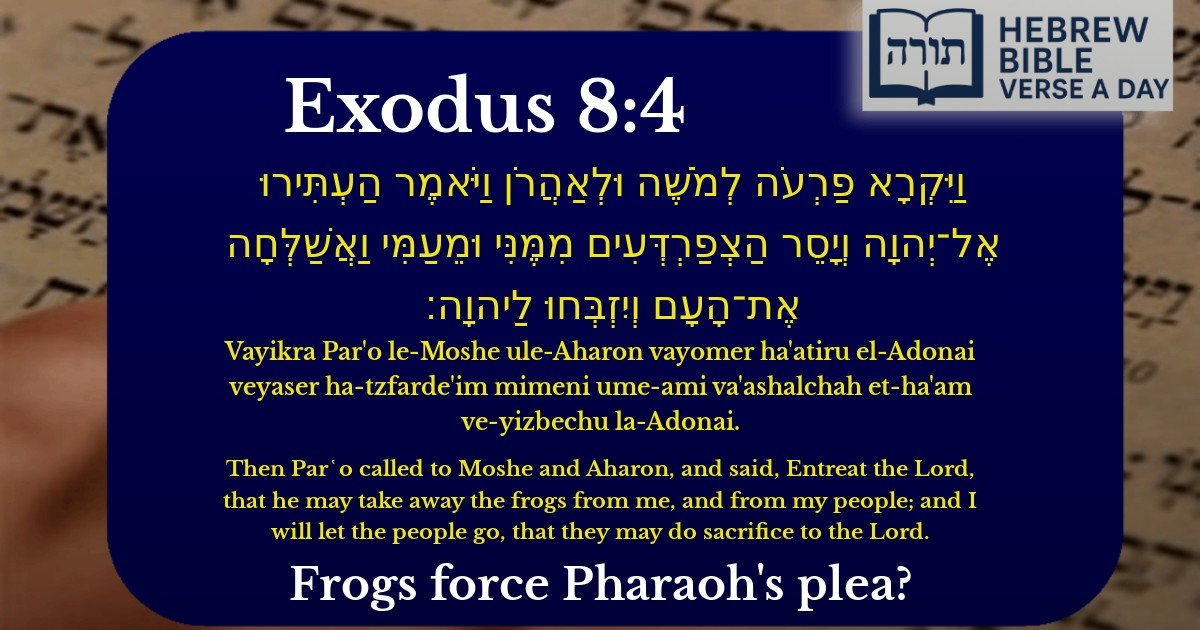
וַיִּקְרָא פַרְעֹה לְמֹשֶׁה וּלְאַהֲרֹן וַיֹּאמֶר הַעְתִּירוּ אֶל־יְהוָה וְיָסֵר הַצְפַרְדְּעִים מִמֶּנִּי וּמֵעַמִּי וַאֲשַׁלְּחָה אֶת־הָעָם וְיִזְבְּחוּ לַיהוָה׃
English Translation
Then Par῾o called to Moshe and Aharon, and said, Entreat the Lord, that he may take away the frogs from me, and from my people; and I will let the people go, that they may do sacrifice to the Lord.
Transliteration
Vayikra Par'o le-Moshe ule-Aharon vayomer ha'atiru el-Adonai veyaser ha-tzfarde'im mimeni ume-ami va'ashalchah et-ha'am ve-yizbechu la-Adonai.
Hebrew Leining Text
וַיִּקְרָ֨א פַרְעֹ֜ה לְמֹשֶׁ֣ה וּֽלְאַהֲרֹ֗ן וַיֹּ֙אמֶר֙ הַעְתִּ֣ירוּ אֶל־יְהֹוָ֔ה וְיָסֵר֙ הַֽצְפַרְדְּעִ֔ים מִמֶּ֖נִּי וּמֵֽעַמִּ֑י וַאֲשַׁלְּחָה֙ אֶת־הָעָ֔ם וְיִזְבְּח֖וּ לַיהֹוָֽה׃
🎵 Listen to leining
Parasha Commentary
📚 Talmud Citations
This verse is quoted in the Talmud.
📖 Pesachim 117a
The verse is referenced in the context of discussing the power of prayer and how Pharaoh acknowledged the need to entreat the Lord through Moses and Aaron.
📖 Exodus Rabbah 10:4
The midrashic commentary discusses Pharaoh's request to Moses and Aaron to pray for the removal of the frogs, highlighting the theme of divine intervention and human agency.
Pharaoh's Request and Its Implications
The verse describes Pharaoh summoning Moshe and Aharon to request their intercession with Hashem to remove the plague of frogs. Rashi (Shemos 8:4) notes that Pharaoh specifically asked for the frogs to be removed "from me and from my people", indicating his personal distress, yet he did not ask for their complete eradication. This suggests Pharaoh was willing to tolerate the frogs' continued presence in Egypt as long as they no longer afflicted him and his inner circle directly.
The Conditional Promise of Freedom
Pharaoh's statement "I will let the people go, that they may do sacrifice to the Lord" appears to be a concession, but the Midrash (Shemos Rabbah 10:3) highlights its insincerity. The promise was conditional and temporary—only for the purpose of offering sacrifices, not for permanent emancipation. Rambam (Hilchos Teshuva 2:1) would later emphasize that true repentance requires abandoning sinful behavior, which Pharaoh failed to do, as evidenced by his subsequent refusal to let Bnei Yisrael leave.
The Nature of Pharaoh's Appeal
Lessons in Divine Justice
The Talmud (Sanhedrin 67b) teaches that Hashem punishes measure for measure. Pharaoh had ordered the drowning of Jewish infants, and the frogs, which emerged from the Nile (the same river used for infanticide), invaded even his most private spaces. This demonstrates the precision of Divine retribution, as emphasized by the Sforno, who notes that the frogs' intrusion into Pharaoh's bedchamber symbolized the inescapable nature of accountability.