
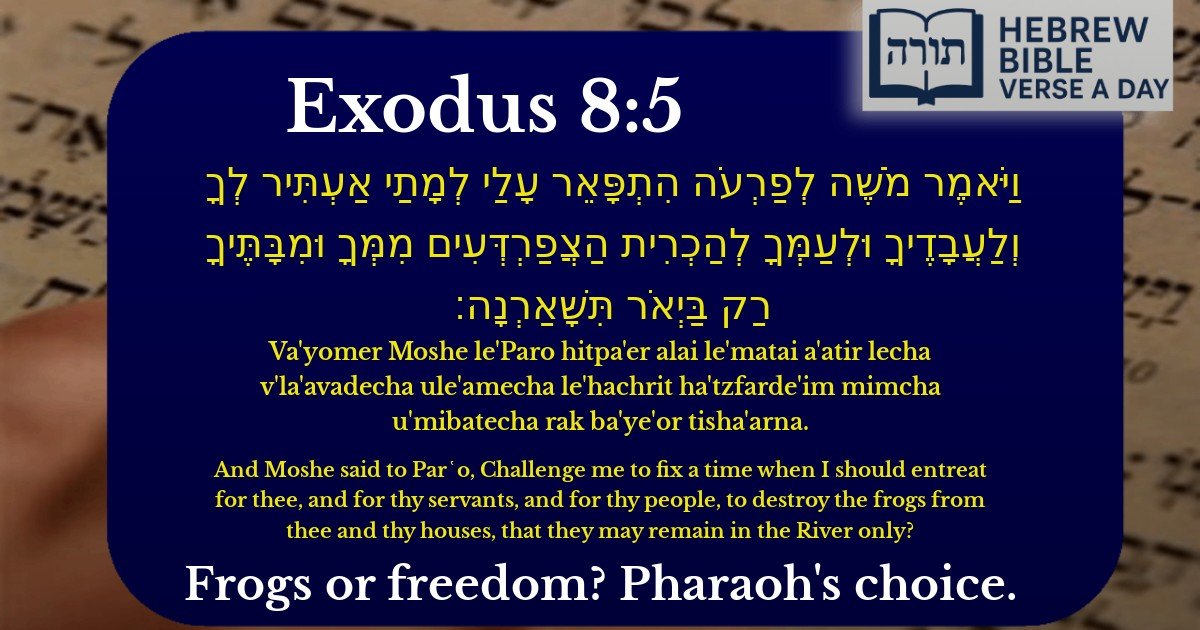

Exodus 8:5 - Frogs or freedom? Pharaoh's choice.

Exodus 8:5 - שמות 8:5

Hebrew Text

וַיֹּאמֶר מֹשֶׁה לְפַרְעֹה הִתְפָּאֵר עָלַי לְמָתַי אַעְתִּיר לְךָ וְלַעֲבָדֶיךָ וּלְעַמְּךָ לְהַכְרִית הַצֲפַרְדְּעִים מִמְּךָ וּמִבָּתֶּיךָ רַק בַּיְאֹר תִּשָּׁאַרְנָה׃

English Translation

And Moshe said to Par῾o, Challenge me to fix a time when I should entreat for thee, and for thy servants, and for thy people, to destroy the frogs from thee and thy houses, that they may remain in the River only?

Transliteration

Va'yomer Moshe le'Paro hitpa'er alai le'matai a'atir lecha v'la'avadecha ule'amecha le'hachrit ha'tzfarde'im mimcha u'mibatecha rak ba'ye'or tisha'arna.

Hebrew Leining Text

וַיֹּ֨אמֶר מֹשֶׁ֣ה לְפַרְעֹה֮ הִתְפָּאֵ֣ר עָלַי֒ לְמָתַ֣י&thinsp

🎵 Listen to leining

Parasha Commentary

Moshe's Offer to Paroh

The verse (Shemos 8:5) describes Moshe's response to Paroh's plea to remove the plague of frogs. Rashi explains that Moshe's phrase "הִתְפָּאֵר עָלַי" ("Challenge me") means Moshe was giving Paroh the honor of choosing when the frogs should depart. This demonstrated Moshe's confidence in Hashem's power and his own prophetic authenticity.

The Significance of Timing

The Sforno notes that Moshe's offer to Paroh to "fix a time" for the frogs' removal served two purposes:

  • To prove that the plague was not a natural phenomenon, but a divine act that could be precisely controlled
  • To show that Hashem responds to tefillah (prayer), as Moshe would need to entreat Hashem at the appointed time

Why Frogs Remained in the River

The Malbim explains that the frogs remaining in the Nile ("רַק בַּיְאֹר תִּשָּׁאַרְנָה") served as:

  • A constant reminder of the miracle
  • Evidence that the frogs didn't just naturally die out, but were specifically removed by divine intervention
  • A fulfillment of the warning that the Nile - which Paroh worshipped - would become a source of punishment

Spiritual Lessons

The Kli Yakar derives several important principles from this exchange:

  • Even when administering justice, we should give our opponents opportunities to demonstrate their free will
  • Miracles should leave some lasting evidence to strengthen future generations' faith
  • True leadership involves both firmness in carrying out divine will and compassion in execution

📚 Talmud Citations

This verse is not quoted in the Talmud.

Frequently Asked Questions

Q: What does Moshe mean when he tells Pharaoh 'Challenge me to fix a time'?
A: Moshe is giving Pharaoh the opportunity to choose when the plague of frogs should end, demonstrating that the plague was under Hashem's control and not a random natural event. Rashi explains that this was to show Pharaoh that the frogs would leave precisely at the appointed time, proving it was a divine act.
Q: Why did the frogs remain in the River after the plague?
A: The frogs remained in the Nile River to show that they returned to their natural habitat and did not simply disappear. Ramban explains that this was another sign that the plague was orchestrated by Hashem—frogs came unnaturally onto land, and then returned normally to the river when the plague ended.
Q: What lesson can we learn from Moshe giving Pharaoh a choice in when the plague would end?
A: This teaches that Hashem gives people opportunities to recognize His power and repent. The Midrash Tanchuma highlights that Moshe allowed Pharaoh to choose the time to show that true repentance requires acknowledging divine intervention. Even in hardship, Hashem grants us the chance to reflect and change.
Q: Why did Moshe include Pharaoh's servants and people in his request to remove the frogs?
A: Moshe prayed for all of Egypt to emphasize that the plagues affected everyone, not just Pharaoh, and that repentance and relief should be collective. The Talmud (Berachot 12b) teaches that Moshe’s inclusive approach reflects the Jewish value of compassion, even for those who oppress us.