

Join Our Newsletter To Be Informed When New Videos Are Posted
Hebrew Text
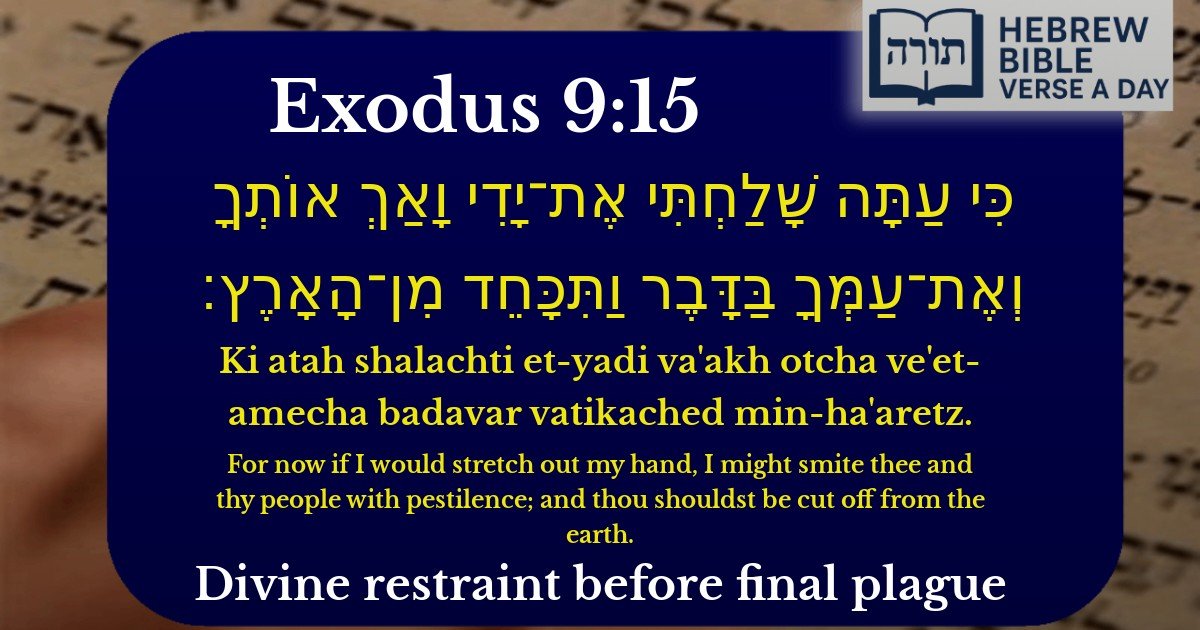
כִּי עַתָּה שָׁלַחְתִּי אֶת־יָדִי וָאַךְ אוֹתְךָ וְאֶת־עַמְּךָ בַּדָּבֶר וַתִּכָּחֵד מִן־הָאָרֶץ׃
English Translation
For now if I would stretch out my hand, I might smite thee and thy people with pestilence; and thou shouldst be cut off from the earth.
Transliteration
Ki atah shalachti et-yadi va'akh otcha ve'et-amecha badavar vatikached min-ha'aretz.
Hebrew Leining Text
כִּ֤י עַתָּה֙ שָׁלַ֣חְתִּי אֶת־יָדִ֔י וָאַ֥ךְ אוֹתְךָ֛ וְאֶֽת־עַמְּךָ֖ בַּדָּ֑בֶר וַתִּכָּחֵ֖ד מִן־הָאָֽרֶץ׃
🎵 Listen to leining
Parasha Commentary
📚 Talmud Citations
This verse is not quoted in the Talmud.
Context in Shemot (Exodus 9:15)
This verse appears during the narrative of the plagues in Egypt, specifically before the plague of hail (ברד). Hashem warns Pharaoh through Moshe that He could have already destroyed Egypt with a devastating pestilence (דבר), but He has restrained His full power to demonstrate His sovereignty and allow for Pharaoh's repentance.
Rashi's Explanation
Rashi (Rabbi Shlomo Yitzchaki) comments on the phrase "כי עתה שלחתי את ידי" ("For now if I would stretch out my hand") that Hashem is emphasizing His deliberate restraint. The term "עתה" ("now") suggests that the punishment could have been immediate and total, but Hashem chose a measured approach to give Pharaoh opportunities to repent. Rashi further explains that "ותכחד מן הארץ" ("and thou shouldst be cut off from the earth") implies complete annihilation, underscoring the severity of Pharaoh's defiance.
Rambam's Perspective on Divine Justice
Rambam (Maimonides) in Hilchot Teshuvah discusses how Hashem grants sinners time to repent before exacting full punishment. This aligns with the verse’s implication that Pharaoh was granted multiple warnings (through earlier plagues) rather than immediate destruction. The mention of pestilence (דבר) as a potential punishment reflects a common divine retribution for moral corruption, as seen in other Tanach narratives (e.g., the plague in David’s time, II Samuel 24).
Midrashic Insights
Ibn Ezra on the Linguistic Nuance
Ibn Ezra notes that the phrasing "כי עתה" ("for now") conveys a conditional threat—Had Hashem willed it, the punishment could have been swift and total. The use of "דבר" (pestilence) specifically denotes a sudden, divinely ordained catastrophe, contrasting with natural disasters, to emphasize that this would be an unmistakable act of divine intervention.
Halachic Implications
The Gemara (Sanhedrin 90a) derives from this verse that denial of divine providence (כפירה) warrants severe punishment, as Pharaoh’s stubbornness led to escalating consequences. The structure of the plagues also mirrors the principle of "מדה כנגד מדה" (measure for measure), as Pharaoh’s decree to drown Hebrew boys (Shemot 1:22) was met with water-related plagues (e.g., blood, frogs) and eventual destruction.