

Join Our Newsletter To Be Informed When New Videos Are Posted
Hebrew Text
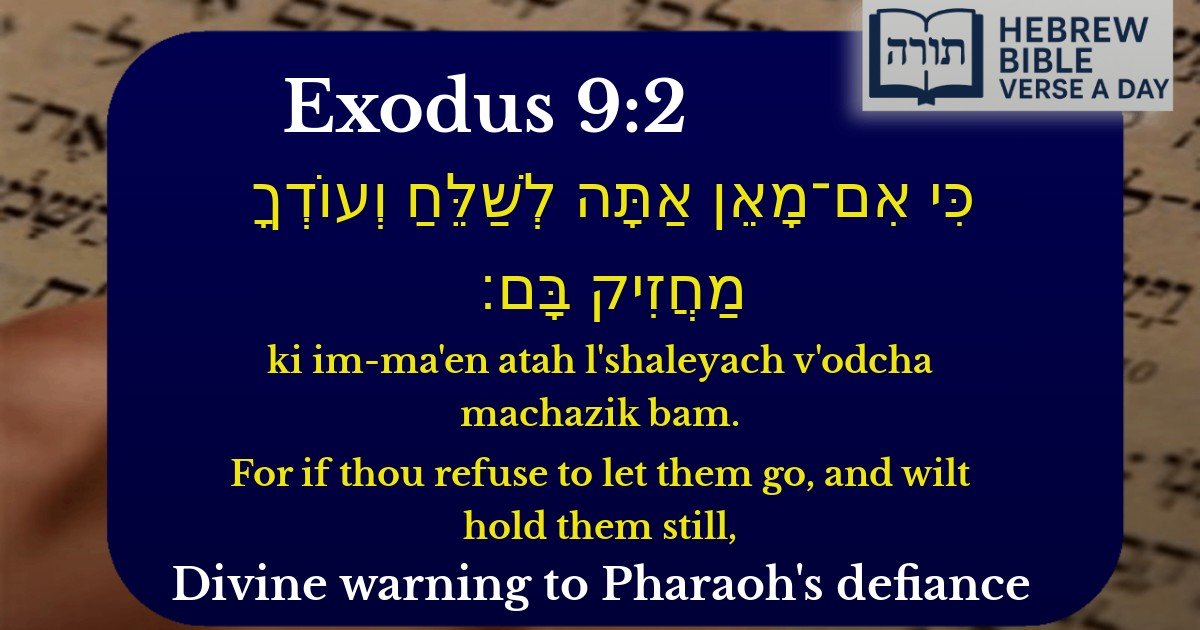
כִּי אִם־מָאֵן אַתָּה לְשַׁלֵּחַ וְעוֹדְךָ מַחֲזִיק בָּם׃
English Translation
For if thou refuse to let them go, and wilt hold them still,
Transliteration
Ki im-ma'en atah l'shaleyach v'odcha machazik bam.
Hebrew Leining Text
כִּ֛י אִם־מָאֵ֥ן אַתָּ֖ה לְשַׁלֵּ֑חַ וְעוֹדְךָ֖ מַחֲזִ֥יק בָּֽם׃
🎵 Listen to leining
Parasha Commentary
📚 Talmud Citations
This verse is not quoted in the Talmud.
Context in the Exodus Narrative
This verse (Exodus 9:2) appears during the warnings before the fifth plague, dever (pestilence), when Moshe delivers Hashem's message to Pharaoh. The phrase underscores Pharaoh's stubborn refusal to release Bnei Yisrael despite escalating divine signs.
Grammatical and Linguistic Insights
The phrase "כִּי אִם־מָאֵן אַתָּה" ("for if thou refuse") uses the root מָאֵן, which Rashi explains as an expression of refusal rooted in obstinacy (Rashi on Exodus 9:2). The doubling of language—"מָאֵן... וְעוֹדְךָ מַחֲזִיק" ("refuse... and wilt hold them still")—emphasizes Pharaoh's active resistance, implying he is not merely passive but clinging to his position (Ibn Ezra).
Theological Implications
Pharaoh's Moral Culpability
The Sforno highlights that "וְעוֹדְךָ מַחֲזִיק בָּם" ("and wilt hold them still") implies Pharaoh's ongoing moral responsibility. Despite witnessing earlier plagues, his continued oppression reveals a deliberate rejection of truth, making him liable for greater punishment (cf. Talmud, Avodah Zarah 54b on willful ignorance).