

Join Our Newsletter To Be Informed When New Videos Are Posted
Hebrew Text
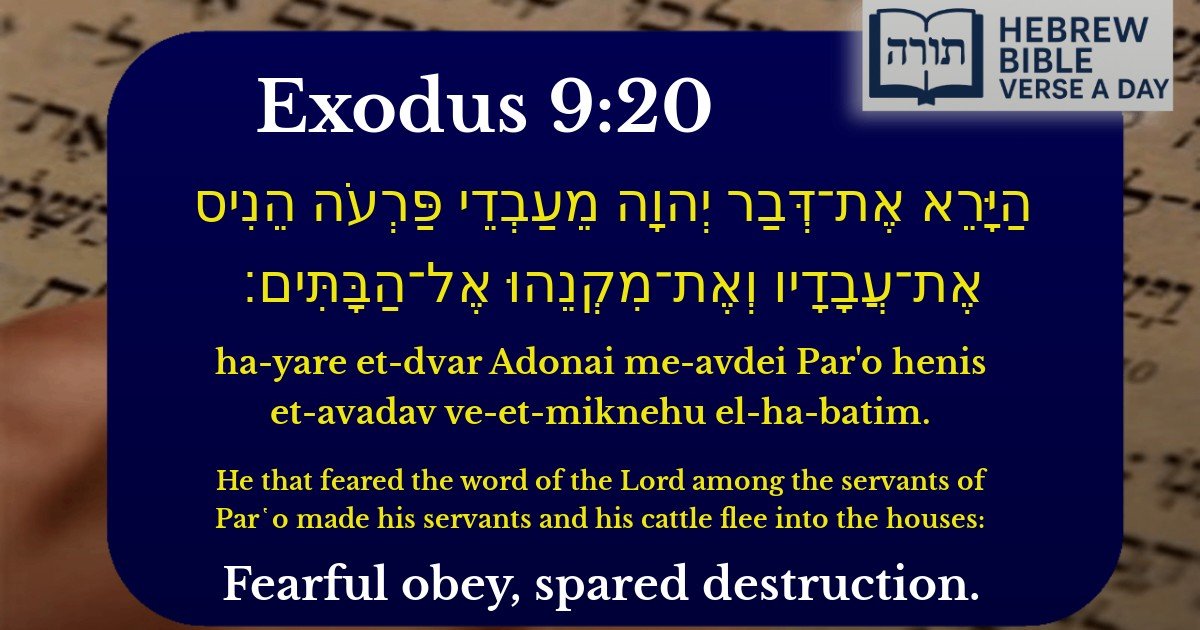
הַיָּרֵא אֶת־דְּבַר יְהוָה מֵעַבְדֵי פַּרְעֹה הֵנִיס אֶת־עֲבָדָיו וְאֶת־מִקְנֵהוּ אֶל־הַבָּתִּים׃
English Translation
He that feared the word of the Lord among the servants of Par῾o made his servants and his cattle flee into the houses:
Transliteration
Ha-yare et-dvar Adonai me-avdei Par'o henis et-avadav ve-et-miknehu el-ha-batim.
Hebrew Leining Text
הַיָּרֵא֙ אֶת־דְּבַ֣ר יְהֹוָ֔ה מֵֽעַבְדֵ֖י פַּרְעֹ֑ה הֵנִ֛יס אֶת־עֲבָדָ֥יו וְאֶת־מִקְנֵ֖הוּ אֶל־הַבָּתִּֽים׃
🎵 Listen to leining
Parasha Commentary
📚 Talmud Citations
This verse is not quoted in the Talmud.
Context in the Plague of Hail
The verse (Shemot 9:20) describes the reaction of some of Pharaoh's servants who heeded Moshe's warning about the impending plague of hail. Unlike those who ignored the divine warning, these individuals took protective measures by bringing their servants and livestock indoors.
Rashi's Explanation
Rashi explains that "הירא את דבר ה'" (he that feared the word of Hashem) refers to those among Pharaoh's court who developed reverence for Hashem's word after witnessing the previous plagues. They took Moshe's warning seriously and acted upon it, demonstrating a level of emunah (faith) in Hashem's prophecy.
The Significance of Their Actions
Midrashic Insights
The Midrash Tanchuma (Bo 5) highlights that these individuals were Egyptians, yet they merited being called "ירא את דבר ה'" because they acknowledged Hashem's supremacy. This teaches that sincere reverence for Hashem is possible even among non-Jews when they recognize divine truth.
Contrast with Pharaoh's Stubbornness
The Sforno contrasts these servants with Pharaoh, who repeatedly hardened his heart. The servants' willingness to heed the warning underscores that Pharaoh's obstinacy was a deliberate choice, not an inevitable response.