

Join Our Newsletter To Be Informed When New Videos Are Posted
Hebrew Text
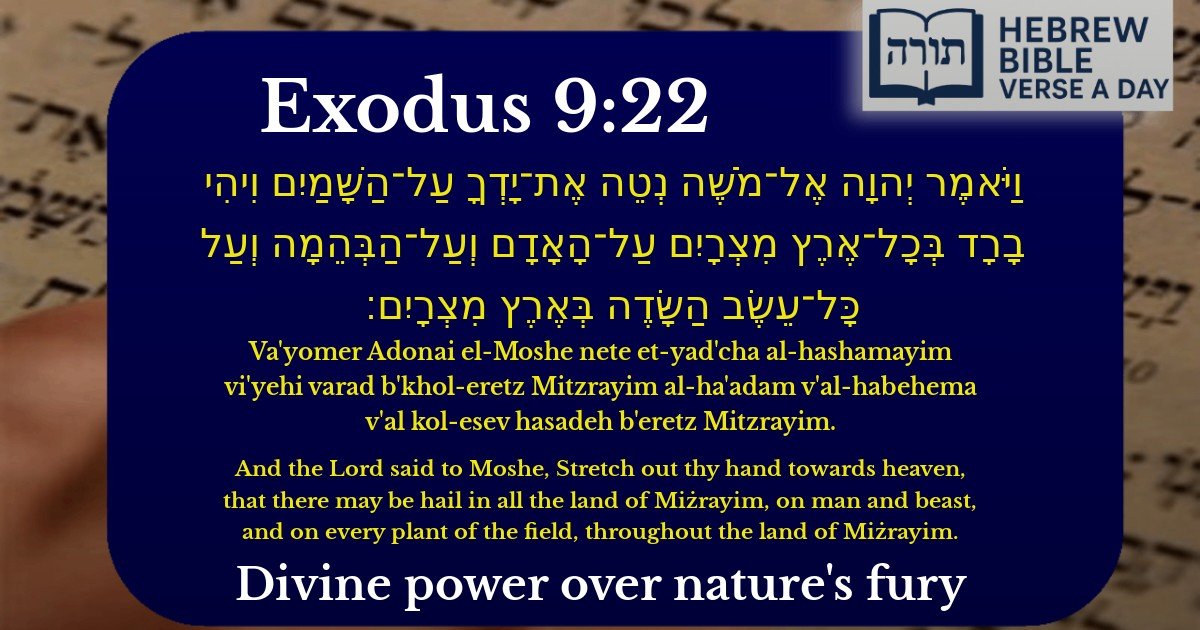
וַיֹּאמֶר יְהוָה אֶל־מֹשֶׁה נְטֵה אֶת־יָדְךָ עַל־הַשָּׁמַיִם וִיהִי בָרָד בְּכָל־אֶרֶץ מִצְרָיִם עַל־הָאָדָם וְעַל־הַבְּהֵמָה וְעַל כָּל־עֵשֶׂב הַשָּׂדֶה בְּאֶרֶץ מִצְרָיִם׃
English Translation
And the Lord said to Moshe, Stretch out thy hand towards heaven, that there may be hail in all the land of Miżrayim, on man and beast, and on every plant of the field, throughout the land of Miżrayim.
Transliteration
Va'yomer Adonai el-Moshe nete et-yad'cha al-hashamayim vi'yehi varad b'khol-eretz Mitzrayim al-ha'adam v'al-habehema v'al kol-esev hasadeh b'eretz Mitzrayim.
Hebrew Leining Text
וַיֹּ֨אמֶר יְהֹוָ֜ה אֶל־מֹשֶׁ֗ה נְטֵ֤ה אֶת־יָֽדְךָ֙ עַל־הַשָּׁמַ֔יִם וִיהִ֥י בָרָ֖ד בְּכׇל־אֶ֣רֶץ מִצְרָ֑יִם עַל־הָאָדָ֣ם וְעַל־הַבְּהֵמָ֗ה וְעַ֛ל כׇּל־עֵ֥שֶׂב הַשָּׂדֶ֖ה בְּאֶ֥רֶץ מִצְרָֽיִם׃
🎵 Listen to leining
Parasha Commentary
📚 Talmud Citations
This verse is quoted in the Talmud.
The verse is discussed in the context of the plagues in Egypt, emphasizing the power of God's command to Moses.
📖 Pesachim 118a
Referenced in a discussion about the miracles performed in Egypt, highlighting the severity of the hail plague.
Context of the Plague of Hail
This verse (Shemot 9:22) describes the seventh plague brought upon Egypt—the plague of hail (ברד). According to Rashi, this plague was particularly severe because it combined fire and ice, demonstrating Hashem's absolute control over nature. The hail destroyed crops, livestock, and even people who did not heed Moshe's warning to seek shelter.
The Significance of "Stretch Out Your Hand Toward Heaven"
Ramban explains that Moshe was commanded to raise his hand toward the heavens to symbolize that the hail came from the Divine realm, emphasizing that this was not a natural disaster but a direct act of Hashem. The Midrash Tanchuma adds that this gesture also served as a warning to Pharaoh and the Egyptians, giving them another opportunity to repent before the plague struck.
The Targets of the Plague
Divine Precision in Judgment
The Talmud (Berachot 59a) notes that the hail did not fall in Goshen, where Bnei Yisrael lived, demonstrating Hashem's ability to execute judgment with exact precision. The Malbim explains that this distinction highlighted the difference between the Egyptians, who oppressed the Israelites, and the Israelites themselves, who were under Divine protection.
Lessons from the Plague
Rabbeinu Bachya teaches that the plague of hail was meant to break Pharaoh's arrogance, as he believed himself to be a god controlling nature. The unnatural combination of fire and ice within the hail served as a clear refutation of this belief. Additionally, the Chizkuni emphasizes that this plague reinforced the principle of middah k'neged middah (measure for measure)—just as Pharaoh sought to drown Jewish infants in the Nile, he was punished with water (hail) from above.