

Join Our Newsletter To Be Informed When New Videos Are Posted
Hebrew Text
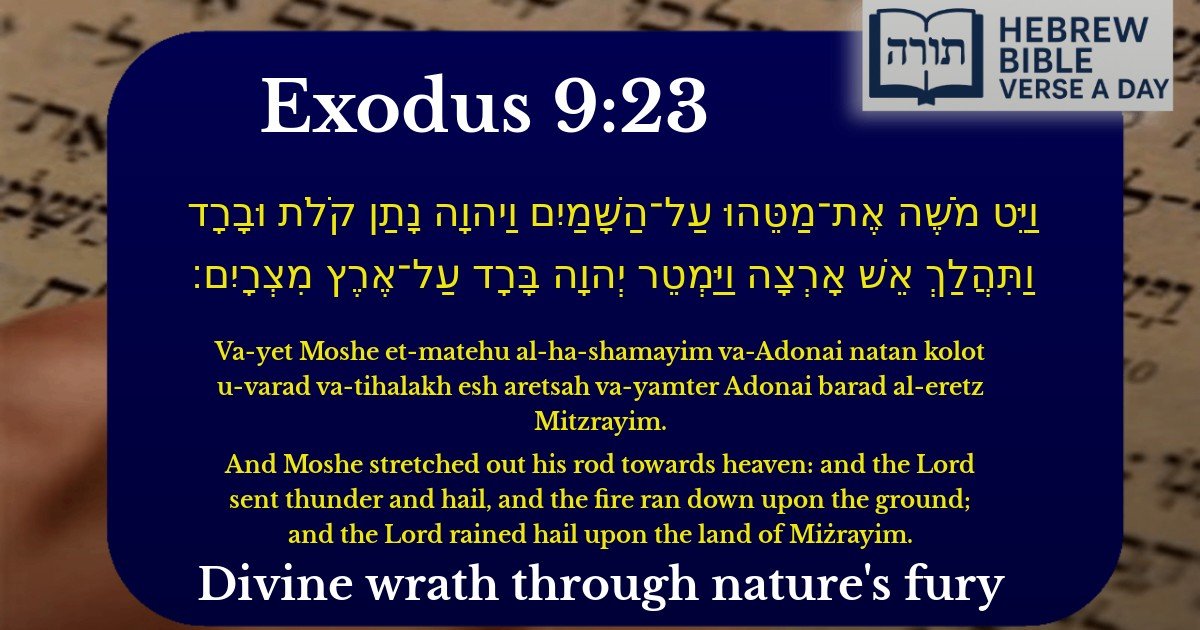
וַיֵּט מֹשֶׁה אֶת־מַטֵּהוּ עַל־הַשָּׁמַיִם וַיהוָה נָתַן קֹלֹת וּבָרָד וַתִּהֲלַךְ אֵשׁ אָרְצָה וַיַּמְטֵר יְהוָה בָּרָד עַל־אֶרֶץ מִצְרָיִם׃
English Translation
And Moshe stretched out his rod towards heaven: and the Lord sent thunder and hail, and the fire ran down upon the ground; and the Lord rained hail upon the land of Miżrayim.
Transliteration
Va-yet Moshe et-matehu al-ha-shamayim va-Adonai natan kolot u-varad va-tihalakh esh aretsah va-yamter Adonai barad al-eretz Mitzrayim.
Hebrew Leining Text
וַיֵּ֨ט מֹשֶׁ֣ה אֶת־מַטֵּ֘הוּ֮ עַל־הַשָּׁמַ֒יִם֒ וַֽיהֹוָ֗ה נָתַ֤ן קֹלֹת֙ וּבָרָ֔ד וַתִּ֥הֲלַךְ אֵ֖שׁ אָ֑רְצָה וַיַּמְטֵ֧ר יְהֹוָ֛ה בָּרָ֖ד עַל־אֶ֥רֶץ מִצְרָֽיִם׃
🎵 Listen to leining
Parasha Commentary
📚 Talmud Citations
This verse is quoted in the Talmud.
📖 Berakhot 54b
The verse is referenced in the context of discussing miracles and the appropriate blessings to recite upon witnessing natural phenomena that recall God's wonders in Egypt.
📖 Ta'anit 3b
The verse is mentioned in a discussion about the power of prayer and divine intervention, using the plagues of Egypt as an example of God's control over nature.
The Seventh Plague: Hail and Fire
The verse describes the seventh plague brought upon Egypt—hail mixed with fire—as Moshe stretches his rod toward heaven. This plague demonstrated Hashem's absolute dominion over nature, as fire and water (hail) coexisted miraculously against their natural tendencies (Rashi on Shemot 9:23). The Midrash (Shemot Rabbah 12:3) explains that this was a display of divine power, proving that even opposing elements obey Hashem's will.
The Symbolism of the Plague
Rambam (Moreh Nevuchim 3:29) teaches that each plague targeted Egypt's false beliefs. Hail and fire together negated the Egyptian worship of natural forces, showing that Hashem controls all elements. Additionally, the hail destroyed crops and livestock, striking at Egypt's economic strength (Ibn Ezra on Shemot 9:25).
Moshe's Role in the Plague
Moshe's act of stretching his rod toward heaven signifies that the plague came directly from Hashem, not through natural causes (Sforno on Shemot 9:23). The Talmud (Berachot 54b) notes that Moshe's precise obedience in performing the miracle highlights the importance of following divine commandments exactly as instructed.
The Thunder and Hail as Divine Messages
The thunder (kolot) served as a warning before the hail, giving the Egyptians a final chance to repent (Rashi on Shemot 9:23). The Midrash (Pirkei DeRabbi Eliezer 43) states that the fire within the hail symbolized Hashem's judgment, as fire represents both purification and punishment in Jewish thought.