

Join Our Newsletter To Be Informed When New Videos Are Posted
Hebrew Text
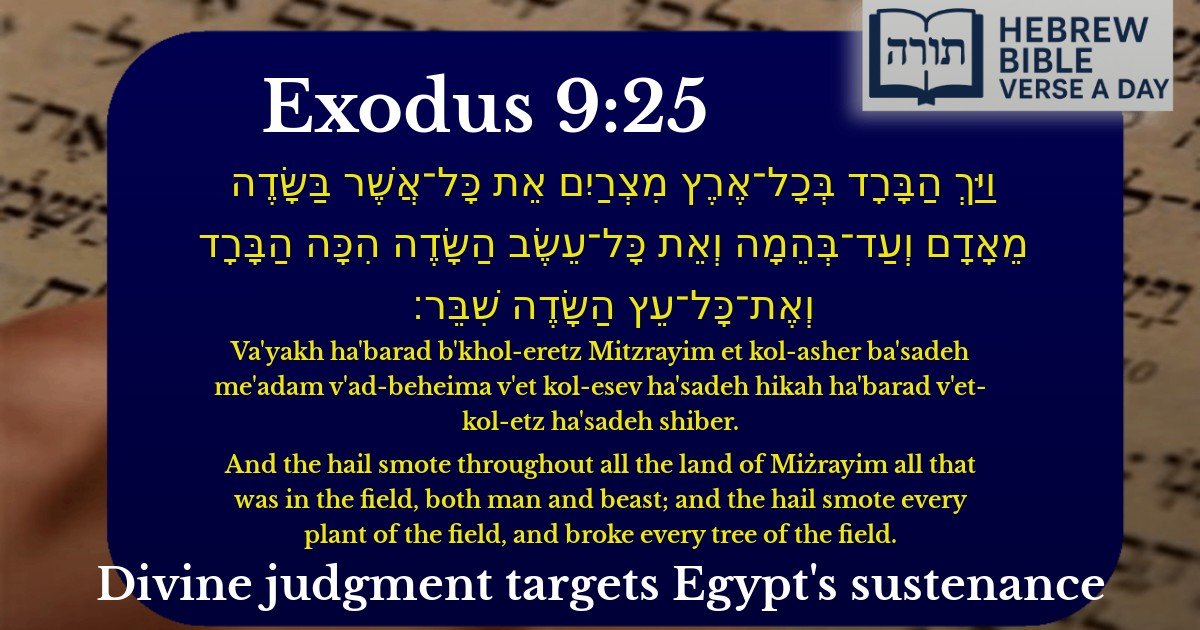
וַיַּךְ הַבָּרָד בְּכָל־אֶרֶץ מִצְרַיִם אֵת כָּל־אֲשֶׁר בַּשָּׂדֶה מֵאָדָם וְעַד־בְּהֵמָה וְאֵת כָּל־עֵשֶׂב הַשָּׂדֶה הִכָּה הַבָּרָד וְאֶת־כָּל־עֵץ הַשָּׂדֶה שִׁבֵּר׃
English Translation
And the hail smote throughout all the land of Miżrayim all that was in the field, both man and beast; and the hail smote every plant of the field, and broke every tree of the field.
Transliteration
Va'yakh ha'barad b'khol-eretz Mitzrayim et kol-asher ba'sadeh me'adam v'ad-beheima v'et kol-esev ha'sadeh hikah ha'barad v'et-kol-etz ha'sadeh shiber.
Hebrew Leining Text
וַיַּ֨ךְ הַבָּרָ֜ד בְּכׇל־אֶ֣רֶץ מִצְרַ֗יִם אֵ֚ת כׇּל־אֲשֶׁ֣ר בַּשָּׂדֶ֔ה מֵאָדָ֖ם וְעַד־בְּהֵמָ֑ה וְאֵ֨ת כׇּל־עֵ֤שֶׂב הַשָּׂדֶה֙ הִכָּ֣ה הַבָּרָ֔ד וְאֶת־כׇּל־עֵ֥ץ הַשָּׂדֶ֖ה שִׁבֵּֽר׃
🎵 Listen to leining
Parasha Commentary
📚 Talmud Citations
This verse is quoted in the Talmud.
📖 Berakhot 54b
The verse is referenced in the context of discussing the miracles performed in Egypt, particularly the plague of hail, as part of the broader discussion on the obligation to recite blessings over miracles.
📖 Ta'anit 7a
The verse is cited in a discussion about the power of prayer and divine intervention, using the plague of hail as an example of God's control over natural phenomena.
The Plague of Hail in Egypt
The verse describes the seventh plague—the plague of hail—that struck Egypt, as recorded in Shemot (Exodus) 9:25. This plague was unique in its destructive power, affecting humans, animals, vegetation, and trees. The Torah emphasizes its comprehensive devastation with the repetition of "כָּל" (all), underscoring that no part of Egyptian life was spared.
Rashi's Commentary on the Hail's Impact
Rashi (Shemot 9:25) notes that the hail was miraculous in its precision. While it destroyed everything in the field, it did not harm the Israelites in Goshen (Shemot 9:26). Additionally, Rashi explains that the phrase "וְאֶת־כָּל־עֵץ הַשָּׂדֶה שִׁבֵּר" (and broke every tree of the field) refers to the hail's ability to strip trees of their bark and branches, rendering them useless. This aligns with the Midrash (Shemot Rabbah 12:5), which describes the hail as containing fire within the ice, amplifying its destructive force.
The Dual Nature of the Hail
The Talmud (Berachot 54b) highlights the miraculous nature of the hail, which combined fire and ice—elements that normally cancel each other out. Rambam (Moreh Nevuchim 2:29) interprets this as a demonstration of Hashem's absolute control over nature, showing that He can suspend natural laws to execute divine judgment.
The Moral Lesson of the Plague
The Midrash Tanchuma (Va'eira 14) teaches that this plague was a punishment for the Egyptians' cruelty in forcing the Israelites to work in the fields under harsh conditions. The destruction of the fields and trees symbolized the undoing of Egypt's economic exploitation, as their agricultural wealth was a direct result of Israelite labor.
Key Takeaways from the Verse