
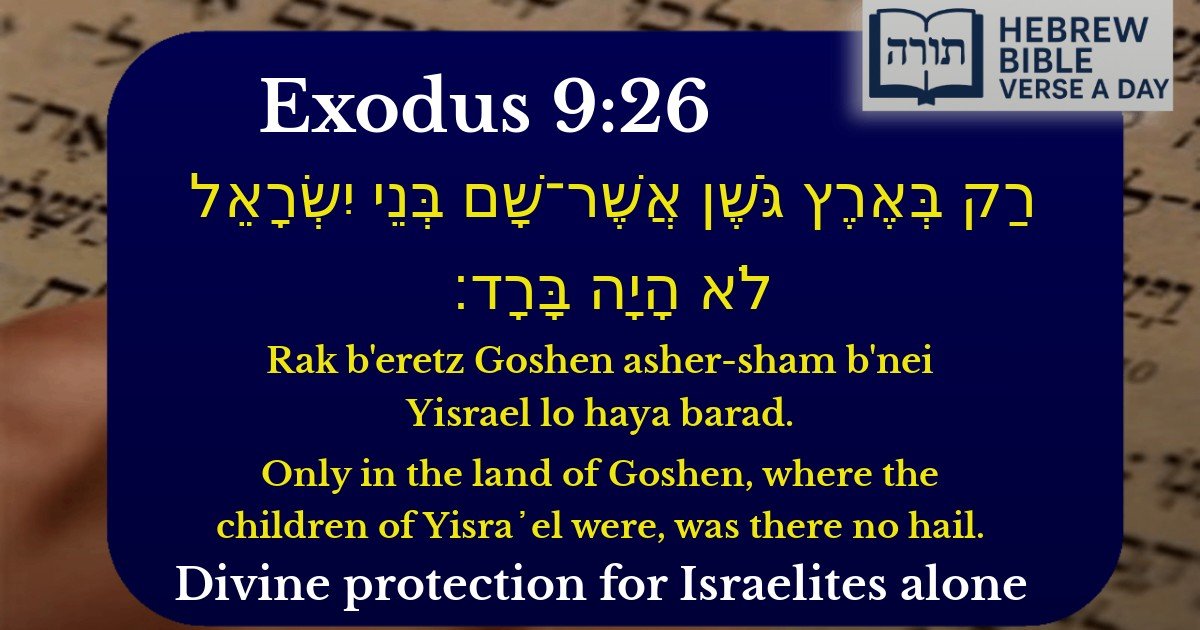

Exodus 9:26 - Divine protection for Israelites alone

Exodus 9:26 - שמות 9:26

Hebrew Text

רַק בְּאֶרֶץ גֹּשֶׁן אֲשֶׁר־שָׁם בְּנֵי יִשְׂרָאֵל לֹא הָיָה בָּרָד׃

English Translation

Only in the land of Goshen, where the children of Yisra᾽el were, was there no hail.

Transliteration

Rak b'eretz Goshen asher-sham b'nei Yisrael lo haya barad.

Hebrew Leining Text

רַ֚ק בְּאֶ֣רֶץ גֹּ֔שֶׁן אֲשֶׁר־שָׁ֖ם בְּנֵ֣י יִשְׂרָאֵ֑ל לֹ֥א הָיָ֖ה בָּרָֽד׃

🎵 Listen to leining

Parasha Commentary

Context in the Plagues of Egypt

The verse (Shemot 9:26) describes the seventh plague, barad (hail), which devastated Egypt but spared the land of Goshen where Bnei Yisrael resided. This follows the pattern of earlier plagues, where Hashem distinguished between Egypt and Israel, demonstrating His divine providence over His people.

Rashi's Explanation

Rashi (ad loc.) emphasizes that the absence of hail in Goshen was a clear miracle, as Goshen was geographically part of Egypt and thus naturally should have been affected. This distinction served as a sign that the plagues were directed by Hashem’s will, not natural phenomena.

Divine Protection and Separation

The Midrash (Shemot Rabbah 12:4) elaborates that Goshen was spared to fulfill the promise made to Avraham Avinu in Brit Bein HaBetarim (Bereishit 15:14), where Hashem assured that He would ultimately judge Egypt while protecting Israel. The selective nature of the plague reinforced the idea that Bnei Yisrael were under divine guardianship.

Moral and Theological Implications

  • Hashgacha Pratit (Divine Providence): The Rambam (Moreh Nevuchim 3:17) discusses how such miracles affirm Hashem’s direct involvement in history, guiding the destiny of His people.
  • Distinction Between Israel and Egypt: The Talmud (Berachot 9a) notes that the plagues highlighted the moral divide between Pharaoh’s oppression and Israel’s covenantal relationship with Hashem.

Goshen as a Symbol

The Kli Yakar (Shemot 9:26) suggests that Goshen’s exemption symbolizes the future redemption—just as Israel was shielded in Egypt, so too will they be protected in times of divine judgment. This foreshadows the eventual Exodus and the eternal bond between Hashem and Klal Yisrael.

📚 Talmud Citations

This verse is not quoted in the Talmud.

Frequently Asked Questions

Q: What does Exodus 9:26 mean when it says there was no hail in Goshen?
A: This verse shows that during the plague of hail in Egypt, the land of Goshen—where the Israelites lived—was miraculously protected. This demonstrated Hashem's special care for Bnei Yisrael even while punishing Egypt (Rashi on Exodus 9:26).
Q: Why was Goshen protected from the hail?
A: Goshen was protected because it was where the Israelites lived. This miracle showed that the plagues were targeted punishments for Pharaoh and Egypt, not random natural disasters. The Midrash teaches this was one of many ways Hashem distinguished between the Israelites and Egyptians (Shemot Rabbah 12:4).
Q: What lesson can we learn from Exodus 9:26 today?
A: We learn that Hashem protects His people even when there is suffering around them. The Rambam teaches that recognizing such divine protection should increase our faith and gratitude (Hilchot Yesodei HaTorah 1:1-3).
Q: How did the Egyptians react to Goshen being unharmed?
A: The Torah doesn't specify, but the fact that Pharaoh's servants later warned him (Exodus 10:7) suggests they noticed the distinction. The Talmud teaches that miracles for Israel made some Egyptians recognize Hashem's power (Megillah 10b).
Q: Was Goshen protected from all the plagues?
A: No, only certain plagues distinguished between Egyptians and Israelites. The Midrash explains this was strategic—some plagues affected everyone to teach different lessons (Shemot Rabbah 11:5). The hail was unique in its visible geographic boundary.