
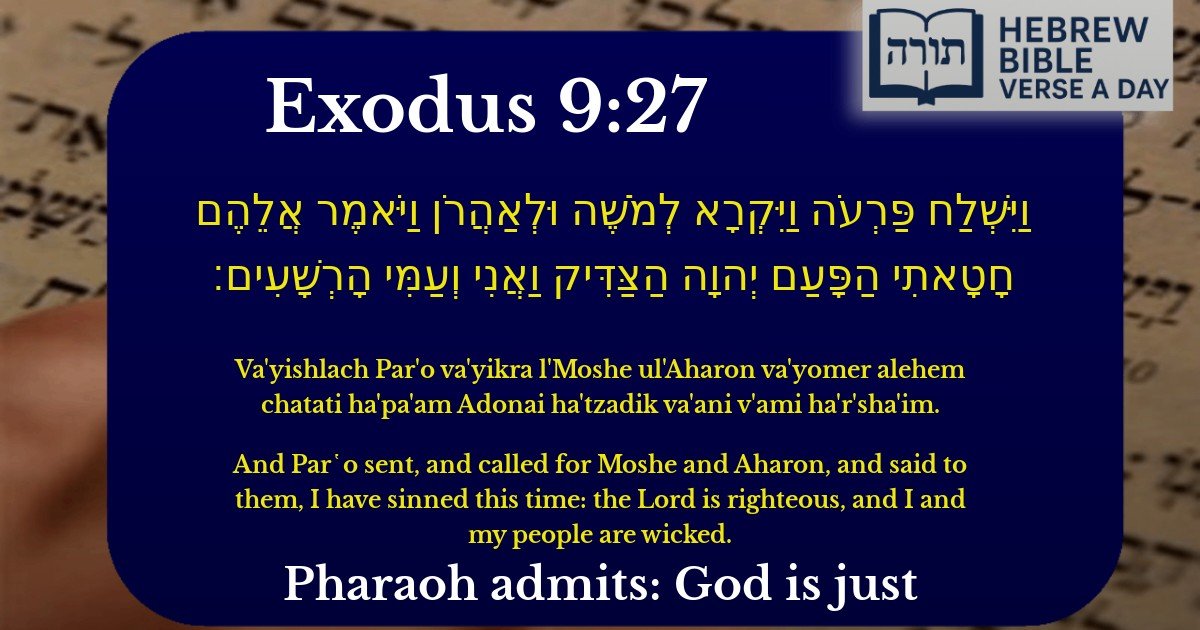

Exodus 9:27 - Pharaoh admits: God is just

Exodus 9:27 - שמות 9:27

Hebrew Text

וַיִּשְׁלַח פַּרְעֹה וַיִּקְרָא לְמֹשֶׁה וּלְאַהֲרֹן וַיֹּאמֶר אֲלֵהֶם חָטָאתִי הַפָּעַם יְהוָה הַצַּדִּיק וַאֲנִי וְעַמִּי הָרְשָׁעִים׃

English Translation

And Par῾o sent, and called for Moshe and Aharon, and said to them, I have sinned this time: the Lord is righteous, and I and my people are wicked.

Transliteration

Va'yishlach Par'o va'yikra l'Moshe ul'Aharon va'yomer alehem chatati ha'pa'am Adonai ha'tzadik va'ani v'ami ha'r'sha'im.

Hebrew Leining Text

וַיִּשְׁלַ֣ח פַּרְעֹ֗ה וַיִּקְרָא֙ לְמֹשֶׁ֣ה וּֽלְאַהֲרֹ֔ן וַיֹּ֥אמֶר אֲלֵהֶ֖ם חָטָ֣אתִי הַפָּ֑עַם יְהֹוָה֙ הַצַּדִּ֔יק וַאֲנִ֥י וְעַמִּ֖י הָרְשָׁעִֽים׃

🎵 Listen to leining

Parasha Commentary

Pharaoh's Admission of Sin

The verse (Shemot 9:27) describes Pharaoh's temporary acknowledgment of wrongdoing during the plague of hail. Rashi explains that Pharaoh's confession—"I have sinned this time"—indicates his recognition of Hashem's justice specifically in this instance, but not a full repentance. The phrase "this time" suggests his admission was limited to the current plague, not his previous obstinacy.

The Righteousness of Hashem

Pharaoh declares, "Hashem is righteous, and I and my people are wicked." The Midrash (Shemot Rabbah 12:1) highlights the irony of Pharaoh, a tyrant, acknowledging divine justice. Rambam (Hilchot Teshuvah 2:1) notes that such confessions, even if insincere, demonstrate the undeniable truth of Hashem's righteousness when confronted with undeniable miracles.

Pharaoh's Incomplete Repentance

The Talmud (Sanhedrin 105a) compares Pharaoh's repentance to that of the wicked King Achav. Both admitted wrongdoing under duress but lacked sincere commitment to change. The Malbim emphasizes that Pharaoh's words were tactical—aimed at ending the plague—rather than a genuine transformation of character.

Lessons in Teshuvah

  • Partial Admission: Pharaoh's "this time" teaches that true teshuvah requires acknowledging all past sins, not just recent ones (Rambam, Hilchot Teshuvah 1:1).
  • External vs. Internal Change: His words lacked the humility and resolve of genuine repentance, as seen in David’s confession (Tehillim 51:3-4).
  • Divine Justice: Even a reluctant admission from a tyrant affirms Hashem's righteousness, reinforcing the purpose of the plagues as divine revelation (Sforno).

📚 Talmud Citations

This verse is not quoted in the Talmud.

Frequently Asked Questions

Q: What does Pharaoh mean when he says 'I have sinned this time' in Exodus 9:27?
A: Pharaoh admits his wrongdoing after the plague of hail, acknowledging that Hashem is just in punishing Egypt. However, Rashi notes that Pharaoh's repentance was insincere—he only admitted guilt temporarily due to fear, not true change of heart (Rashi on Exodus 9:27).
Q: Why does Pharaoh call Hashem 'righteous' and himself 'wicked' in this verse?
A: Pharaoh recognizes that Hashem's punishments are justified because of Egypt's oppression of Bnei Yisrael. The Midrash explains that even wicked people can sometimes acknowledge truth under duress, but true teshuvah requires lasting change (Shemot Rabbah 12:1).
Q: How does this verse teach us about repentance?
A: The Rambam (Hilchot Teshuvah 2:1-2) teaches that genuine repentance requires admitting sin, regretting it, and resolving not to repeat it. Pharaoh failed this test—his admission was temporary, teaching that fear alone doesn’t constitute true teshuvah.
Q: Why did Pharaoh call Moshe and Aharon specifically to confess?
A: The Talmud (Sanhedrin 102b) explains that Pharaoh sought Moshe’s intercession to stop the plague, showing his focus was on ending suffering rather than correcting his ways. This highlights the difference between seeking convenience and seeking righteousness.
Q: What lesson can we learn from Pharaoh saying 'I and my people are wicked'?
A: The Sforno teaches that Pharaoh’s blame-shifting ('my people are wicked') reveals his lack of personal accountability. True repentance requires owning one’s actions without excuses (Sforno on Exodus 9:27).