

Join Our Newsletter To Be Informed When New Videos Are Posted
Hebrew Text
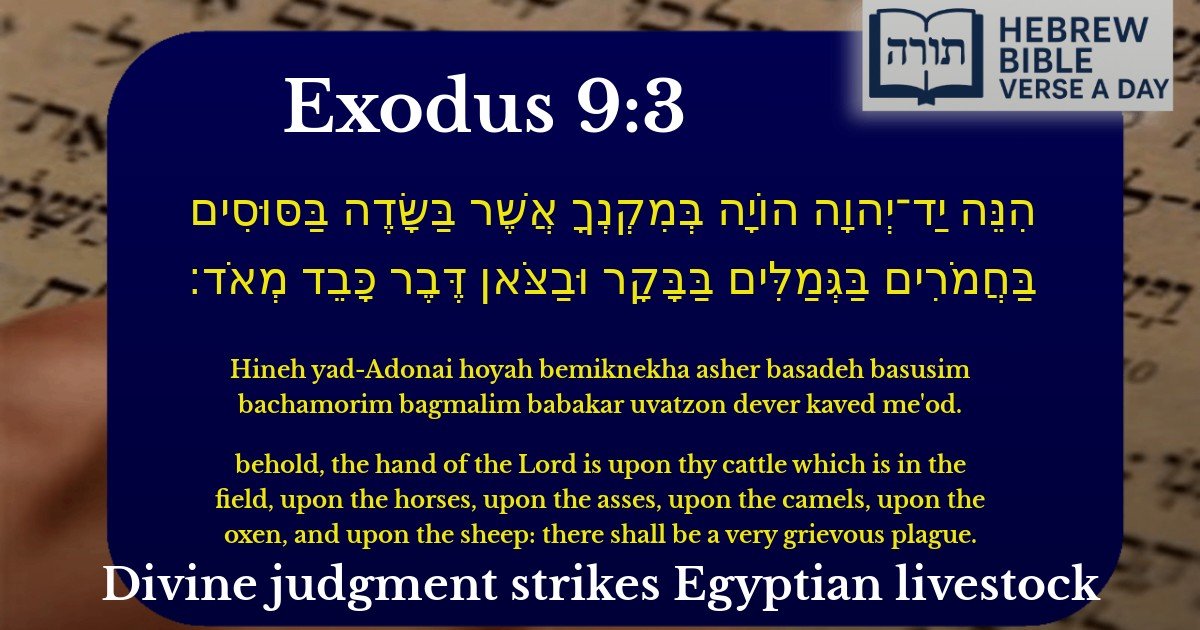
הִנֵּה יַד־יְהוָה הוֹיָה בְּמִקְנְךָ אֲשֶׁר בַּשָּׂדֶה בַּסּוּסִים בַּחֲמֹרִים בַּגְּמַלִּים בַּבָּקָר וּבַצֹּאן דֶּבֶר כָּבֵד מְאֹד׃
English Translation
behold, the hand of the Lord is upon thy cattle which is in the field, upon the horses, upon the asses, upon the camels, upon the oxen, and upon the sheep: there shall be a very grievous plague.
Transliteration
Hineh yad-Adonai hoyah bemiknekha asher basadeh basusim bachamorim bagmalim babakar uvatzon dever kaved me'od.
Hebrew Leining Text
הִנֵּ֨ה יַד־יְהֹוָ֜ה הוֹיָ֗ה בְּמִקְנְךָ֙ אֲשֶׁ֣ר בַּשָּׂדֶ֔ה בַּסּוּסִ֤ים בַּֽחֲמֹרִים֙ בַּגְּמַלִּ֔ים בַּבָּקָ֖ר וּבַצֹּ֑אן דֶּ֖בֶר כָּבֵ֥ד מְאֹֽד׃
🎵 Listen to leining
Parasha Commentary
📚 Talmud Citations
This verse is not quoted in the Talmud.
Context in the Plagues of Egypt
This verse (Shemot 9:3) describes the fifth plague, Dever (דֶּבֶר), a severe pestilence that struck the livestock of Egypt. According to Rashi, this plague specifically targeted animals left in the fields, sparing those kept indoors—highlighting Hashem's precision in distinguishing between Egyptian and Israelite property (since Bnei Yisrael dwelled in Goshen, where no plague occurred, as stated in Shemot 9:4).
The Significance of "Yad Hashem" (Hand of the Lord)
The phrase "הִנֵּה יַד־יְהוָה" ("behold, the hand of the Lord") emphasizes divine intervention. Ramban explains that this terminology underscores that the plague was not a natural occurrence but a direct act of Hashem to demonstrate His sovereignty over creation. The Midrash Tanchuma (Bo 5) elaborates that each plague corresponded to Egypt’s specific sins, and Dever punished their exploitation of Israelite labor in agricultural work with livestock.
Enumeration of Affected Animals
The Severity of the Plague
The term "דֶּבֶר כָּבֵד מְאֹד" ("a very grievous plague") is interpreted by the Malbim as indicating an unprecedented level of devastation. Unlike natural plagues, which might affect certain species or regions, this was a targeted, supernatural affliction designed to break Pharaoh’s stubbornness (as per Shemot Rabbah 11:3).
Moral and Theological Implications
The plague of Dever served as a divine rebuke of Egypt’s cruelty. The Kli Yakar connects this to the broader theme of middah k’neged middah (measure for measure): just as Pharaoh enslaved Bnei Yisrael by forcing them to tend livestock (Shemot 1:11), his own livestock were struck. Additionally, the Chizkuni highlights that the Egyptians worshipped some of these animals (e.g., the bull-god Apis), making their destruction a blow to idolatry.