

Join Our Newsletter To Be Informed When New Videos Are Posted
Hebrew Text
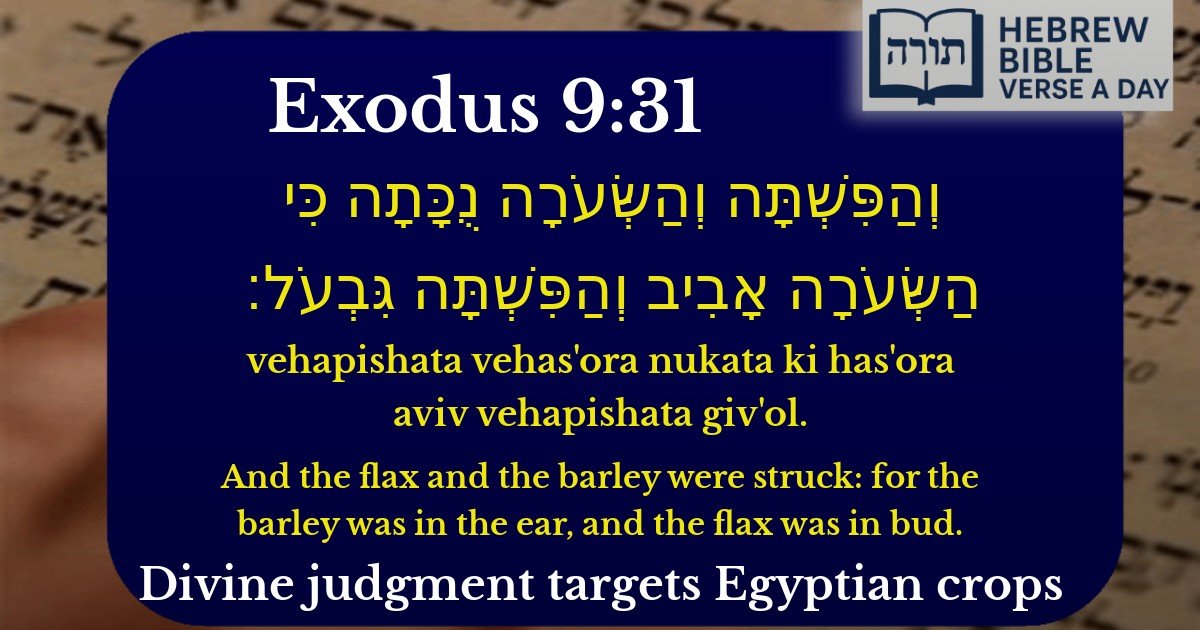
וְהַפִּשְׁתָּה וְהַשְּׂעֹרָה נֻכָּתָה כִּי הַשְּׂעֹרָה אָבִיב וְהַפִּשְׁתָּה גִּבְעֹל׃
English Translation
And the flax and the barley were struck: for the barley was in the ear, and the flax was in bud.
Transliteration
Vehapishata vehas'ora nukata ki has'ora aviv vehapishata giv'ol.
Hebrew Leining Text
וְהַפִּשְׁתָּ֥ה וְהַשְּׂעֹרָ֖ה נֻכָּ֑תָה כִּ֤י הַשְּׂעֹרָה֙ אָבִ֔יב וְהַפִּשְׁתָּ֖ה גִּבְעֹֽל׃
🎵 Listen to leining
Parasha Commentary
📚 Talmud Citations
This verse is not quoted in the Talmud.
Context in the Plagues of Egypt
This verse (Shemot 9:31) describes the aftermath of the plague of hail, which destroyed certain crops in Egypt. The Torah specifies that the flax (פִּשְׁתָּה) and barley (שְּׂעֹרָה) were particularly affected because they were at vulnerable stages of growth—the barley was already in the ear (אָבִיב), and the flax was budding (גִּבְעֹל). Rashi explains that this timing was significant because these crops ripen earlier than others, making them susceptible to destruction at this point in the year.
Agricultural and Halachic Significance
The mention of these crops is not incidental. Barley and flax held particular importance in Egypt and in Jewish law:
Divine Precision in the Plague
Rambam (Moreh Nevuchim 3:50) emphasizes that the plagues were not arbitrary but were carefully designed to demonstrate Hashem's control over nature. The fact that only certain crops were destroyed—while wheat and spelt were spared (Shemot 9:32)—showed that the plague was a targeted judgment, not a random disaster. The Ibn Ezra adds that this precision served as a lesson to Pharaoh and the Egyptians that Hashem governs even the growth cycles of plants.
Moral and Symbolic Lessons
The Midrash Tanchuma (Va'eira 14) draws a parallel between the flax and barley and the moral state of Egypt:
Their destruction was thus a rebuke of these corrupt traits.