

Join Our Newsletter To Be Informed When New Videos Are Posted
Hebrew Text
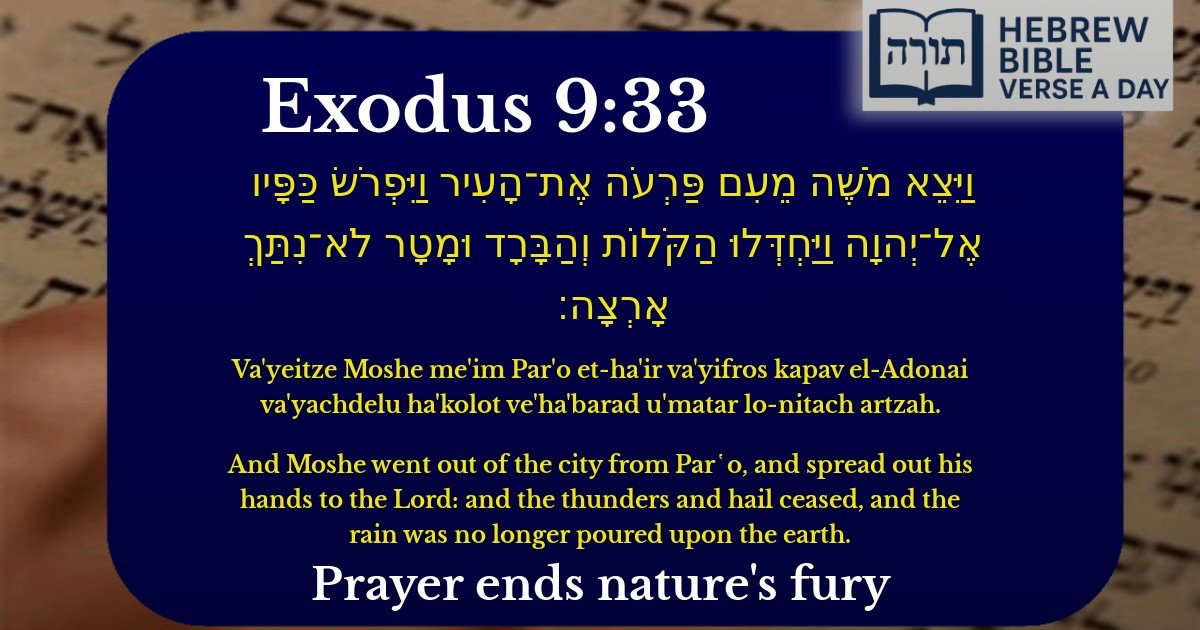
וַיֵּצֵא מֹשֶׁה מֵעִם פַּרְעֹה אֶת־הָעִיר וַיִּפְרֹשׂ כַּפָּיו אֶל־יְהוָה וַיַּחְדְּלוּ הַקֹּלוֹת וְהַבָּרָד וּמָטָר לֹא־נִתַּךְ אָרְצָה׃
English Translation
And Moshe went out of the city from Par῾o, and spread out his hands to the Lord: and the thunders and hail ceased, and the rain was no longer poured upon the earth.
Transliteration
Va'yeitze Moshe me'im Par'o et-ha'ir va'yifros kapav el-Adonai va'yachdelu ha'kolot ve'ha'barad u'matar lo-nitach artzah.
Hebrew Leining Text
וַיֵּצֵ֨א מֹשֶׁ֜ה מֵעִ֤ם פַּרְעֹה֙ אֶת־הָעִ֔יר וַיִּפְרֹ֥שׂ כַּפָּ֖יו אֶל־יְהֹוָ֑ה וַֽיַּחְדְּל֤וּ הַקֹּלוֹת֙ וְהַבָּרָ֔ד וּמָטָ֖ר לֹא־נִתַּ֥ךְ אָֽרְצָה׃
🎵 Listen to leining
Parasha Commentary
📚 Talmud Citations
This verse is not quoted in the Talmud.
Moshe's Prayer and the Cessation of the Plague
The verse describes Moshe leaving Pharaoh's presence, exiting the city, and spreading his hands in prayer to Hashem, resulting in the cessation of the hail and thunder. Rashi (Shemot 9:29) explains that Moshe left the city to pray because it was filled with idolatry, and he did not wish to pray in an impure place. This teaches the importance of separating oneself from negative influences when engaging in divine service.
The Significance of Spreading Hands in Prayer
The phrase "וַיִּפְרֹשׂ כַּפָּיו" (spread out his hands) indicates a posture of supplication. The Rambam (Hilchot Tefillah 5:4) notes that spreading one's hands upward is a traditional gesture of earnest prayer, symbolizing dependence on Hashem. The Midrash Tanchuma (Va'eira 22) adds that Moshe's outstretched hands demonstrated his complete trust in Hashem's mercy to stop the plague.
The Immediate Response to Prayer
The cessation of the hail and thunder immediately after Moshe's prayer highlights the power of a tzaddik's tefillah. The Talmud (Berachot 34b) teaches that the prayers of the righteous can bring about swift divine intervention. Additionally, the Malbim (Shemot 9:33) observes that the phrase "וַיַּחְדְּלוּ הַקֹּלוֹת" (the thunders ceased) implies a sudden, complete halt—emphasizing that nature obeys Hashem's will without delay when He responds to sincere prayer.
Lessons in Divine Justice and Mercy