

Join Our Newsletter To Be Informed When New Videos Are Posted
Hebrew Text
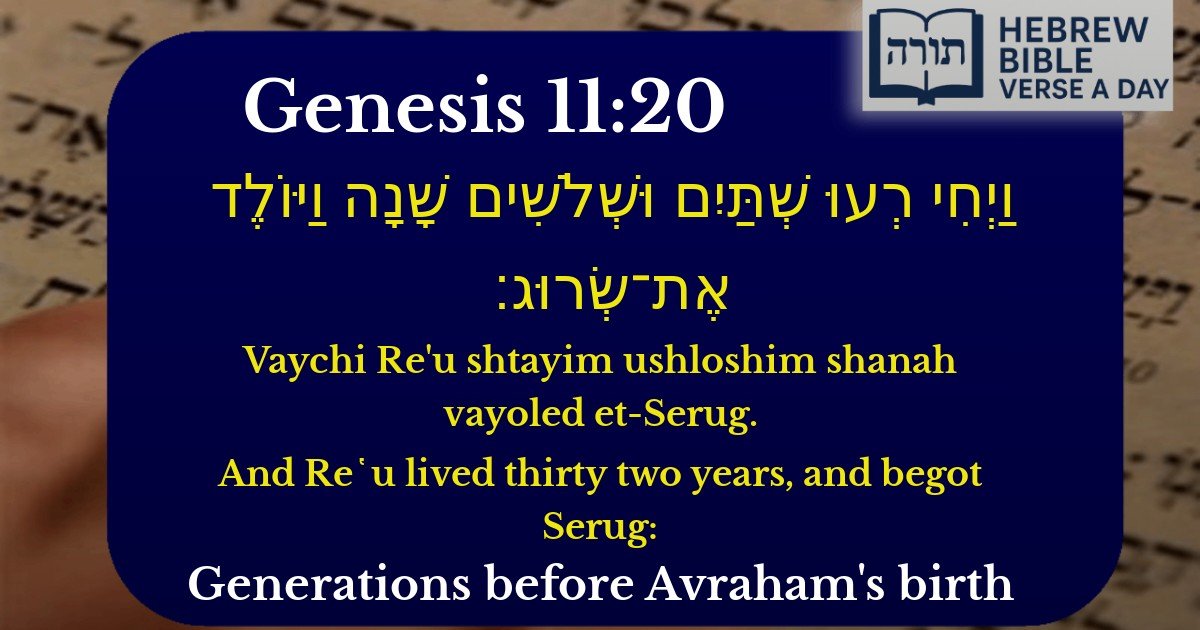
וַיְחִי רְעוּ שְׁתַּיִם וּשְׁלֹשִׁים שָׁנָה וַיּוֹלֶד אֶת־שְׂרוּג׃
English Translation
And Re῾u lived thirty two years, and begot Serug:
Transliteration
Vaychi Re'u shtayim ushloshim shanah vayoled et-Serug.
Hebrew Leining Text
וַיְחִ֣י רְע֔וּ שְׁתַּ֥יִם וּשְׁלֹשִׁ֖ים שָׁנָ֑ה וַיּ֖וֹלֶד אֶת־שְׂרֽוּג׃
🎵 Listen to leining
Parasha Commentary
📚 Talmud Citations
This verse is not quoted in the Talmud.
Commentary on Bereishit 11:20 - The Life of Re'u and the Birth of Serug
The verse states: "וַיְחִי רְעוּ שְׁתַּיִם וּשְׁלֹשִׁים שָׁנָה וַיּוֹלֶד אֶת־שְׂרוּג" ("And Re'u lived thirty-two years, and begot Serug"). This passage appears in the genealogy from Shem to Avraham, detailing the lineage that connects Noach to the Avos (forefathers).
Rashi's Explanation
Rashi (Rabbi Shlomo Yitzchaki) notes that the phrase "וַיְחִי" ("and he lived") is used here to indicate that Re'u reached the age of thirty-two before fathering Serug. This follows the pattern seen in earlier generations, where the Torah specifies the age at which each patriarch had his named descendant in this lineage. Rashi emphasizes that these genealogical records establish the authenticity of the Jewish people's ancestry, tracing back to Adam HaRishon.
Significance of the Name "Serug"
The Midrash (Bereishit Rabbah 38:13) discusses the meaning of the name שְׂרוּג (Serug), suggesting it is related to the word שְׂרִיג (branch), symbolizing the continuation of the lineage leading to Avraham Avinu. The Sforno (Rabbi Ovadia Sforno) adds that this name may allude to the branching out of humanity into different nations, as this period was marked by the dispersion after the Tower of Bavel.
Chronological Context
Rambam (Maimonides) in Moreh Nevuchim (Guide for the Perplexed) highlights that these genealogies serve not only as historical records but also as a framework for understanding the development of monotheism. The generations from Noach to Avraham were a transitional period, where idolatry became widespread, yet the lineage leading to Avraham preserved the knowledge of Hashem.
Lessons from Re'u's Life