

Join Our Newsletter To Be Informed When New Videos Are Posted
Hebrew Text
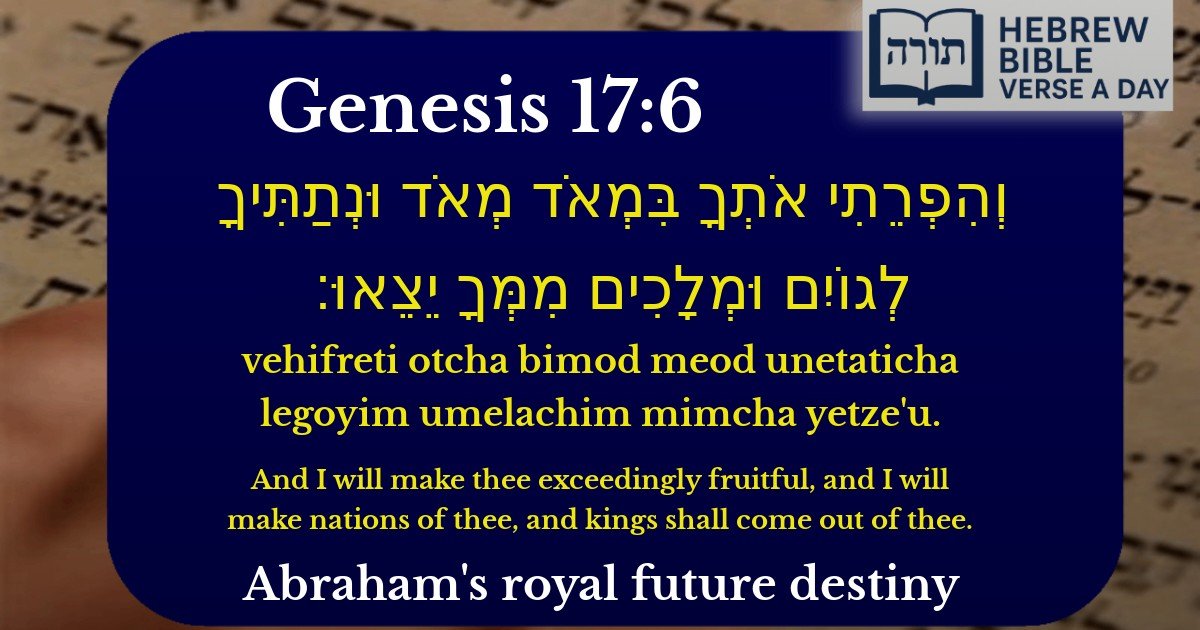
וְהִפְרֵתִי אֹתְךָ בִּמְאֹד מְאֹד וּנְתַתִּיךָ לְגוֹיִם וּמְלָכִים מִמְּךָ יֵצֵאוּ׃
English Translation
And I will make thee exceedingly fruitful, and I will make nations of thee, and kings shall come out of thee.
Transliteration
Vehifreti otcha bimod meod unetaticha legoyim umelachim mimcha yetze'u.
Hebrew Leining Text
וְהִפְרֵתִ֤י אֹֽתְךָ֙ בִּמְאֹ֣ד מְאֹ֔ד וּנְתַתִּ֖יךָ לְגוֹיִ֑ם וּמְלָכִ֖ים מִמְּךָ֥ יֵצֵֽאוּ׃
🎵 Listen to leining
Parasha Commentary
📚 Talmud Citations
This verse is quoted in the Talmud.
📖 Megillah 14a
The verse is referenced in the context of discussing the descendants of Abraham and the fulfillment of God's promise to make him exceedingly fruitful.
📖 Sanhedrin 107a
The verse is cited in a discussion about the blessings and promises given to Abraham and his lineage.
Explanation of the Verse
The verse "וְהִפְרֵתִי אֹתְךָ בִּמְאֹד מְאֹד וּנְתַתִּיךָ לְגוֹיִם וּמְלָכִים מִמְּךָ יֵצֵאוּ" (And I will make thee exceedingly fruitful, and I will make nations of thee, and kings shall come out of thee) appears in Bereishit (Genesis) 17:6, as part of Hashem's covenant with Avraham Avinu. This promise is foundational to the Jewish people's destiny and is interpreted in depth by classical Jewish commentators.
Rashi's Commentary
Rashi explains that the phrase "בִּמְאֹד מְאֹד" (exceedingly fruitful) emphasizes an extraordinary level of blessing, beyond normal human fertility. He notes that this blessing was not only for Avraham personally but also for his descendants, ensuring their proliferation. Regarding "וּנְתַתִּיךָ לְגוֹיִם" (I will make nations of thee), Rashi clarifies that this refers to the descendants of Yishmael and Esav, who would become nations, while the primary covenant would remain with Yitzchak and Yaakov.
Rambam's Perspective
Rambam (Maimonides), in Moreh Nevuchim, discusses the broader theological significance of this promise. He explains that the blessing of kings emerging from Avraham ("וּמְלָכִים מִמְּךָ יֵצֵאוּ") signifies the establishment of a righteous lineage that would uphold divine values, ultimately leading to the Davidic dynasty and Mashiach.
Midrashic Interpretations
The Midrash Rabbah (Bereishit 46:4) elaborates on the phrase "לְגוֹיִם", teaching that Avraham would become the father of multiple nations, including spiritual "nations" in the form of converts who would join the Jewish people. The Midrash also connects the promise of kings to the future reign of David and Shlomo, as well as the ultimate redemption.
Key Themes in Jewish Thought