

Join Our Newsletter To Be Informed When New Videos Are Posted
Hebrew Text
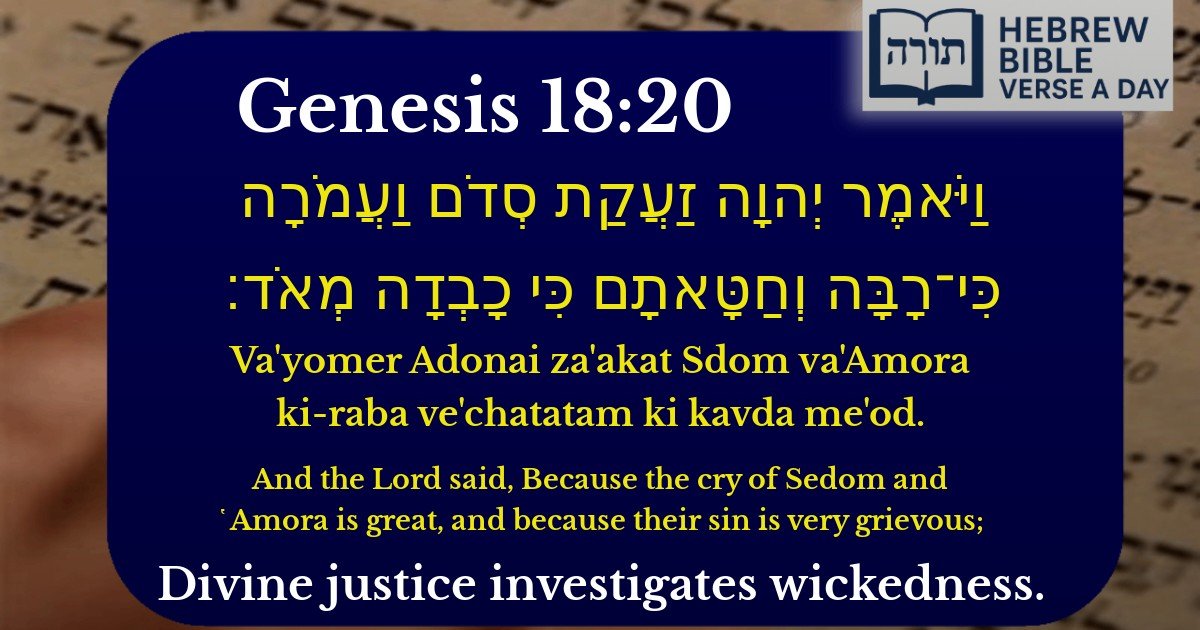
וַיֹּאמֶר יְהוָה זַעֲקַת סְדֹם וַעֲמֹרָה כִּי־רָבָּה וְחַטָּאתָם כִּי כָבְדָה מְאֹד׃
English Translation
And the Lord said, Because the cry of Sedom and ῾Amora is great, and because their sin is very grievous;
Transliteration
Va'yomer Adonai za'akat Sdom va'Amora ki-raba ve'chatatam ki kavda me'od.
Hebrew Leining Text
וַיֹּ֣אמֶר יְהֹוָ֔ה זַעֲקַ֛ת סְדֹ֥ם וַעֲמֹרָ֖ה כִּי־רָ֑בָּה וְחַ֨טָּאתָ֔ם כִּ֥י כָבְדָ֖ה מְאֹֽד׃
🎵 Listen to leining
Parasha Commentary
📚 Talmud Citations
This verse is quoted in the Talmud.
📖 Sanhedrin 109a
The verse is referenced in the context of discussing the sins of Sodom and Gomorrah, illustrating the severity of their transgressions.
📖 Bava Batra 15b
Mentioned in a discussion about the prophetic nature of the verse and its implications for understanding divine judgment.
The Cry of Sedom and Amorah
The verse states, "And the Lord said, Because the cry of Sedom and ῾Amora is great, and because their sin is very grievous" (Bereishit 18:20). Rashi explains that the "cry" refers to the outcry of the oppressed in these cities, whose suffering reached Hashem. The Midrash (Bereishit Rabbah 49:6) elaborates that the people of Sedom were notorious for their cruelty, particularly in denying hospitality and exploiting strangers. Their sins were so severe that their collective wickedness demanded divine intervention.
The Nature of Their Sins
Rambam (Hilchot De'ot 6:1) teaches that the sins of Sedom stemmed from extreme selfishness and a rejection of chesed (kindness). The Talmud (Sanhedrin 109a) details their harsh decrees against acts of charity, even punishing those who offered food to the poor. The severity of their sins is emphasized by the phrase "כִּי כָבְדָה מְאֹד" ("because it is very grievous"), indicating that their corruption was irredeemable.
Divine Justice and Measure-for-Measure
The punishment of Sedom reflects the principle of middah k'neged middah (measure-for-measure). The Sforno notes that since they oppressed the vulnerable, their destruction came through a reversal of their own cruelty—fire and brimstone from above. The Kli Yakar adds that their societal corruption was so entrenched that repentance was impossible, justifying their fate as a necessary act of divine justice.
Lessons for Future Generations