

Join Our Newsletter To Be Informed When New Videos Are Posted
Hebrew Text
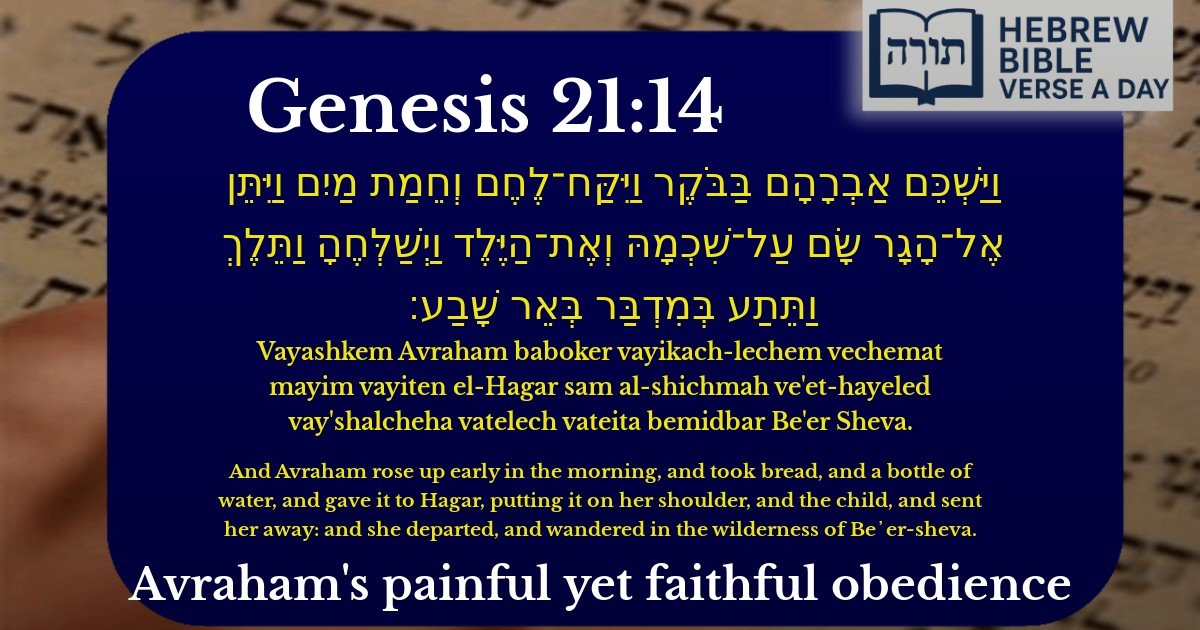
וַיַּשְׁכֵּם אַבְרָהָם בַּבֹּקֶר וַיִּקַּח־לֶחֶם וְחֵמַת מַיִם וַיִּתֵּן אֶל־הָגָר שָׂם עַל־שִׁכְמָהּ וְאֶת־הַיֶּלֶד וַיְשַׁלְּחֶהָ וַתֵּלֶךְ וַתֵּתַע בְּמִדְבַּר בְּאֵר שָׁבַע׃
English Translation
And Avraham rose up early in the morning, and took bread, and a bottle of water, and gave it to Hagar, putting it on her shoulder, and the child, and sent her away: and she departed, and wandered in the wilderness of Be᾽er-sheva.
Transliteration
Vayashkem Avraham baboker vayikach-lechem vechemat mayim vayiten el-Hagar sam al-shichmah ve'et-hayeled vay'shalcheha vatelech vateita bemidbar Be'er Sheva.
Hebrew Leining Text
וַיַּשְׁכֵּ֣ם אַבְרָהָ֣ם ׀ בַּבֹּ֡קֶר וַיִּֽקַּֽח־לֶ֩חֶם֩ וְחֵ֨מַת מַ֜יִם וַיִּתֵּ֣ן אֶל־הָ֠גָ֠ר שָׂ֧ם עַל־שִׁכְמָ֛הּ וְאֶת־הַיֶּ֖לֶד וַֽיְשַׁלְּחֶ֑הָ וַתֵּ֣לֶךְ וַתֵּ֔תַע בְּמִדְבַּ֖ר בְּאֵ֥ר שָֽׁבַע׃
🎵 Listen to leining
Parasha Commentary
📚 Talmud Citations
This verse is quoted in the Talmud.
📖 Rosh Hashanah 16b
The verse is referenced in a discussion about the timing of divine judgment, illustrating how Abraham's actions in the morning symbolize the time of judgment.
📖 Sanhedrin 89b
The verse is cited in a discussion about the trials of Abraham, emphasizing his obedience and the hardships he faced.
Avraham's Early Morning Actions
The verse begins with Avraham rising early in the morning (וַיַּשְׁכֵּם בַּבֹּקֶר), which Rashi explains as a sign of his eagerness to fulfill Hashem's command (Bereishit 22:3). This demonstrates Avraham's characteristic zerizut (alacrity) in performing mitzvot, even in difficult circumstances like sending away Hagar and Yishmael.
The Provisions Given to Hagar
Avraham provides bread and a bottle of water (לֶחֶם וְחֵמַת מַיִם). The Midrash (Bereishit Rabbah 53:13) notes that the bread was from matzah, baked during Pesach, showing Avraham's observance of mitzvot even before Matan Torah. The limited provisions reflect the trial of faith—Avraham trusted in Hashem's promise that Yishmael would become a great nation (Bereishit 21:13).
Hagar's Burden and the Wilderness
The verse describes Hagar carrying the provisions and the child (שָׂם עַל־שִׁכְמָהּ וְאֶת־הַיֶּלֶד). Ramban suggests that Yishmael, though a teenager (based on chronology), was weakened by illness, necessitating Hagar's support. The wilderness of Be'er Sheva (מִדְבַּר בְּאֵר שָׁבַע) symbolizes spiritual desolation, as the Midrash connects מִדְבַּר (wilderness) to מְדַבֵּר (speaking)—a place where one calls out to Hashem in distress (Shemot Rabbah 2:4).
Theological Implications