

Join Our Newsletter To Be Informed When New Videos Are Posted
Hebrew Text
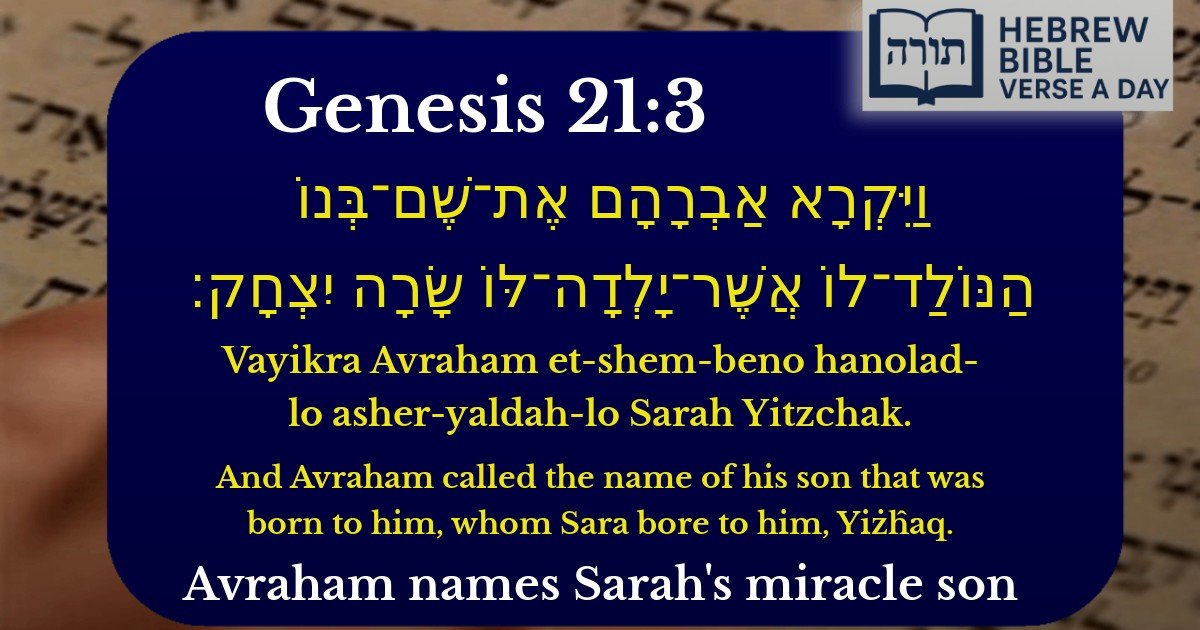
וַיִּקְרָא אַבְרָהָם אֶת־שֶׁם־בְּנוֹ הַנּוֹלַד־לוֹ אֲשֶׁר־יָלְדָה־לּוֹ שָׂרָה יִצְחָק׃
English Translation
And Avraham called the name of his son that was born to him, whom Sara bore to him, Yiżĥaq.
Transliteration
Vayikra Avraham et-shem-beno hanolad-lo asher-yaldah-lo Sarah Yitzchak.
Hebrew Leining Text
וַיִּקְרָ֨א אַבְרָהָ֜ם אֶֽת־שֶׁם־בְּנ֧וֹ הַנּֽוֹלַד־ל֛וֹ אֲשֶׁר־יָלְדָה־לּ֥וֹ שָׂרָ֖ה יִצְחָֽק׃
🎵 Listen to leining
Parasha Commentary
📚 Talmud Citations
This verse is quoted in the Talmud.
📖 Berakhot 13a
The verse is referenced in a discussion about the significance of names and the naming of Isaac, highlighting the divine promise and Sarah's role in his birth.
📖 Sanhedrin 107b
The verse is mentioned in the context of discussions about Abraham's faith and the fulfillment of God's promises, particularly in relation to the birth of Isaac.
The Naming of Yitzchak
The verse states: "And Avraham called the name of his son that was born to him, whom Sara bore to him, Yitzchak" (Bereishit 21:3). This naming carries deep significance in Jewish tradition, reflecting divine promise, miraculous birth, and prophetic insight.
Rashi's Explanation
Rashi (Bereishit 17:19) explains that the name Yitzchak (יצחק) derives from the root צחוק ("laughter"), alluding to Avraham's laughter (17:17) and Sarah's laughter (18:12) upon hearing they would bear a child in their old age. However, Rashi emphasizes that this laughter was not mockery but astonishment at the miracle—a theme reinforced by Sarah's declaration in Bereishit 21:6: "G-d has made laughter for me."
Rambam on Divine Providence
Rambam (Moreh Nevuchim 2:42) highlights that Yitzchak's birth and name signify divine intervention beyond natural law. The name serves as a perpetual reminder of Hashem's power to overturn nature in fulfillment of His covenant (Bereishit 17:19).
Midrashic Insights
Theological Significance
The repetition of "born to him, whom Sara bore to him" underscores two key ideas in Jewish thought: