

Join Our Newsletter To Be Informed When New Videos Are Posted
Hebrew Text
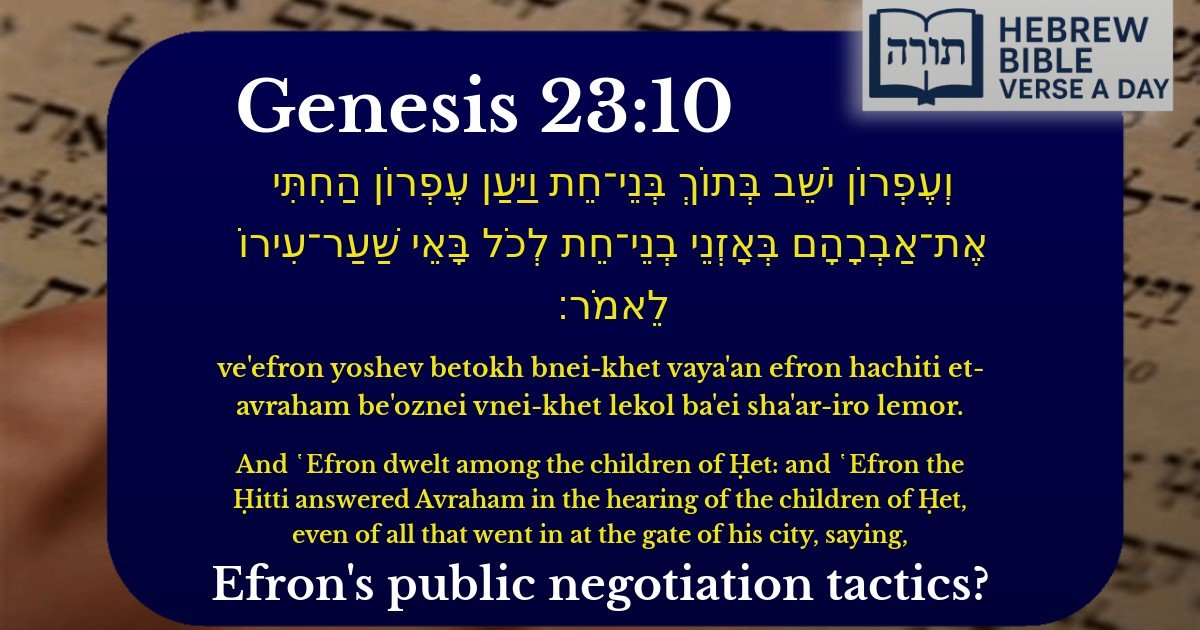
וְעֶפְרוֹן יֹשֵׁב בְּתוֹךְ בְּנֵי־חֵת וַיַּעַן עֶפְרוֹן הַחִתִּי אֶת־אַבְרָהָם בְּאָזְנֵי בְנֵי־חֵת לְכֹל בָּאֵי שַׁעַר־עִירוֹ לֵאמֹר׃
English Translation
And ῾Efron dwelt among the children of Ḥet: and ῾Efron the Ḥitti answered Avraham in the hearing of the children of Ḥet, even of all that went in at the gate of his city, saying,
Transliteration
Ve'efron yoshev betokh bnei-khet vaya'an efron hachiti et-avraham be'oznei vnei-khet lekol ba'ei sha'ar-iro lemor.
Hebrew Leining Text
וְעֶפְר֥וֹן יֹשֵׁ֖ב בְּת֣וֹךְ בְּנֵי־חֵ֑ת וַיַּ֩עַן֩ עֶפְר֨וֹן הַחִתִּ֤י אֶת־אַבְרָהָם֙ בְּאׇזְנֵ֣י בְנֵי־חֵ֔ת לְכֹ֛ל בָּאֵ֥י שַֽׁעַר־עִיר֖וֹ לֵאמֹֽר׃
🎵 Listen to leining
Parasha Commentary
📚 Talmud Citations
This verse is not quoted in the Talmud.
Context of the Verse
This verse (Genesis 23:10) appears in the narrative of Avraham Avinu purchasing the Cave of Machpelah as a burial site for Sarah Imenu. Efron the Hittite is introduced here as a key figure in the negotiations, and the public nature of the transaction is emphasized—it takes place "in the hearing of the children of Ḥet" and "all that went in at the gate of his city."
Rashi's Commentary
Rashi (Rabbi Shlomo Yitzchaki) notes that the phrase "וְעֶפְרוֹן יֹשֵׁב בְּתוֹךְ בְּנֵי־חֵת" ("And Efron dwelt among the children of Ḥet") highlights Efron's prominence among the Hittites. He was a leader, sitting among the elders at the city gate, where legal and communal matters were conducted (Rashi on Genesis 23:10). This explains why the negotiations occur in such a public setting.
Significance of the City Gate
The "gate of the city" (שַׁעַר־עִירוֹ) was the center of public life in ancient times, where business, legal proceedings, and communal gatherings took place (see Rambam, Hilchot Mechirah 14:9). By conducting the transaction here, Avraham ensures the sale is legally binding and publicly witnessed, preventing future disputes over ownership.
Efron’s Public Declaration
The verse emphasizes that Efron responds "בְּאָזְנֵי בְנֵי־חֵת" ("in the hearing of the children of Ḥet"). The Midrash (Bereishit Rabbah 58:7) suggests that Efron initially pretended to be generous, offering the land for free, but his true intentions—seeking full payment—were revealed in this public setting. This teaches that public negotiations can expose hidden motives.
Legal and Ethical Implications