

Join Our Newsletter To Be Informed When New Videos Are Posted
Hebrew Text
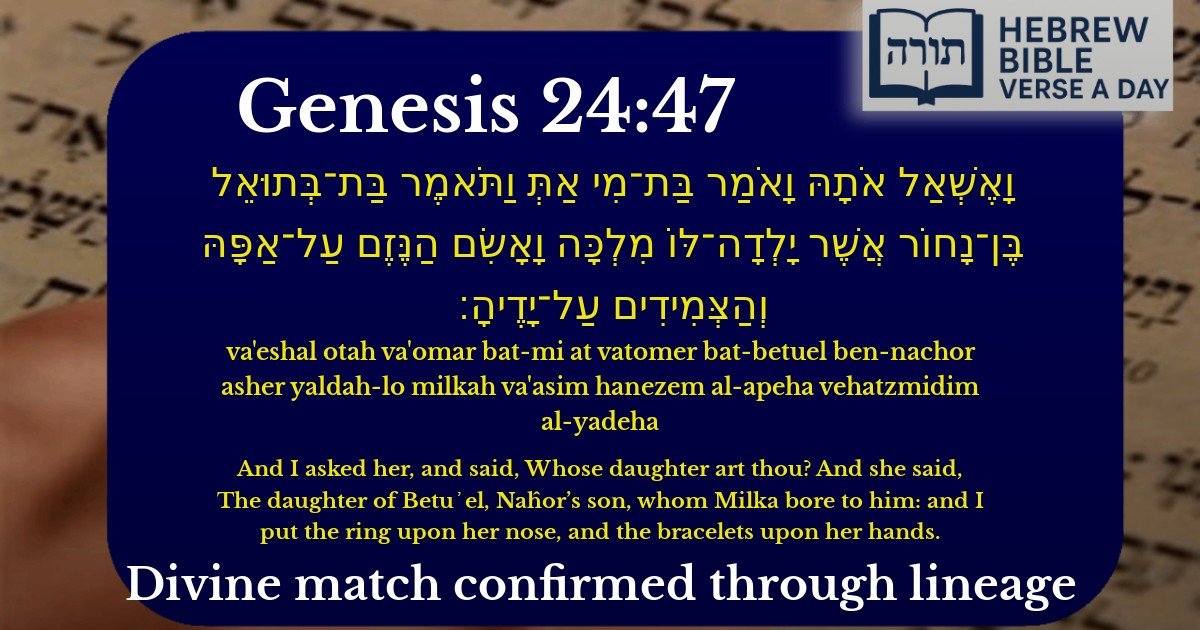
וָאֶשְׁאַל אֹתָהּ וָאֹמַר בַּת־מִי אַתְּ וַתֹּאמֶר בַּת־בְּתוּאֵל בֶּן־נָחוֹר אֲשֶׁר יָלְדָה־לּוֹ מִלְכָּה וָאָשִׂם הַנֶּזֶם עַל־אַפָּהּ וְהַצְּמִידִים עַל־יָדֶיהָ׃
English Translation
And I asked her, and said, Whose daughter art thou? And she said, The daughter of Betu᾽el, Naĥor’s son, whom Milka bore to him: and I put the ring upon her nose, and the bracelets upon her hands.
Transliteration
Va'eshal otah va'omar bat-mi at vatomer bat-betuel ben-nachor asher yaldah-lo milkah va'asim hanezem al-apeha vehatzmidim al-yadeha
Hebrew Leining Text
וָאֶשְׁאַ֣ל אֹתָ֗הּ וָאֹמַר֮ בַּת־מִ֣י אַתְּ֒ וַתֹּ֗אמֶר בַּת־בְּתוּאֵל֙ בֶּן־נָח֔וֹר אֲשֶׁ֥ר יָֽלְדָה־לּ֖וֹ מִלְכָּ֑ה וָאָשִׂ֤ם הַנֶּ֙זֶם֙ עַל־אַפָּ֔הּ וְהַצְּמִידִ֖ים עַל־יָדֶֽיהָ׃
🎵 Listen to leining
Parasha Commentary
📚 Talmud Citations
This verse is not quoted in the Talmud.
Context of the Verse
This verse (Genesis 24:47) is part of the narrative where Eliezer, Avraham's servant, recounts his mission to find a wife for Yitzchak. He describes his encounter with Rivka at the well and how he confirmed her lineage before bestowing gifts upon her.
Eliezer's Inquiry About Rivka's Lineage
Rashi explains that Eliezer asked Rivka, "בַּת־מִי אַתְּ" ("Whose daughter are you?"), to confirm that she was indeed from Avraham's family, as Avraham had instructed him to find a wife for Yitzchak from his own kin (Genesis 24:4). The mention of Betu'el and Nachor establishes her connection to Avraham's family, as Nachor was Avraham's brother.
The Significance of Rivka's Response
Rivka identifies herself as the daughter of Betu'el ben Nachor and specifies that her grandmother was Milka. The Midrash (Bereishit Rabbah 60:5) notes that Milka was the daughter of Haran, Avraham's brother, further solidifying the familial bond. This detail was crucial for Eliezer, as it confirmed Rivka's suitability as a match for Yitzchak.
The Gifts: Ring and Bracelets
Eliezer describes placing a nezem (ring) on Rivka's nose and tzamidim (bracelets) on her hands. Rashi explains that these were signs of betrothal, symbolizing his intent to take her as a wife for Yitzchak. The nezem was a common ornament in ancient times, often worn on the nose or ear (as seen in Exodus 32:2-3), while the tzamidim were bracelets, possibly indicating wealth and status.
Symbolism of the Actions
The act of giving these gifts was not merely ceremonial but carried deep halachic and symbolic meaning. The Kli Yakar explains that the placement of the ring on her nose and bracelets on her hands signified that Rivka's actions (her kindness in drawing water for Eliezer and his camels) were the qualities that made her worthy of becoming Yitzchak's wife.