

Join Our Newsletter To Be Informed When New Videos Are Posted
Hebrew Text
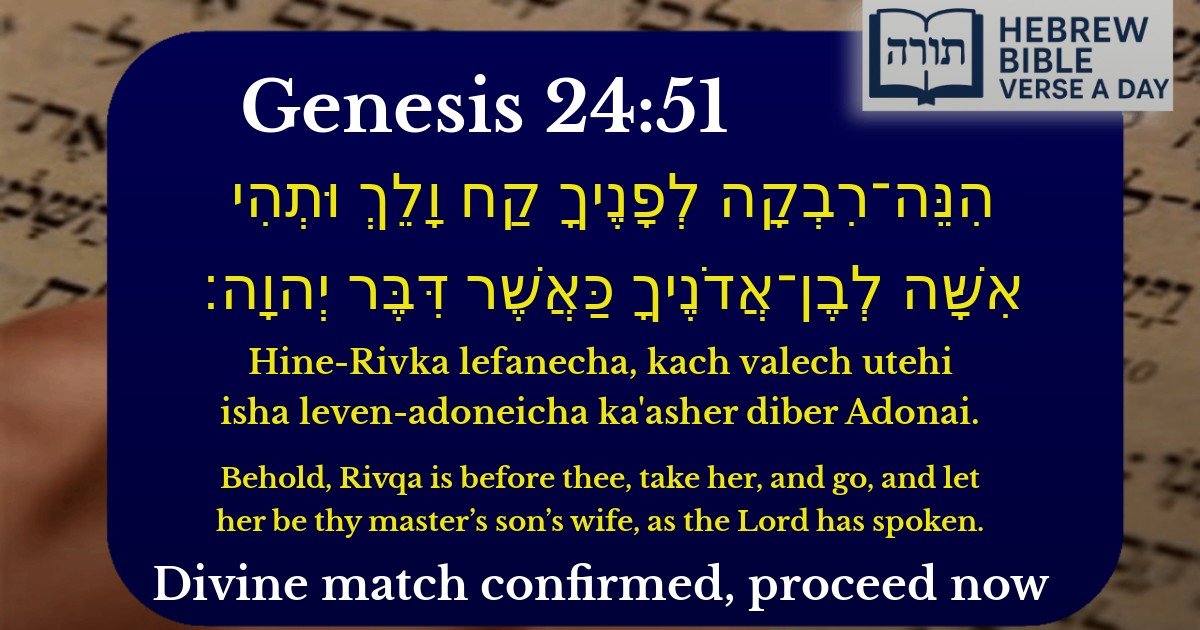
הִנֵּה־רִבְקָה לְפָנֶיךָ קַח וָלֵךְ וּתְהִי אִשָּׁה לְבֶן־אֲדֹנֶיךָ כַּאֲשֶׁר דִּבֶּר יְהוָה׃
English Translation
Behold, Rivqa is before thee, take her, and go, and let her be thy master’s son’s wife, as the Lord has spoken.
Transliteration
Hine-Rivka lefanecha, kach valech utehi isha leven-adoneicha ka'asher diber Adonai.
Hebrew Leining Text
הִנֵּֽה־רִבְקָ֥ה לְפָנֶ֖יךָ קַ֣ח וָלֵ֑ךְ וּתְהִ֤י אִשָּׁה֙ לְבֶן־אֲדֹנֶ֔יךָ כַּאֲשֶׁ֖ר דִּבֶּ֥ר יְהֹוָֽה׃
🎵 Listen to leining
Parasha Commentary
📚 Talmud Citations
This verse is not quoted in the Talmud.
Context of the Verse
The verse (Bereshit 24:51) appears in the narrative of Eliezer, Avraham’s servant, who was sent to find a wife for Yitzchak. After witnessing Rivqa’s kindness and confirming through divine signs that she was the chosen one, Eliezer meets her family. This statement is made by her brother Lavan and her father Besuel, acknowledging Hashem’s hand in the matter.
Key Themes and Interpretation
Grammatical and Linguistic Insights
The term "לְבֶן־אֲדֹנֶיךָ" ("thy master’s son") is notable. Ramban observes that Lavan and Besuel refer to Yitzchak this way to subtly assert their own honor—acknowledging Avraham’s greatness while diplomatically avoiding direct subservience (Ramban on Bereshit 24:51).
Moral and Halachic Implications