Frequently Asked Questions
Q: Who were the sons of Yishmael mentioned in Genesis 25:13?
A: The verse lists the sons of Yishmael: Nevayot (the firstborn), Qedar, Adbe'el, and Mivsam. According to Rashi and other commentaries, these names represent the founding tribes of the Ishmaelite nations. The Torah traces their lineage to show the fulfillment of Hashem's promise to Avraham that Yishmael would become a great nation (Genesis 17:20).
Q: Why does the Torah list the names of Yishmael's sons?
A: The Torah lists Yishmael's descendants to show how Hashem's blessing to Avraham—that Yishmael would father twelve princes (Genesis 17:20)—was fulfilled. Ramban explains that recording these names also establishes the origins of neighboring nations, which is important for understanding later interactions between Bnei Yisrael and these tribes.
Q: What is the significance of Nevayot being called the firstborn?
A: Nevayot is mentioned first because he was Yishmael's bechor (firstborn). In Torah tradition, the firstborn often holds a special status in lineage and inheritance (though Yishmael's spiritual legacy passed through Yitzchak). Rashi notes that listing the firstborn first was a common way of recording genealogies in the Torah.
Q: Do Yishmael's descendants have any connection to the Jewish people today?
A: While the Torah traces the lineage of Yishmael, Jewish tradition (as explained in the Talmud and Midrash) emphasizes that the covenant and spiritual inheritance continued through Yitzchak. However, some commentaries note that certain interactions with these tribes (like the Kedars, known as desert dwellers) appear later in Tanach, showing historical connections.
Q: How many sons did Yishmael have in total?
A: While this verse lists four sons, Genesis 25:16 later states that Yishmael had twelve sons in total (corresponding to the twelve princes promised in Genesis 17:20). The Torah often introduces genealogies with partial lists before giving the full count, as Rashi explains regarding other family listings in Bereishit.

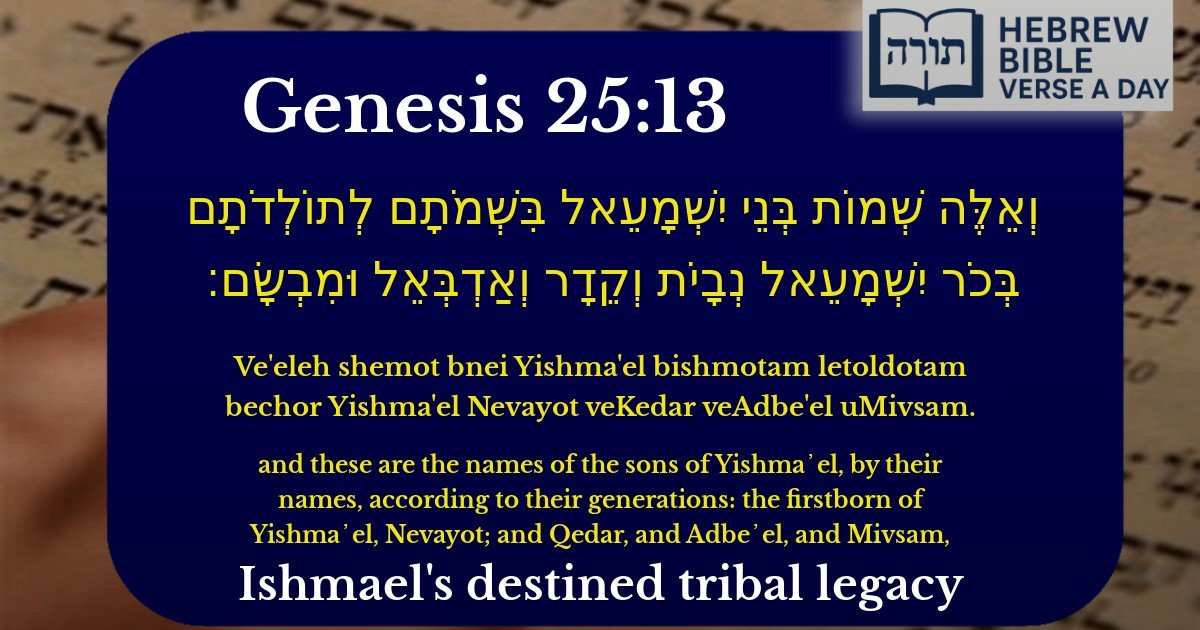

The Names of Yishmael's Sons
The verse lists the twelve sons of Yishmael, beginning with his firstborn, Nevayot, followed by Qedar, Adbe'el, and Mivsam. Rashi (on Bereishit 25:13) explains that this enumeration parallels the twelve tribes of Yisrael, emphasizing that Yishmael, like Yitzchak, was blessed with twelve princes (see Bereishit 17:20). The Torah specifies their names "by their names, according to their generations" to highlight their distinct identities and lineages.
Significance of the Order
Nevayot is listed first as the bechor (firstborn), establishing his prominence. The Midrash (Bereishit Rabbah 62:3) notes that Nevayot's descendants were known for their wealth, particularly in flocks, as referenced in Yeshayahu 60:7. Qedar, the second son, is associated with the Arabian tribes, as later biblical passages (e.g., Yeshayahu 21:16-17) mention the Qedarites as desert dwellers. Ramban (on Bereishit 25:13) suggests that these names reflect the fulfillment of Hashem’s promise to Yishmael that he would father a great nation.
Spiritual Implications
The Talmud (Avodah Zarah 2b) discusses how the descendants of Yishmael will play a role in the pre-Messianic era, hinting at their historical significance. The listing of their names serves as a reminder of Divine providence over all nations, even as the Torah’s primary focus remains on Bnei Yisrael.
Lessons from the Enumeration