

Join Our Newsletter To Be Informed When New Videos Are Posted
Hebrew Text
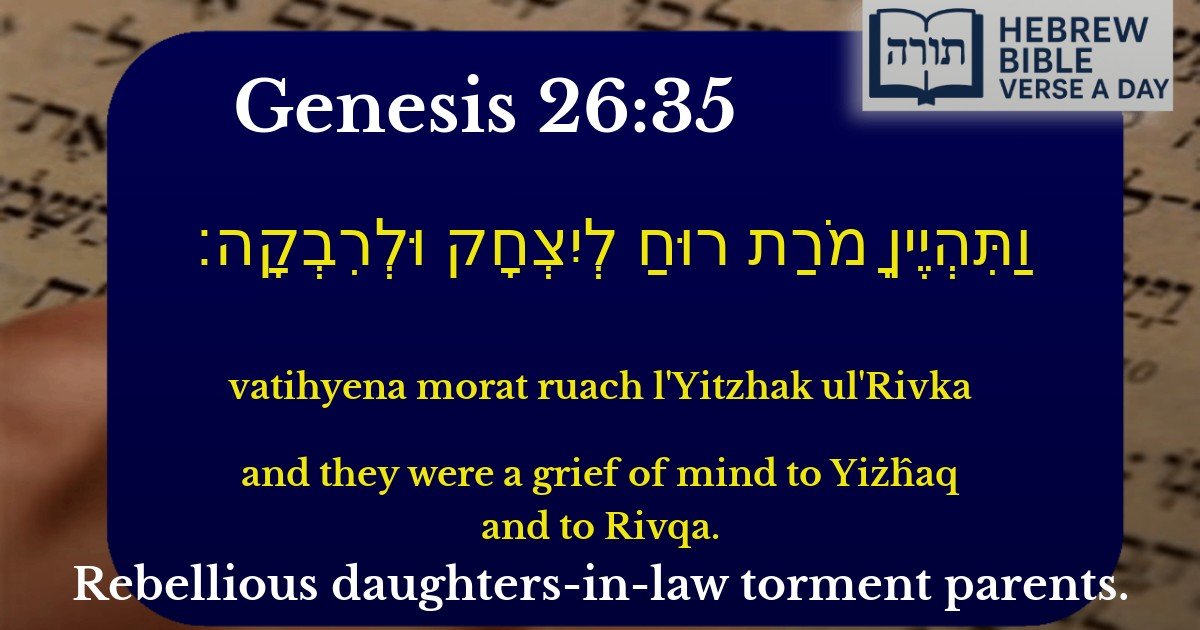
וַתִּהְיֶיןָ מֹרַת רוּחַ לְיִצְחָק וּלְרִבְקָה׃
English Translation
and they were a grief of mind to Yiżĥaq and to Rivqa.
Transliteration
Vatihyena morat ruach l'Yitzhak ul'Rivka
Hebrew Leining Text
וַתִּהְיֶ֖יןָ מֹ֣רַת ר֑וּחַ לְיִצְחָ֖ק וּלְרִבְקָֽה׃ {ס}
🎵 Listen to leining
Parasha Commentary
📚 Talmud Citations
This verse is not quoted in the Talmud.
Context in the Torah
The verse (Bereshit 26:35) describes the distress caused to Yitzchak and Rivkah by the wives of their son Esav. The phrase "מֹרַת רוּחַ" (morat ruach) literally means "bitterness of spirit," indicating deep emotional anguish.
Rashi's Commentary
Rashi explains that Esav's Hittite wives engaged in idol worship, which caused great distress to Yitzchak and Rivkah. He cites the Midrash (Bereshit Rabbah 67:8) that these women would burn incense to their idols, making their behavior a spiritual provocation in Yitzchak's household.
Ramban's Insight
The Ramban (Nachmanides) adds that the grief was not only due to idolatry but also because these wives did not adopt the ways of Avraham's family. Their behavior clashed with the values of modesty and righteousness that defined Yitzchak and Rivkah's home.
Midrashic Interpretation
Halachic Implications
The Tur (Even HaEzer 16) cites this verse as a basis for the halachic principle that one should avoid marrying those who may bring "מֹרַת רוּחַ" into the home. The Shulchan Aruch (EH 16:1) later codifies this as a consideration in marital matches.
Spiritual Lesson
The Kli Yakar teaches that this episode demonstrates how the spiritual environment of a home can be affected by its members. The presence of those who oppose Torah values creates "bitterness of spirit," while harmony in values brings peace.