

Join Our Newsletter To Be Informed When New Videos Are Posted
Hebrew Text
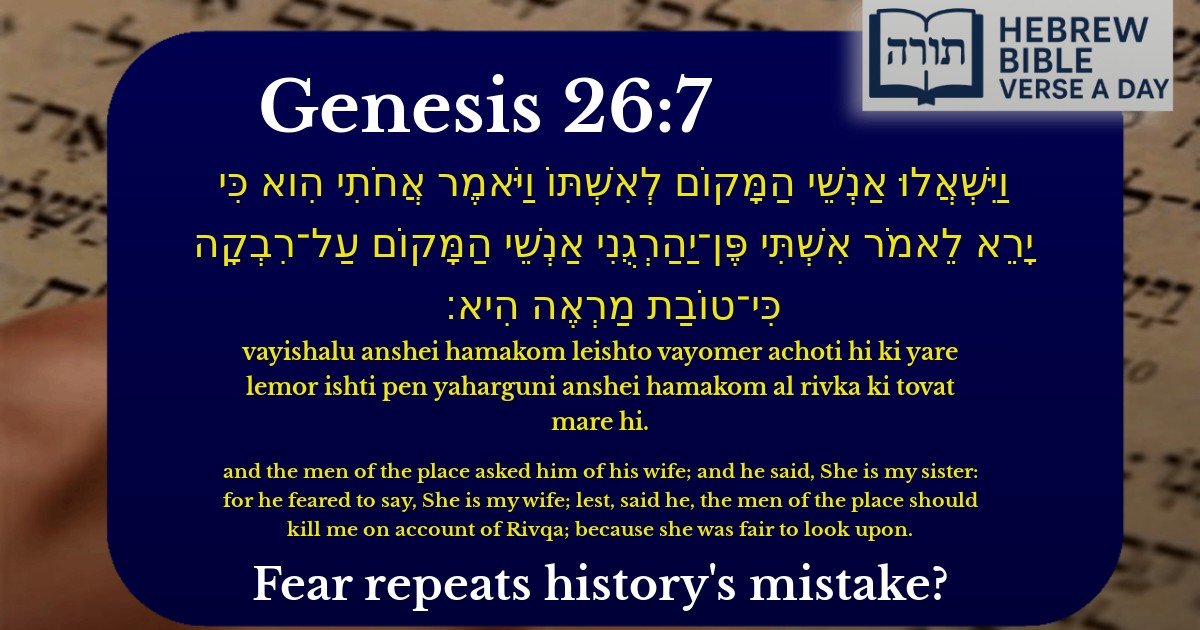
וַיִּשְׁאֲלוּ אַנְשֵׁי הַמָּקוֹם לְאִשְׁתּוֹ וַיֹּאמֶר אֲחֹתִי הִוא כִּי יָרֵא לֵאמֹר אִשְׁתִּי פֶּן־יַהַרְגֻנִי אַנְשֵׁי הַמָּקוֹם עַל־רִבְקָה כִּי־טוֹבַת מַרְאֶה הִיא׃
English Translation
and the men of the place asked him of his wife; and he said, She is my sister: for he feared to say, She is my wife; lest, said he, the men of the place should kill me on account of Rivqa; because she was fair to look upon.
Transliteration
Vayishalu anshei hamakom leishto vayomer achoti hi ki yare lemor ishti pen yaharguni anshei hamakom al rivka ki tovat mare hi.
Hebrew Leining Text
וַֽיִּשְׁאֲל֞וּ אַנְשֵׁ֤י הַמָּקוֹם֙ לְאִשְׁתּ֔וֹ וַיֹּ֖אמֶר אֲחֹ֣תִי הִ֑וא כִּ֤י יָרֵא֙ לֵאמֹ֣ר אִשְׁתִּ֔י פֶּן־יַֽהַרְגֻ֜נִי אַנְשֵׁ֤י הַמָּקוֹם֙ עַל־רִבְקָ֔ה כִּֽי־טוֹבַ֥ת מַרְאֶ֖ה הִֽוא׃
🎵 Listen to leining
Parasha Commentary
📚 Talmud Citations
This verse is quoted in the Talmud.
📖 Sanhedrin 19b
The verse is discussed in the context of Abraham's actions and the moral implications of his decision to say that Sarah was his sister rather than his wife.
📖 Bava Metzia 87a
The verse is referenced in a discussion about the behavior of the patriarchs and the ethical considerations of their actions.
Understanding Yitzchak's Concern
In Bereishit 26:7, Yitzchak tells the people of Gerar that Rivka is his sister rather than his wife, fearing they would kill him to take her. Rashi explains that this incident mirrors Avraham's similar actions in Egypt and Gerar (Bereishit 12:11-13, 20:2), demonstrating a recurring test for the Avot (forefathers). The Midrash (Bereishit Rabbah 64:3) notes that Yitzchak's fear stemmed from Rivka's exceptional beauty, which could provoke envy and violence.
Halachic and Ethical Considerations
Rambam (Hilchot Yesodei HaTorah 5:2) discusses the principle of pikuach nefesh (saving a life), which permits certain deviations from truth in life-threatening situations. The Talmud (Sanhedrin 57a) implies that Yitzchak's decision was justified under duress, as self-preservation takes precedence in such cases. However, the Ramban (Bereishit 12:11) critiques Avraham (and by extension, Yitzchak) for lacking sufficient trust in Hashem's protection.
Rivka's Role and Midrashic Insights
Divine Providence and Historical Context
The Ohr HaChaim (Bereishit 26:7) highlights that this episode was orchestrated by Hashem to demonstrate Yitzchak's merit and to fulfill the promise that his descendants would inherit the land. The Kli Yakar adds that the repetition of this test with both Avraham and Yitzchak underscores the challenges faced by the Avot in establishing their legacy in a hostile environment.