

Join Our Newsletter To Be Informed When New Videos Are Posted
Hebrew Text
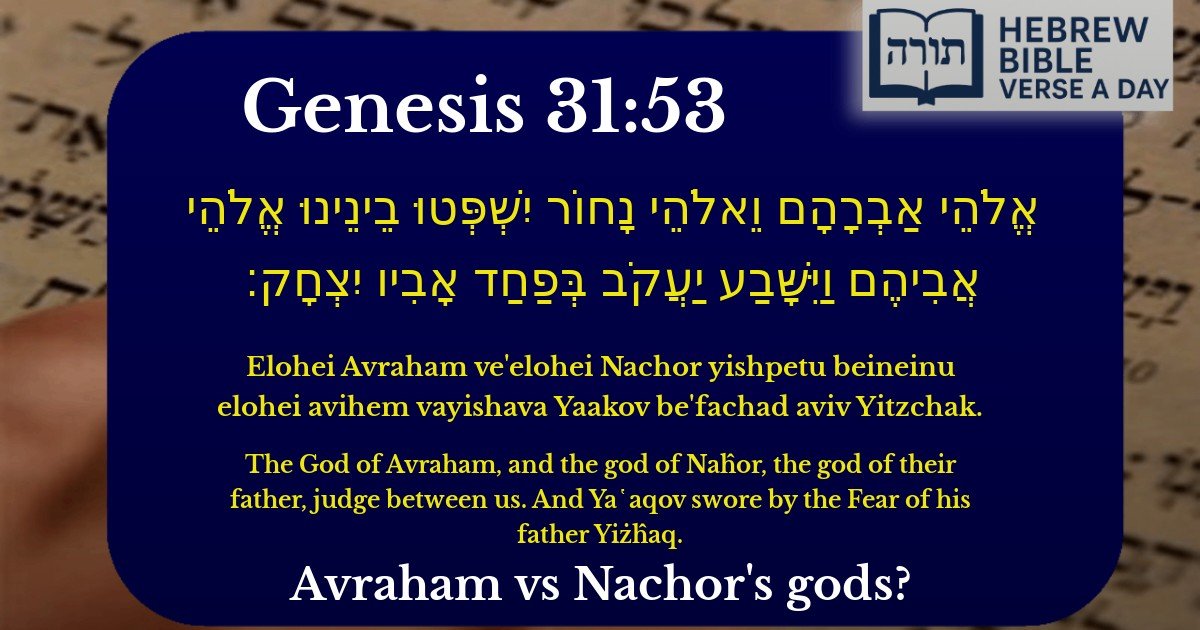
אֱלֹהֵי אַבְרָהָם וֵאלֹהֵי נָחוֹר יִשְׁפְּטוּ בֵינֵינוּ אֱלֹהֵי אֲבִיהֶם וַיִּשָּׁבַע יַעֲקֹב בְּפַחַד אָבִיו יִצְחָק׃
English Translation
The God of Avraham, and the god of Naĥor, the god of their father, judge between us. And Ya῾aqov swore by the Fear of his father Yiżĥaq.
Transliteration
Elohei Avraham ve'elohei Nachor yishpetu beineinu elohei avihem vayishava Yaakov be'fachad aviv Yitzchak.
Hebrew Leining Text
אֱלֹהֵ֨י אַבְרָהָ֜ם וֵֽאלֹהֵ֤י נָחוֹר֙ יִשְׁפְּט֣וּ בֵינֵ֔ינוּ אֱלֹהֵ֖י אֲבִיהֶ֑ם וַיִּשָּׁבַ֣ע יַעֲקֹ֔ב בְּפַ֖חַד אָבִ֥יו יִצְחָֽק׃
🎵 Listen to leining
Parasha Commentary
📚 Talmud Citations
This verse is quoted in the Talmud.
📖 Shevuot 36a
The verse is referenced in the context of discussing the validity and nature of oaths, particularly how Jacob swore by the 'Fear of his father Isaac.'
The Context of the Verse
This verse appears in Bereishit (Genesis) 31:53, during the confrontation between Yaakov and Lavan. Yaakov, having left Lavan's household, is accused of stealing Lavan's idols. In response, Yaakov invokes divine judgment, swearing an oath to affirm his innocence.
The Meaning of "Elokei Avraham v'Elokei Nachor"
Rashi explains that Yaakov mentions "the God of Avraham and the god of Nachor" to highlight the distinction between true monotheism and idolatry. Avraham served Hashem, while Nachor worshipped false deities. By invoking both, Yaakov emphasizes that the true Judge—the God of Avraham—will determine the truth between them, not the false gods of Nachor.
Why Yaakov Swears by "Pachad Yitzchak"
The phrase "Pachad Yitzchak" (the Fear of Yitzchak) is interpreted in several ways:
The Oath as a Legal and Spiritual Act
Yaakov’s oath serves both a legal and spiritual purpose:
Lavan’s Idolatry Contrasted with Yaakov’s Faith
The Ibn Ezra notes that Lavan, though related to Avraham’s family, remained steeped in idol worship (as seen in Rachel’s theft of his terafim). Yaakov’s mention of "Elokei Avraham" versus "Elokei Nachor" underscores this divide—one lineage remained faithful to Hashem, while the other strayed.