

Join Our Newsletter To Be Informed When New Videos Are Posted
Hebrew Text
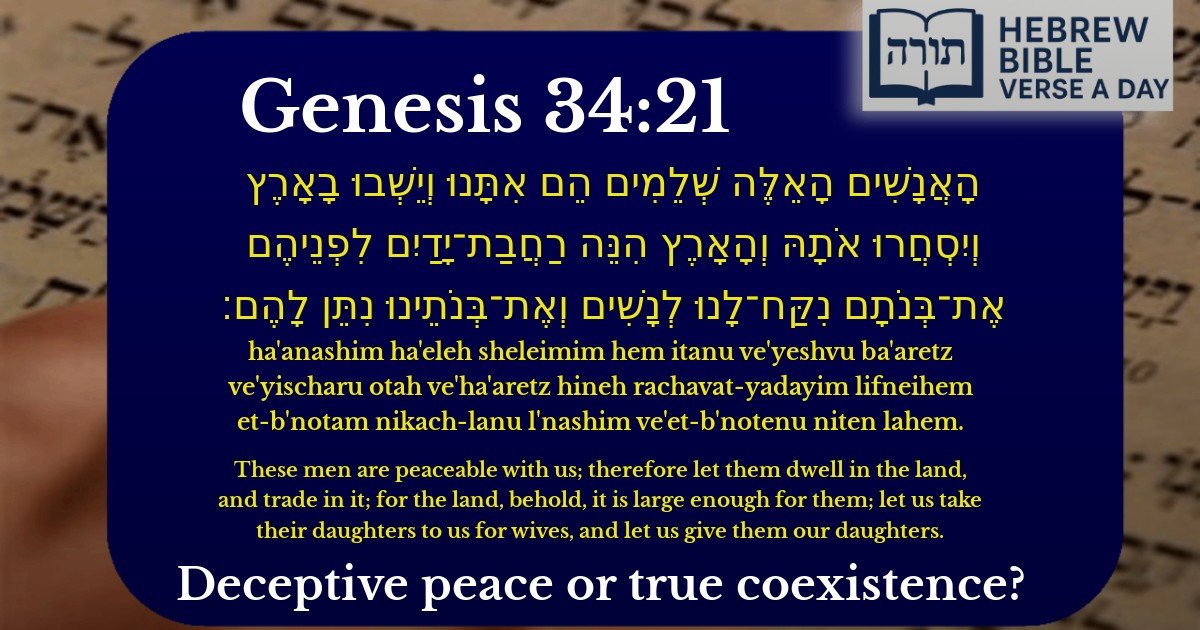
הָאֲנָשִׁים הָאֵלֶּה שְׁלֵמִים הֵם אִתָּנוּ וְיֵשְׁבוּ בָאָרֶץ וְיִסְחֲרוּ אֹתָהּ וְהָאָרֶץ הִנֵּה רַחֲבַת־יָדַיִם לִפְנֵיהֶם אֶת־בְּנֹתָם נִקַּח־לָנוּ לְנָשִׁים וְאֶת־בְּנֹתֵינוּ נִתֵּן לָהֶם׃
English Translation
These men are peaceable with us; therefore let them dwell in the land, and trade in it; for the land, behold, it is large enough for them; let us take their daughters to us for wives, and let us give them our daughters.
Transliteration
Ha'anashim ha'eleh sheleimim hem itanu ve'yeshvu ba'aretz ve'yischaru otah ve'ha'aretz hineh rachavat-yadayim lifneihem et-b'notam nikach-lanu l'nashim ve'et-b'notenu niten lahem.
Hebrew Leining Text
הָאֲנָשִׁ֨ים הָאֵ֜לֶּה שְֽׁלֵמִ֧ים הֵ֣ם אִתָּ֗נוּ וְיֵשְׁב֤וּ בָאָ֙רֶץ֙ וְיִסְחֲר֣וּ אֹתָ֔הּ וְהָאָ֛רֶץ הִנֵּ֥ה רַֽחֲבַת־יָדַ֖יִם לִפְנֵיהֶ֑ם אֶת־בְּנֹתָם֙ נִקַּֽח־לָ֣נוּ לְנָשִׁ֔ים וְאֶת־בְּנֹתֵ֖ינוּ נִתֵּ֥ן לָהֶֽם׃
🎵 Listen to leining
Parasha Commentary
📚 Talmud Citations
This verse is not quoted in the Talmud.
Context of the Verse
This verse (Bereishit 34:21) is spoken by Chamor and his son Shechem to the men of their city, proposing peaceful coexistence and intermarriage with Yaakov's family after the incident involving Dinah. The proposal appears outwardly reasonable but is deeply problematic from a Torah perspective.
Rashi's Commentary
Rashi notes that the phrase "שְׁלֵמִים הֵם אִתָּנוּ" ("they are peaceable with us") is deceptive. While Chamor presents Yaakov's family as peaceful, Rashi explains that their true nature was not peaceful, as they were actually strict in their ways and would not intermarry with idolaters (citing Bereishit Rabbah 80:7).
Ramban's Insight
The Ramban (Nachmanides) observes that Chamor's argument about the land being spacious enough ("רַחֲבַת־יָדַיִם") reveals his ulterior motive: he wanted to absorb Yaakov's family into his own people rather than allow them to maintain their distinct identity. This reflects a recurring challenge of assimilation faced by the Jewish people.
Midrashic Perspective
The Midrash (Bereishit Rabbah 80:9) contrasts the wording here with Avraham's purchase of Ma'arat HaMachpelah, noting that while Avraham insisted on proper acquisition of land, Chamor sought to blur boundaries through intermarriage. This highlights the Torah's emphasis on maintaining distinct Jewish identity.
Halachic Implications
Moral Lesson
The Malbim explains that this episode teaches how assimilation often begins with seemingly peaceful overtures and economic cooperation, but ultimately threatens Jewish continuity. The violent response of Shimon and Levi, while controversial, demonstrated the importance of zealously protecting Jewish identity when faced with existential threats.