

Join Our Newsletter To Be Informed When New Videos Are Posted
Hebrew Text
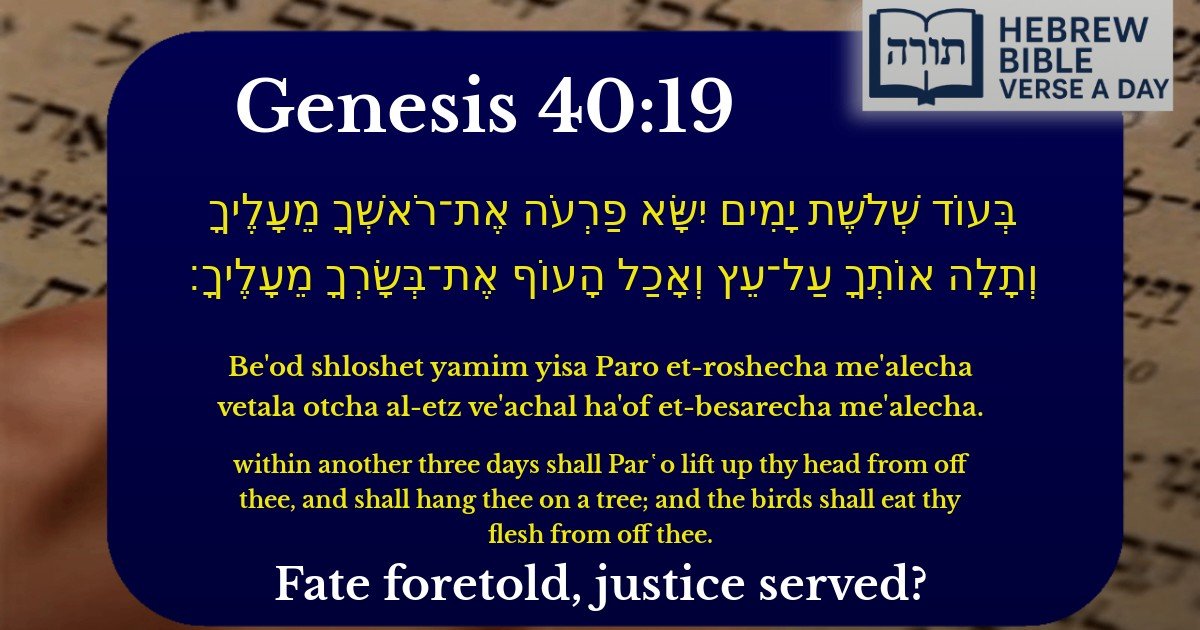
בְּעוֹד שְׁלֹשֶׁת יָמִים יִשָּׂא פַרְעֹה אֶת־רֹאשְׁךָ מֵעָלֶיךָ וְתָלָה אוֹתְךָ עַל־עֵץ וְאָכַל הָעוֹף אֶת־בְּשָׂרְךָ מֵעָלֶיךָ׃
English Translation
within another three days shall Par῾o lift up thy head from off thee, and shall hang thee on a tree; and the birds shall eat thy flesh from off thee.
Transliteration
Be'od shloshet yamim yisa Paro et-roshecha me'alecha vetala otcha al-etz ve'achal ha'of et-besarecha me'alecha.
Hebrew Leining Text
בְּע֣וֹד ׀ שְׁלֹ֣שֶׁת יָמִ֗ים יִשָּׂ֨א פַרְעֹ֤ה אֶת־רֹֽאשְׁךָ֙ מֵֽעָלֶ֔יךָ וְתָלָ֥ה אוֹתְךָ֖ עַל־עֵ֑ץ וְאָכַ֥ל הָע֛וֹף אֶת־בְּשָׂרְךָ֖ מֵעָלֶֽיךָ׃
🎵 Listen to leining
Parasha Commentary
📚 Talmud Citations
This verse is quoted in the Talmud.
📖 Berakhot 55b
The verse is referenced in the context of dream interpretation, where it is cited as an example of a dream that foretells a negative outcome.
📖 Sanhedrin 92b
The verse is mentioned in a discussion about the nature of prophecy and the fulfillment of dreams, particularly in relation to Joseph's interpretation of the butler's and baker's dreams.
Context in the Torah
This verse (Bereshit 40:19) is part of Yosef's interpretation of the dream of Pharaoh's chief baker while they were both imprisoned in Egypt. The baker had dreamed of carrying three baskets of bread on his head, with birds eating from them. Yosef's interpretation foretells the baker's execution in three days.
Rashi's Commentary
Rashi explains the phrase "יִשָּׂא פַרְעֹה אֶת־רֹאשְׁךָ" (Pharaoh will lift up your head) as an idiom meaning "to remove" - Pharaoh will remove your head from your body through execution. Rashi notes the contrast with the same phrase used positively for the cupbearer in the previous verse (40:13), showing how identical language can have opposite meanings based on context.
Ibn Ezra's Insight
Ibn Ezra observes that the three days correspond to the three baskets in the baker's dream. He notes that being hanged "עַל־עֵץ" (on a tree) was a common form of execution and public display in ancient Egypt, serving as a warning to others.
Midrashic Interpretation
The Midrash (Bereshit Rabbah 88:2) connects this episode to the principle of divine justice. It suggests the baker was punished measure-for-measure:
Halachic Perspective
The Rambam (Hilchos Sanhedrin 15:6) later derives from this verse that hanging after execution was an Egyptian practice, not a Jewish one. The Torah's later prohibition against leaving a body hanging overnight (Devarim 21:23) contrasts with this Egyptian custom.
Linguistic Analysis
The term "וְתָלָה אוֹתְךָ" (and shall hang you) uses the same root as later Torah laws about hanging. The Malbim notes this demonstrates how Yosef - while in Egypt - already used language that would later appear in the Torah's legal sections, showing his connection to divine wisdom.