

Join Our Newsletter To Be Informed When New Videos Are Posted
Hebrew Text
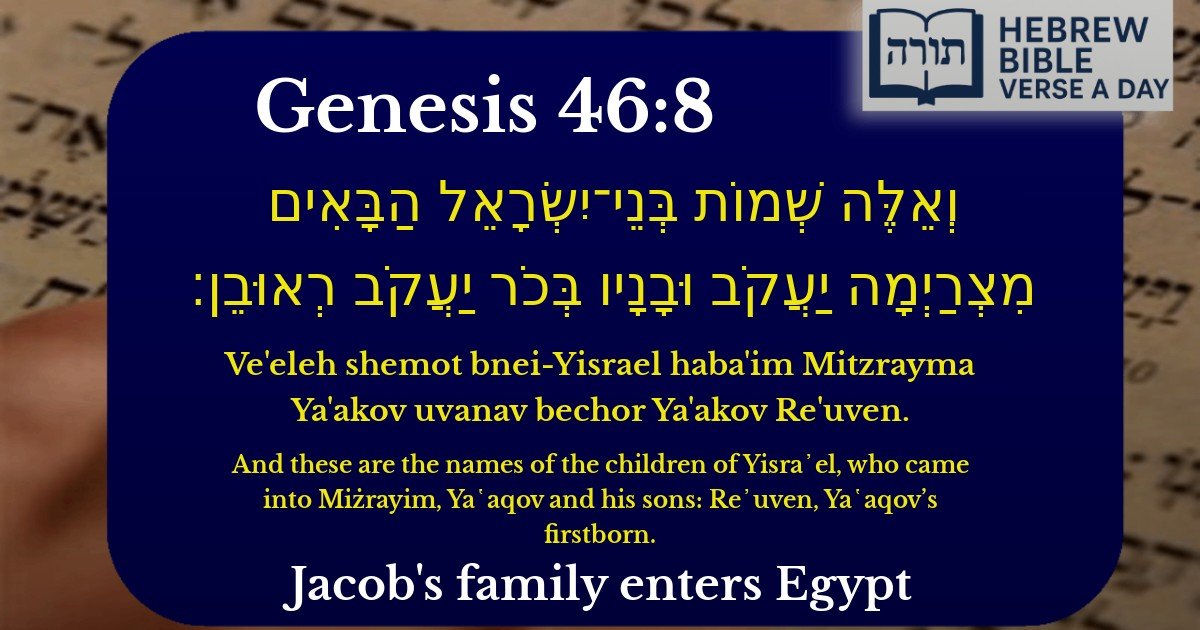
וְאֵלֶּה שְׁמוֹת בְּנֵי־יִשְׂרָאֵל הַבָּאִים מִצְרַיְמָה יַעֲקֹב וּבָנָיו בְּכֹר יַעֲקֹב רְאוּבֵן׃
English Translation
And these are the names of the children of Yisra᾽el, who came into Miżrayim, Ya῾aqov and his sons: Re᾽uven, Ya῾aqov’s firstborn.
Transliteration
Ve'eleh shemot bnei-Yisrael haba'im Mitzrayma Ya'akov uvanav bechor Ya'akov Re'uven.
Hebrew Leining Text
וְאֵ֨לֶּה שְׁמ֧וֹת בְּנֵֽי־יִשְׂרָאֵ֛ל הַבָּאִ֥ים מִצְרַ֖יְמָה יַעֲקֹ֣ב וּבָנָ֑יו בְּכֹ֥ר יַעֲקֹ֖ב רְאוּבֵֽן׃
🎵 Listen to leining
Parasha Commentary
📚 Talmud Citations
This verse is quoted in the Talmud.
📖 Sotah 36b
The verse is referenced in the context of discussing the names of the children of Israel who went down to Egypt, emphasizing the importance of remembering their names and lineage.
📖 Megillah 16b
The verse is cited in a discussion about the enumeration of the tribes of Israel and their significance in Jewish history.
The Significance of Naming the Tribes
The verse begins with "וְאֵלֶּה שְׁמוֹת" ("And these are the names"), echoing the opening of the Book of Shemot (Exodus). Rashi notes that this phrase connects the narrative to the previous book (Bereishit/Genesis), emphasizing the continuity of the Jewish people's story. Despite their descent into Egypt, the tribes retained their distinct identities, as highlighted by the listing of their names.
Yaakov's Mention Alongside His Sons
The verse states, "יַעֲקֹב וּבָנָיו" ("Yaakov and his sons"). The Midrash (Shemot Rabbah 1:1) explains that Yaakov is mentioned separately to show his elevated status—he was the patriarch whose merit sustained the Jewish people in exile. Ramban (Nachmanides) adds that this phrasing underscores Yaakov's role as the unifying force of the family, ensuring their survival in Egypt.
The Emphasis on Reuven as Firstborn
The verse specifies, "בְּכֹר יַעֲקֹב רְאוּבֵן" ("Reuven, Yaakov’s firstborn"). The Talmud (Bava Batra 123a) discusses why Reuven’s status as firstborn is reiterated here, despite his later loss of the birthright due to his actions (Bereishit 35:22). Rashi explains that this reaffirms his original standing among the tribes, teaching that even when privileges are revoked, one’s inherent dignity remains.
Spiritual Lessons from the Verse