

Join Our Newsletter To Be Informed When New Videos Are Posted
Hebrew Text
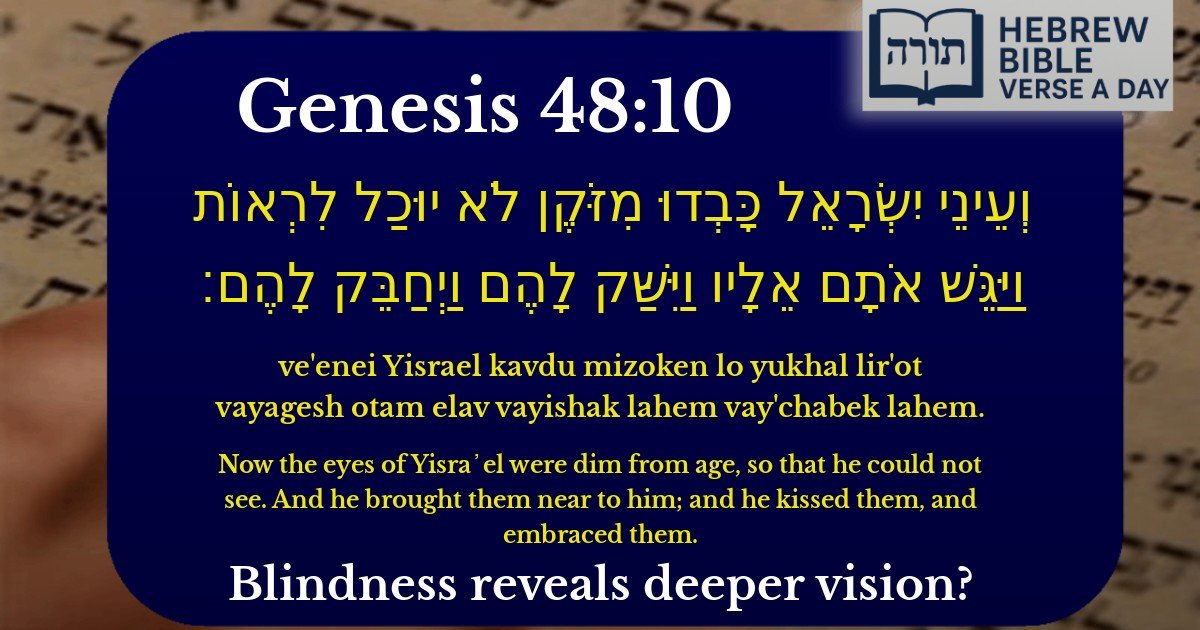
וְעֵינֵי יִשְׂרָאֵל כָּבְדוּ מִזֹּקֶן לֹא יוּכַל לִרְאוֹת וַיַּגֵּשׁ אֹתָם אֵלָיו וַיִּשַּׁק לָהֶם וַיְחַבֵּק לָהֶם׃
English Translation
Now the eyes of Yisra᾽el were dim from age, so that he could not see. And he brought them near to him; and he kissed them, and embraced them.
Transliteration
Ve'enei Yisrael kavdu mizoken lo yukhal lir'ot vayagesh otam elav vayishak lahem vay'chabek lahem.
Hebrew Leining Text
וְעֵינֵ֤י יִשְׂרָאֵל֙ כָּבְד֣וּ מִזֹּ֔קֶן לֹ֥א יוּכַ֖ל לִרְא֑וֹת וַיַּגֵּ֤שׁ אֹתָם֙ אֵלָ֔יו וַיִּשַּׁ֥ק לָהֶ֖ם וַיְחַבֵּ֥ק לָהֶֽם׃
🎵 Listen to leining
Parasha Commentary
📚 Talmud Citations
This verse is quoted in the Talmud.
📖 Chullin 91b
The verse is referenced in a discussion about the actions of the patriarchs and their significance, particularly focusing on Jacob's diminished eyesight in his old age and his emotional reunion with his grandchildren.
The Dimness of Yaakov's Eyes
The verse states, "Now the eyes of Yisra᾽el were dim from age, so that he could not see." Rashi (Bereshit 48:10) explains that Yaakov's blindness was a result of his advanced age, but the Midrash (Bereshit Rabbah 65:8) offers a deeper insight: Yaakov's eyes were weakened from the many tears he shed over Yosef's disappearance. The Talmud (Bava Batra 16b) also connects this to the principle that excessive crying can affect one's eyesight, as seen with Rabbi Yochanan after the destruction of the Beit HaMikdash.
The Significance of Bringing Them Near
The verse continues, "And he brought them near to him." Ramban (Bereshit 48:10) emphasizes that this act was not merely physical but spiritual—Yaakov drew Ephraim and Menashe close to bless them with the sanctity of the tribes of Israel. The Sforno adds that this demonstrated Yaakov's prophetic insight, as he intentionally positioned them for the blessing despite his physical blindness.
The Kiss and Embrace
The verse concludes, "And he kissed them, and embraced them." The Kli Yakar (Bereshit 48:10) explains that the kiss symbolized Torah (as in "the kisses of His mouth" from Shir HaShirim 1:2), while the embrace represented acts of lovingkindness. This reflects the dual pillars of Jewish life—Torah and mitzvot. Additionally, the Or HaChaim notes that Yaakov's affection mirrored the love between the generations, ensuring continuity of Avraham's legacy.