

Join Our Newsletter To Be Informed When New Videos Are Posted
Hebrew Text
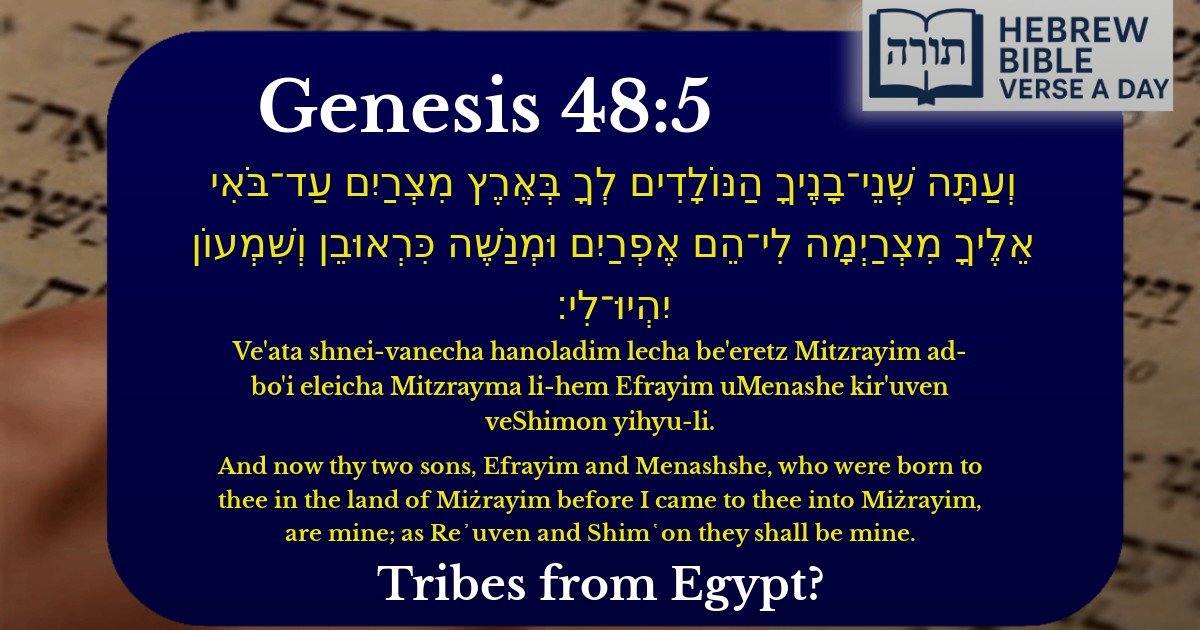
וְעַתָּה שְׁנֵי־בָנֶיךָ הַנּוֹלָדִים לְךָ בְּאֶרֶץ מִצְרַיִם עַד־בֹּאִי אֵלֶיךָ מִצְרַיְמָה לִי־הֵם אֶפְרַיִם וּמְנַשֶּׁה כִּרְאוּבֵן וְשִׁמְעוֹן יִהְיוּ־לִי׃
English Translation
And now thy two sons, Efrayim and Menashshe, who were born to thee in the land of Miżrayim before I came to thee into Miżrayim, are mine; as Re᾽uven and Shim῾on they shall be mine.
Transliteration
Ve'ata shnei-vanecha hanoladim lecha be'eretz Mitzrayim ad-bo'i eleicha Mitzrayma li-hem Efrayim uMenashe kir'uven veShimon yihyu-li.
Hebrew Leining Text
וְעַתָּ֡ה שְׁנֵֽי־בָנֶ֩יךָ֩ הַנּוֹלָדִ֨ים לְךָ֜ בְּאֶ֣רֶץ מִצְרַ֗יִם עַד־בֹּאִ֥י אֵלֶ֛יךָ מִצְרַ֖יְמָה לִי־הֵ֑ם אֶפְרַ֙יִם֙ וּמְנַשֶּׁ֔ה כִּרְאוּבֵ֥ן וְשִׁמְע֖וֹן יִֽהְיוּ־לִֽי׃
🎵 Listen to leining
Parasha Commentary
📚 Talmud Citations
This verse is quoted in the Talmud.
📖 Bava Batra 123a
The verse is discussed in the context of Jacob's adoption of Ephraim and Manasseh, and how they were given equal status to his own sons in terms of inheritance.
📖 Megillah 16b
Referenced in a discussion about the tribes of Israel and their respective inheritances in the Land of Israel.
Context of the Verse
This verse (Bereshit 48:5) appears when Yaakov Avinu blesses Yosef's two sons, Efrayim and Menashe, elevating them to the status of his own sons rather than merely grandsons. This act grants them equal standing among the tribes of Israel, effectively making Yosef's lineage receive a double portion in the inheritance of the land.
Rashi's Explanation
Rashi explains that Yaakov is declaring that Efrayim and Menashe will be counted among the twelve tribes, replacing Yosef as individual tribes. This is why the tribes are often listed as "Efrayim and Menashe" rather than "Yosef." Yaakov equates them to Reuven and Shimon, his firstborn sons, indicating they will have equal status in the division of the land and the formation of the nation.
Rambam's Perspective
In Hilchot Nachalot (Laws of Inheritance), the Rambam discusses how this verse establishes the principle that a grandfather may assign inheritance rights to his grandchildren as if they were his own children. This legal mechanism ensures that Yosef's descendants receive a double portion, fulfilling the concept of the firstborn's rights, which Yosef earned through his righteousness and leadership.
Midrashic Insights
Halachic Implications
The Talmud (Bava Batra 123a) derives from this verse that a father has the authority to assign tribal status to his descendants. This principle is later applied in Jewish law regarding inheritance and tribal affiliation. The Gemara also notes that this act ensured the continuity of Yosef's merit, as his two sons became foundational tribes in Israel.
Symbolic Meaning
Chassidic commentaries (e.g., the Sefat Emet) explain that Efrayim and Menashe represent two paths of Jewish survival in exile: Menashe (meaning "forgetting") symbolizes the need to remember one's roots despite being in a foreign land, while Efrayim (meaning "fruitful") represents thriving spiritually even in challenging circumstances. Yaakov's blessing thus becomes a timeless lesson for future generations in diaspora.