
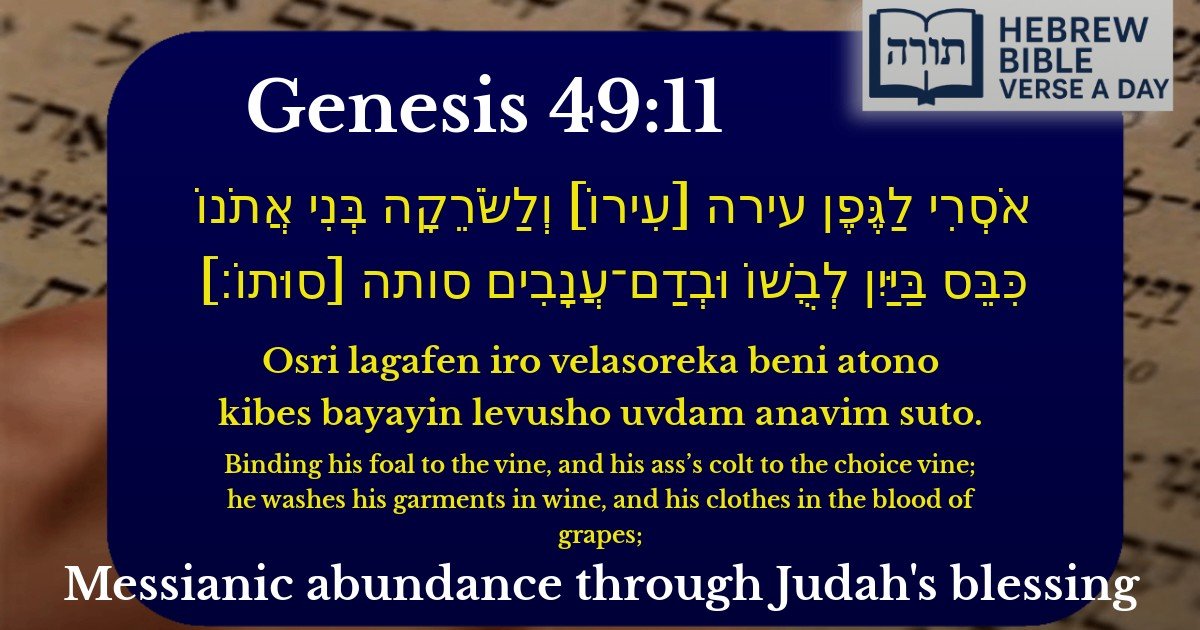

Genesis 49:11 - Messianic abundance through Judah's blessing

Genesis 49:11 - בראשית 49:11

Hebrew Text

אֹסְרִי לַגֶּפֶן עירה [עִירוֹ] וְלַשֹּׂרֵקָה בְּנִי אֲתֹנוֹ כִּבֵּס בַּיַּיִן לְבֻשׁוֹ וּבְדַם־עֲנָבִים סותה [סוּתוֹ׃]

English Translation

Binding his foal to the vine, and his ass’s colt to the choice vine; he washes his garments in wine, and his clothes in the blood of grapes;

Transliteration

Osri lagafen iro velasoreka beni atono kibes bayayin levusho uvdam anavim suto.

Hebrew Leining Text

אֹסְרִ֤י לַגֶּ֙פֶן֙ עִירֹ֔ה וְלַשֹּׂרֵקָ֖ה בְּנִ֣י אֲתֹנ֑וֹ כִּבֵּ֤ס בַּיַּ֙יִן֙ לְבֻשׁ֔וֹ וּבְדַם־עֲנָבִ֖ים סוּתֹֽה׃

🎵 Listen to leining

Parasha Commentary

Context in Yaakov's Blessing to Yehudah

This verse (Bereishit 49:11) appears in Yaakov Avinu's prophetic blessing to his son Yehudah. The imagery of vines, wine, and abundance symbolizes Yehudah's future kingship and prosperity, as explained by Rashi and other commentators.

Symbolism of the Vine and Donkey

  • Binding to the Vine: Rashi explains that this refers to Yehudah's descendants being so wealthy that they will tie their donkeys to choice vines without concern for the animals eating the valuable grapes. The Radak adds that this demonstrates the extraordinary abundance in the land.
  • Choice Vine (Sorekah): Ibn Ezra notes this refers to the finest quality of vine, emphasizing the exceptional blessing.
  • Donkey Symbolism: The donkey represents royalty in Jewish tradition (see Zechariah 9:9), foreshadowing the Davidic dynasty that would descend from Yehudah.

Washing Garments in Wine

The Malbim explains this as a metaphor for such abundant vineyards that wine would flow like water. Alternatively, Ramban suggests it refers to royal garments dyed with wine-colored purple, symbolizing kingship. The imagery of "blood of grapes" (dam anavim) emphasizes the deep red color of fine wine.

Messianic Undertones

Several commentators (including the Kli Yakar) see in this verse allusions to the Messianic era when Yehudah's descendants will experience unprecedented prosperity. The Talmud (Sanhedrin 98a) connects these images with the abundance that will characterize the days of Mashiach.

Practical Lessons

  • The Sforno teaches that this blessing reminds us that true prosperity comes from Hashem's blessing, not merely human effort.
  • The imagery encourages us to anticipate the future redemption while recognizing the Divine source of all abundance.

📚 Talmud Citations

This verse is not quoted in the Talmud.

Frequently Asked Questions

Q: What does Genesis 49:11 mean in Jacob's blessing to Judah?
A: This verse is part of Jacob's blessing to his son Judah, foretelling the future greatness of the tribe of Judah. Rashi explains that it symbolizes abundance and prosperity—Judah will be so wealthy that he will tie his donkey to a vine (normally too weak to hold an animal) because wine will be as plentiful as water. The imagery of washing clothes in wine further emphasizes this overflowing blessing of prosperity.
Q: Why is wine mentioned in Jacob's blessing to Judah?
A: Wine symbolizes blessing, joy, and kingship in Jewish tradition. The Midrash (Bereshit Rabbah 99:6) connects this verse to the future Messianic era, when Judah's descendants (the Davidic dynasty) will bring redemption. Rambam (Hilchot Melachim 11:1) also references this blessing when discussing the qualities of the future Jewish king from the line of Judah.
Q: How does Genesis 49:11 apply to Jewish life today?
A: This verse reminds us of the enduring promise of Judah's greatness and the hope for ultimate redemption. The Talmud (Sanhedrin 98b) teaches that these blessings will be fully realized in the Messianic era. Today, we strive to embody Judah's qualities of leadership and strength while awaiting the fulfillment of Jacob's prophecy.