Frequently Asked Questions
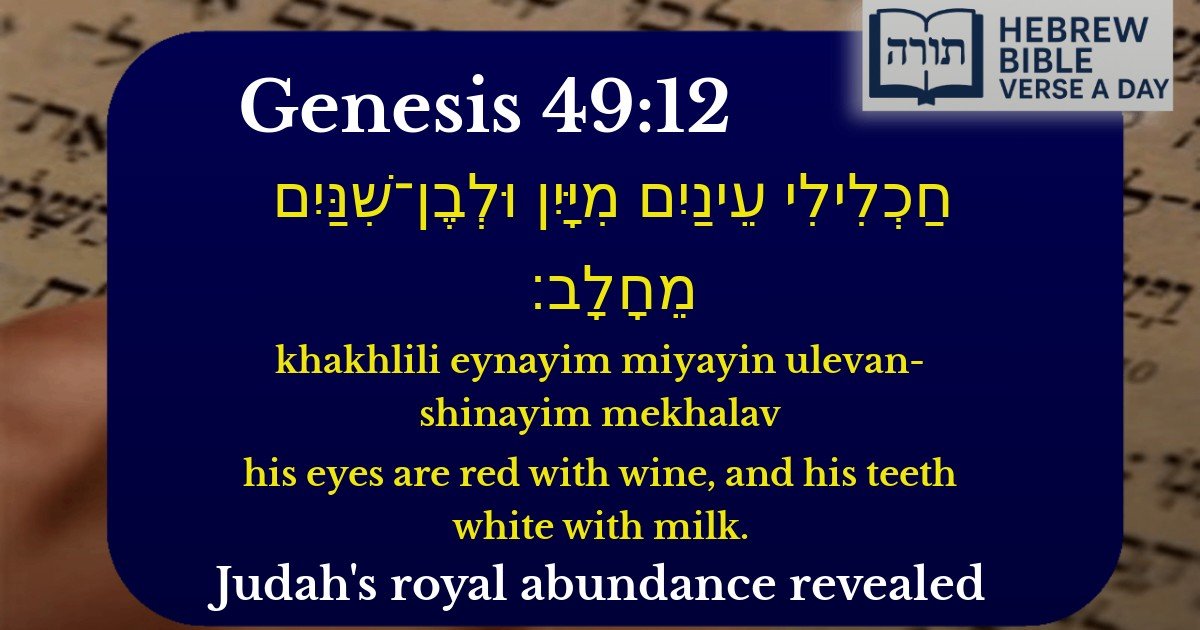
Q: What does Genesis 49:12 mean when it says 'his eyes are red with wine, and his teeth white with milk'?
A: This verse is part of Jacob's blessing to his son Judah. According to Rashi, the redness of the eyes from wine symbolizes abundance and prosperity, as wine was a sign of wealth. The white teeth from milk represent purity and nourishment. Together, they depict a land (Judah's territory) so fertile that it produces abundant wine and milk.
Q: Why is Genesis 49:12 important in Jewish tradition?
A: This verse is significant because it is part of Jacob's prophetic blessings to his sons, which outline the future of the Twelve Tribes of Israel. Judah's blessing, including this verse, highlights the tribe's future greatness, leadership (as kings would come from Judah, like David), and the fertility of their land. The Talmud (Megillah 16b) connects this blessing to the future prosperity of the Jewish people.
Q: How does Genesis 49:12 apply to us today?
A: On a simple level, this verse reminds us of the blessings of material abundance and the importance of gratitude for prosperity. On a deeper level, the Midrash (Bereishit Rabbah 98:9) connects Judah's blessing to the Messianic era, when abundance and peace will prevail. It encourages us to strive for righteousness, as Judah's descendants merited these blessings through their virtues.
Q: What is the symbolism of wine and milk in Genesis 49:12?
A: Wine symbolizes joy and celebration (as in Kiddush), while milk represents sustenance and purity. Rashi explains that the redness of the eyes from wine indicates such abundance that one drinks freely, and the white teeth from milk show health and nourishment. The Midrash (Tanchuma Vayechi 10) also links these to the richness of the Land of Israel, flowing with blessings.


Context and Source
The verse "חַכְלִילִי עֵינַיִם מִיָּיִן וּלְבֶן־שִׁנַּיִם מֵחָלָב" (Bereishit 49:12) appears in Yaakov Avinu's blessing to Yehudah. It is part of a broader prophecy about the future greatness of the tribe of Yehudah, including kingship and prosperity.
Literal Interpretation (Peshat)
Rashi explains the phrase "חַכְלִילִי עֵינַיִם מִיָּיִן" as describing eyes that are reddened from an abundance of wine, symbolizing material wealth and abundance. The second half, "וּלְבֶן־שִׁנַּיִם מֵחָלָב", refers to teeth whitened by milk, further emphasizing prosperity—where wine and milk are plentiful.
Allegorical Interpretation (Derash)
Midrash Tanchuma and Bereishit Rabbah offer deeper insights:
Kabbalistic Perspective (Sod)
The Zohar connects this verse to the balance of Din (Judgment) and Chesed (Kindness):
Halachic Insight (Rambam)
Rambam (Hilchos Melachim 2:6) alludes to this verse when discussing the ideal Jewish king: a ruler must balance strength (symbolized by wine) with compassion (symbolized by milk), ensuring justice without cruelty.